The Vaal Dam is overflowing but Johannesburg and Pretoria are running out of water


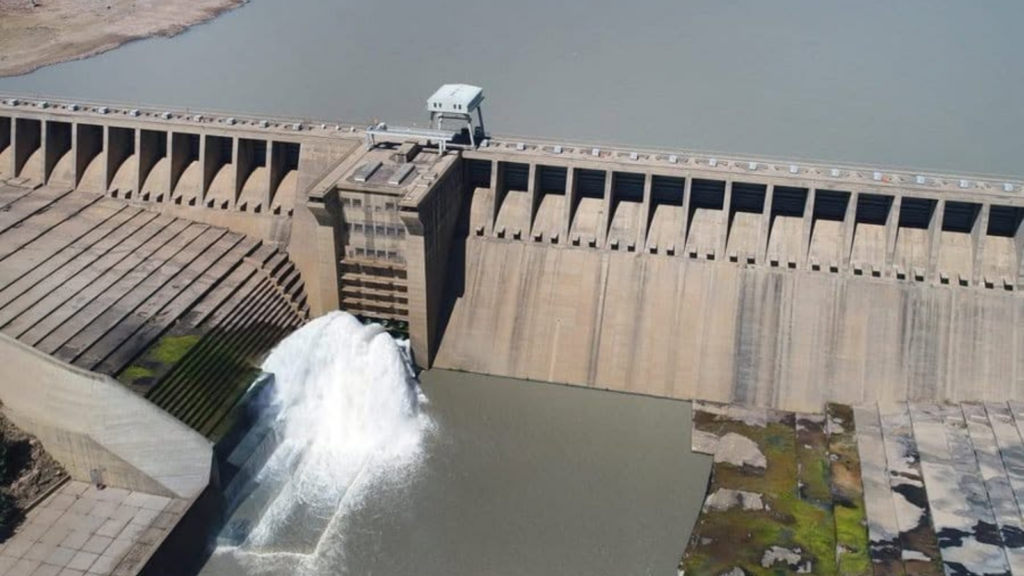
Even though the Vaal Dam’s capacity has now exceeded 100%, residents in Johannesburg and Pretoria continue to face water shortages.
At 05:00 on 26 November 2026, the Vaal Dam was at 110.88% of its capacity, with its controlled spillway still open.
Several other dams supplying the region were also above capacity. Driel Barrage stood at 120.48%, while Grootdraai and Saulspoort were at 106.27% and 101.55%, respectively.
However, Gauteng is struggling to reliably deliver water from bulk suppliers to municipal reservoirs and residents’ taps.
Years of underinvestment, poor maintenance, and inadequate infrastructure upgrades have left municipal water networks increasingly unable to meet demand.
Johannesburg’s water shortages have become particularly severe, with some communities experiencing interruptions lasting days or even weeks.
The city’s water provider, Johannesburg Water, is responsible for much of the infrastructure that distributes water to consumers.
This includes reservoirs, pump stations and the network of pipes connecting them to homes and businesses. However, years of inadequate maintenance have left this infrastructure in a fragile condition.
According to the Centre for Development and Enterprise, the city faces an estimated R26.6 billion infrastructure renewal backlog.
At the current rate of replacement, it could take 200 years to replace Johannesburg’s ageing pipe network.
Half of the water pumped into the city’s system is also lost to leaks and other problems before it reaches consumers.
SA Water Chamber CEO Benoit Le Roy has previously explained that Johannesburg’s distribution system has insufficient storage capacity to withstand interruptions from its bulk supplier, Rand Water.
The system should have enough stored water to continue supplying residents for around 48 hours during a disruption. However, Le Roy said it has less than 12 hours of storage capacity.
This means routine maintenance or a temporary interruption at a pump station can quickly result in empty reservoirs and dry taps.
WaterCAN executive director Dr Ferrial Adam has also criticised Johannesburg Water’s maintenance record.
She said residents should not experience major disruptions whenever Rand Water conducts maintenance because municipal reservoirs should have enough capacity to keep supplying the network.
Half of Johannesburg’s reservoirs are reportedly leaking, while some others are operating on bypass and cannot store sufficient water.
What is behind Gauteng’s water woes
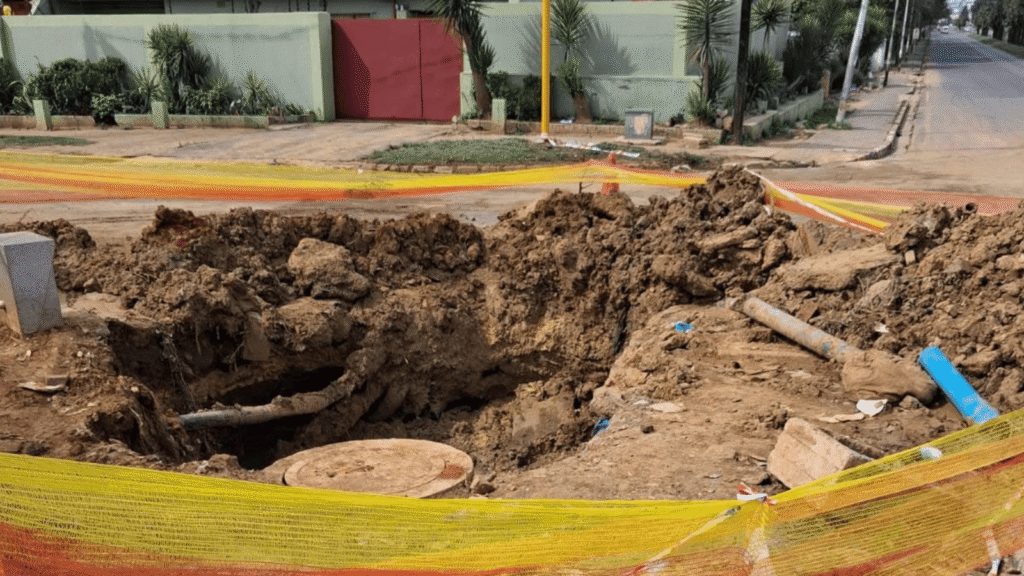
There are many factors contributing to the poor water supply in Gauteng. However, it is important to note that a shortage at household level does not necessarily mean the bulk supplier has run out of water.
Le Roy has previously said Rand Water has continued to supply the region, even exceeding its permitted abstraction under a special arrangement with the Water Minister.
However, he said excessive demand from Johannesburg and Tshwane, combined with physical water losses of between 25% and 35% in their systems, makes it difficult to meet the metros’ requirements.
When municipal infrastructure is already operating under pressure, any disruption to bulk supply can have a much greater impact on residents.
The same problem applies when demand increases. If reservoirs cannot store enough water and pipes are leaking, the municipal network struggles to deliver sufficient volumes.
Johannesburg Water has also identified power cuts, pump station failures, illegal connections, theft and vandalism as factors affecting supply.
The deterioration of municipal water infrastructure in South Africa’s richest city is not a recent development.
South Africa has spent decades investing too little in maintaining, replacing and expanding its water networks.
An eNCA piece by University of South Africa water specialist Anja du Plessis has previously identified poor long-term planning, insufficient funding, weak institutional capacity and rapid urbanisation as contributing factors.
She noted that national infrastructure spending declined after reaching its peak between the 1960s and late 1970s. By 2000, South Africa’s per capita infrastructure spending had reached a 40-year low.
At the same time, Gauteng’s population and economy expanded, increasing pressure on infrastructure that was already ageing.
Municipalities have also struggled to allocate sufficient funding to routine maintenance. Money is often spent responding to emergencies rather than preventing infrastructure failures.
This creates a cycle in which neglected pipes and reservoirs deteriorate further, leading to more leaks, water losses and expensive repairs.
The financial problems extend beyond infrastructure spending. As of 31 July 2026, South African municipalities owed water boards R23.77 billion, excluding current accounts.
Deputy Water and Sanitation Minister David Mahlobo said poor revenue collection, weak financial management and governance problems had contributed to the debt.
The outstanding payments put pressure on water boards’ finances and their ability to maintain, refurbish and expand bulk water infrastructure.
This means financial problems at municipal level can also affect the wider water supply system.
Urgent interventions needed as residents and businesses pay the price for poor infrastructure
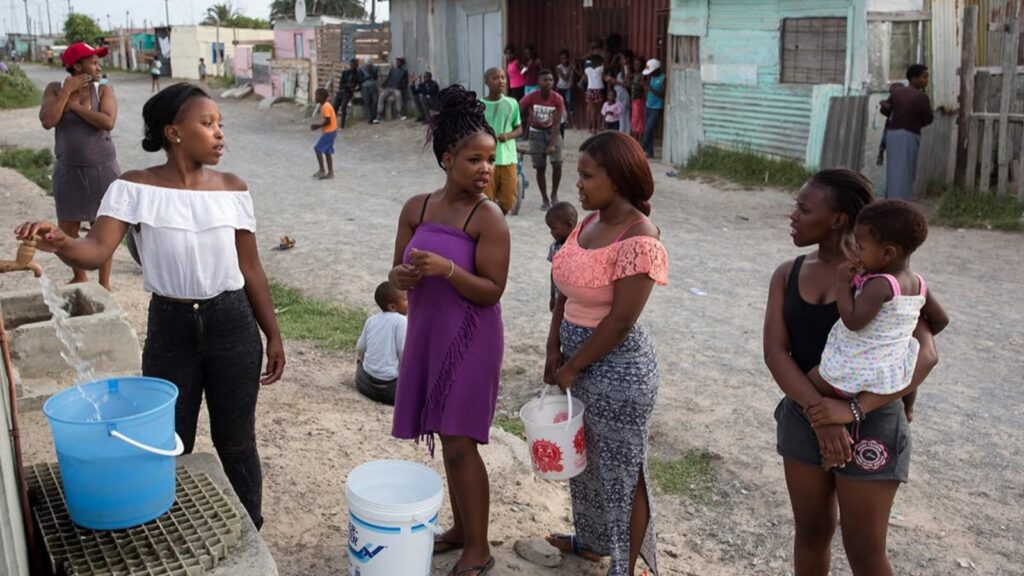
The consequences of these failures are increasingly visible across Johannesburg. A Bloomberg report published in October 2026 documented residents in Westbury going without water for weeks at a time.
Some rely on storage tanks at churches and other community facilities, while others must travel to collect water.
In more affluent areas, households and businesses have increasingly turned to private storage tanks and boreholes.
However, these solutions are expensive and not accessible to everyone. The cost of installing a borehole system can range from R60,000 to R120,000.
One Johannesburg resident spent R25,000 installing a private water storage and pumping system.
Businesses are also facing mounting costs and lost revenue, DA Gauteng infrastructure spokesperson Nico De Jager explained.
He noted that one business in Founders View reported losses exceeding R1 million over three months because of recurring water interruptions
Other businesses have installed storage tanks but are still at risk of closing when the municipal supply fails, and their backup runs out.
Fixing South Africa’s water crisis will require more than temporary interventions such as water tankers and pressure restrictions.
Municipalities need sustained investment to replace ageing pipes, repair leaking reservoirs, upgrade pump stations, and expand storage capacity.
They must also ensure that maintenance budgets are sufficient and that allocated funds are spent on the infrastructure they are intended to support.
The Department of Water and Sanitation has laid more than 100 criminal cases against municipalities and water services authorities over pollution linked to failing wastewater infrastructure.
Mahlobo has called for greater infrastructure investment, stronger financial management and improved revenue collection.
Until municipalities can reliably store and distribute bulk water, even overflowing dams will offer little comfort to households and businesses facing dry taps.
Log in or register for free access to all articles.




Conversation
13 commentsExcuses excuses excuses. The one party who got the most votes frozen out, they would have fixed it. But fear kept them out because the black parties new that once they got in they would stay in. The DA don’t talk it they do it, that’s the difference. The state went on a diffinitive drive if memory serves to force all the white engineers out so that cadres could be given their jobs. What a success that is.