Real reason behind Joburg’s water crisis


Johannesburg’s sporadic water shortages are largely a result of deteriorating municipal infrastructure, with local mismanagement undoing good work done by Rand Water.
The mismanagement of the city’s water infrastructure by Johannesburg Water has been years in the making, with inadequate maintenance over the years of operation.
Now the city is on the edge, with a maintenance budget that is insufficient to address the backlog of projects and a lack of expansion to cope with additional demand.
The city’s infrastructure, made up of leaking reservoirs and failing pump stations, cannot handle any disruption from the bulk supplier, Rand Water, despite being designed to.
As a result, any time Rand Water conducts routine maintenance, which should not be noticed by the end user, it results in hours or days of no water for consumers.
“Johannesburg is in a very difficult situation. There are two issues. The first is that there is no problem with the bulk supplier, Rand Water, neither in December nor now,” SA Water Chamber CEO Benoit Le Roy told the SABC.
“Rand Water is still abstracting more than its permitted licence under a special resolution from the Water Minister because it simply cannot satisfy the excessive demand from the metros, principally Johannesburg and Tshwane.”
“The reason it can’t meet it is that the water systems of those metros are leaking profusely at 25% to 35% physical leaks.”
Thus, when there are supply disruptions from Rand Water due to maintenance or the demand increases, the system fails, and water does not reach the end user.
This is compounded by the lack of investment in storage capacity within Joburg’s water system and the inadequate maintenance of existing reservoirs.
In the event of a disrupted supply from Rand Water due to maintenance or a shutdown, Joburg’s water system should be able to continue supplying water to residents for two days.
“On the distribution side in Johannesburg, the system does not have enough storage capacity. It has less than 12 hours of storage capacity when it should have 48 hours,” Le Roy said.
Le Roy explained that this is because the systems have not been upgraded and maintained over the past 30 to 40 years.
When there is any disruption from the bulk supplier, instead of having 48 hours of storage, there is very little, and so no water reaches the end user.
Simply not enough
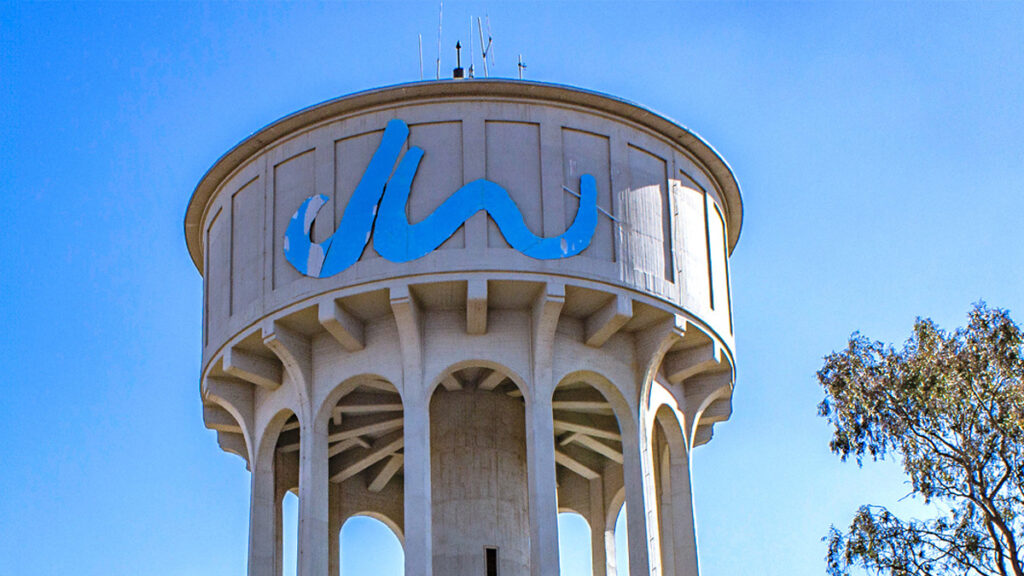
Overall, Joburg Water has not been doing enough maintenance consistently to ensure its infrastructure can cope with the growth in demand from the city’s residents.
On the other hand, experts have noted that Rand Water has been consistent in conducting high-quality maintenance that enables it to supply the Gauteng metros.
WaterCAN executive director Dr Ferrial Adam made it clear that one has to separate out Rand Water and Joburg Water ot correctly see the issues South Africa’s richest city faces.
“In terms of their maintenance, Rand Water has been doing the required amount in 2024 and 2025. That has been important,” Adam told Newzroom Afrika.
“When looking at the state of water supply in Joburg, that is Joburg Water, where we are lacking adequate maintenance, and it is absolutely not doing enough.”
Echoing Le Roy, Adam noted that Joburg’s water system should be able to handle disruptions from the bulk supplier and periods of elevated demand.
“What is happening in Joburg specifically is that local municipal infrastructure is so fragile that anything that the bulk supplier does impacts directly on end users,” Adam said.
“In a normal situation, we should not be feeling the impacts. Our reservoirs should have bulk storage to get us through these maintenance periods, but we don’t. We do not have that at all.”
Half of Joburg’s reservoirs are leaking, and some others are on bypass, so they cannot store sufficient water supply to minimise the impact of changes from Rand Water on end users.
“What we are experiencing in Johannesburg is the lack of maintenance done by Johannesburg Water, resulting in systems not functioning properly,” Adam said.
“What we are seeing is the repetition of a cycle, whereby inadequate maintenance of infrastructure results in increased water losses and shortages.”
The only way this can be halted is if Johannesburg Water gets an increased budget and uses the additional money to fund the maintenance of existing infrastructure.
“Without that, we are going to continue seeing these cycles of the city going into winter with a very fragile system that is likely to fail in some areas due to load reduction or load-shedding,” Adam said.
“When you start going into summer, there will be an increase in demand, and the system quite simply cannot meet that demand.”




Comments