The South African retailer that is changing in front of everyone’s eyes and doubled investors’ money in five years


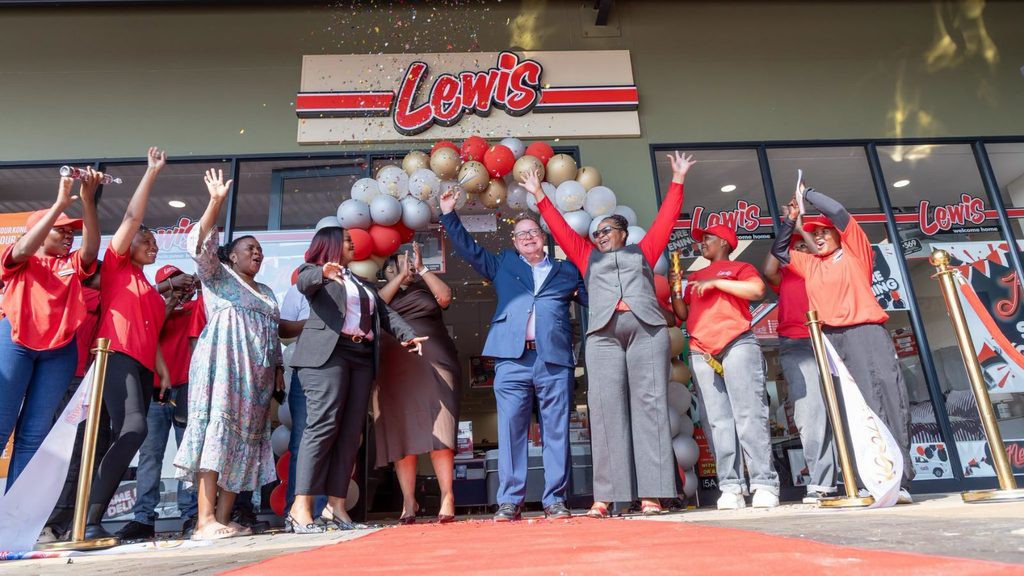
Lewis Group is becoming more of a financial services (finserv) play than a pure retail business, making it an interesting opportunity for South African investors.
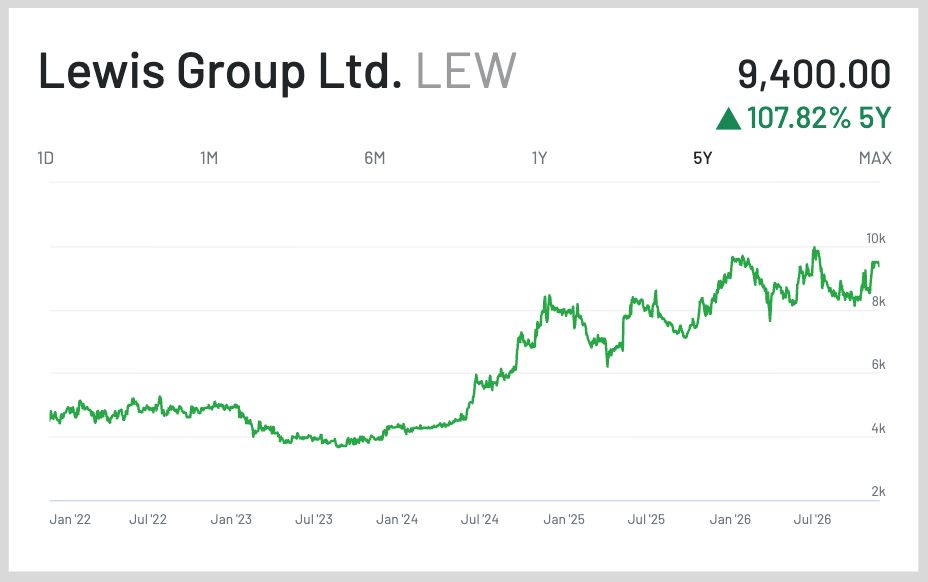
The company has seen its share price rise by 107.82% since 2021, having doubled investors’ money over this five-year period.
Lewis’ transition to becoming more of a finserv play was evident in its latest interim results published on 19 November 2026.
These results, which covered the six months through September 2026, showed that Lewis’ revenue rose by 7.2% to R5.20 billion.
Notably, this revenue was derived equally from Lewis’ Finserv and Retail Merchandise segments, which both contributed R2.6 billion.
While total retail revenue was higher at R3.19 billion, this segment grew by only 4.8%, whereas Finserv revenue rose 10.9%.
At this rate, Lewis’ finserv segment is on track to take over retail as the group’s largest revenue segment.
Within the Finserv segment, Lewis saw its insurance division become the fastest-growing revenue line, having surged 16.8% to R761.1 million.
Lewis also saw its effective interest income increase by 8.4% to R1.24 billion, while ancillary services income grew by 9.1% to R575.6 million.
The group’s gross debtors book expanded by 11.8% to R9.54 billion, supporting the increase in interest and credit-related earnings.
In contrast, Lewis’ retail top-line growth was more subdued, largely due to consumer financial stress and the group’s strict credit vetting.
The group’s traditional retail segment grew sales by 4%, while its speciality retail segment increased merchandise sales by 3%.
At a group level, Lewis reported an 11.3% increase in headline earnings to R373 million, which earnings per share up 11% to 687 cents.
Lewis recorded an operating profit of R574.7 million, up 10.1% from the previous year, while its operating profit margin expanded to 22%.
Analyst opinion
All Weather Capital equity analyst Jared Hoover told BusinessDayTV that this was a robust set of results from Lewis, especially considering that it operates in South Africa’s constrained retail sector.
“One can classify Lewis as a retail play, but one should actually think of it more as a financial services company,” he said.
“What was really encouraging from this set of results was that the credit quality still managed to be quite strong.”
He pointed out that this was despite Lewis having grown its ‘Other’ revenue, which houses its Finserv income.
“What was interesting for us is that you’ve had this other revenue growth outpacing the merchandise sales, which is the typical retail products that they sell, yet still maintaining the credit quality,” he said.
Hoover pointed out that the impairment of Lewis’ credit book has been consistent, and its collection rates have improved to 79%.
“So, I thought it was a good set of results, and that all flowed down the income statement to double-digit headline earnings per share growth,” he said.
Hoover added that this strong growth is commendable in the current operating environment.
In the same interview, PSG Hole In One Ruimsig wealth manager Ricus Reeders agreed with Hoover’s assessment.
He said Lewis has managed its credit book well while maintaining its margins, leading to “pretty steady” results for a company operating in an unforgiving environment.
Hoover added that Lewis’ outlook for the remainder of the 2027 financial year indicates that this strong growth is expected to continue.
The retailer’s sales are expected to be supported by Black Friday and Festive Season spending, setting it up for a strong second-half performance.
Log in or register for free access to all articles.