Four years to create 1 million jobs


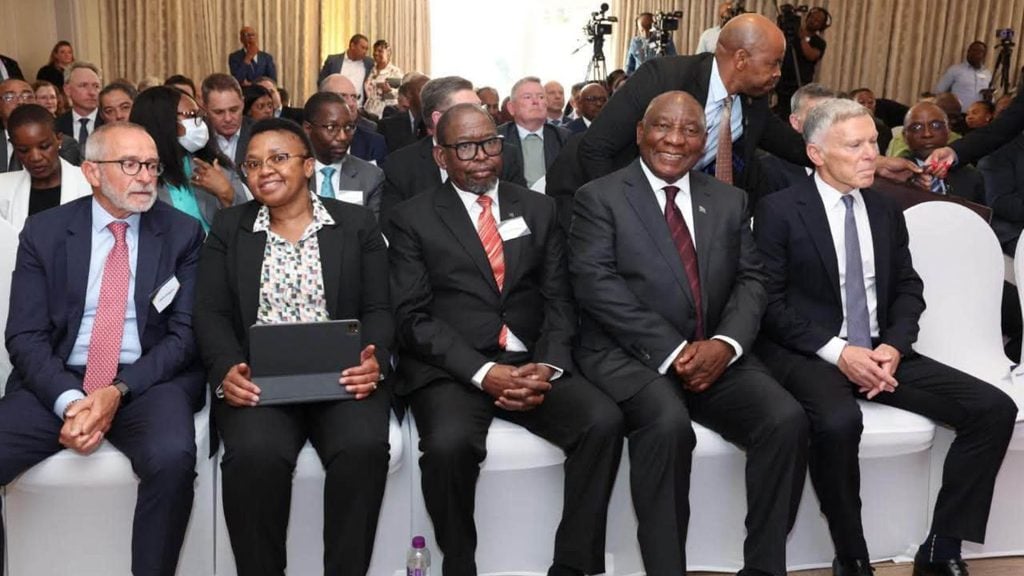
South Africa is targeting economic growth of at least 3% by 2030 to prevent further increases in unemployment, as it begins a new round of reforms to attract investment and create 1 million jobs.
The 3% target is a baseline, not a ceiling, Finance Minister Enoch Godongwana said Thursday on the sidelines of the launch of the third phase of a government-business partnership in Johannesburg.
At current growth rates, the economy is expanding more slowly than the population, reducing income per capita and adding to unemployment, Godongwana said.
Growth of 3% would allow employment to increase without adding to the backlog of joblessness, he said.
“When we grow at 3%, we will have better employment levels, and we won’t accumulate more unemployment,” Godongwana said. “But it’s a minimum.”
South Africa’s unemployment rate is 33.6% — one of the world’s highest — with 8.5 million people out of work.
The continent’s biggest economy is ranked the most unequal country by the Thomas Piketty-backed World Inequality Lab.
Economic growth has stagnated, averaging less than 1% per year over the past decade.
The government-business partnership, established in 2023 to address electricity shortages, logistics bottlenecks and financial crime weaknesses, will now focus on accelerating growth in infrastructure, mining, tourism, agriculture and agro-processing.
The state is targeting R3 trillion of investment and 1 million jobs by 2030 as part of the new phase.
Analysis presented to the partnership showed that a 3% growth rate would keep unemployment broadly flat, while about 5% growth would be needed to materially reduce the backlog, said business representative Adrian Gore, the CEO of financial services group Discovery.
About 300,000 people enter the labour market each year on a net basis, he said.
The government’s immediate objective is to lift growth above 3%, President Cyril Ramaphosa said at the launch of the initiative, while acknowledging that the rate “cannot be the summit of our ambition.”
“We have shown that we can reform,” Ramaphosa said. “We must now show that we can grow.”
Restructuring state energy utility Eskom and port-and-freight-rail operator Transnet are central to South Africa’s efforts to fix snarled infrastructure that hinders growth.
That sparked pushback from Eskom Chairman Mteto Nyati, who warned that plans to transfer the power company’s transmission assets to an independent operator could unsettle the company’s finances and trigger a backlash among investors.
However, Godongwana said there is no uncertainty within government over the restructuring of Eskom’s transmission business, despite that difference of opinion.
A similar process is underway for Transnet’s rail infrastructure, with Treasury assessing the financial implications of separating it from the freight operations business.




Comments