South Africa spends R180 billion a year on road accidents


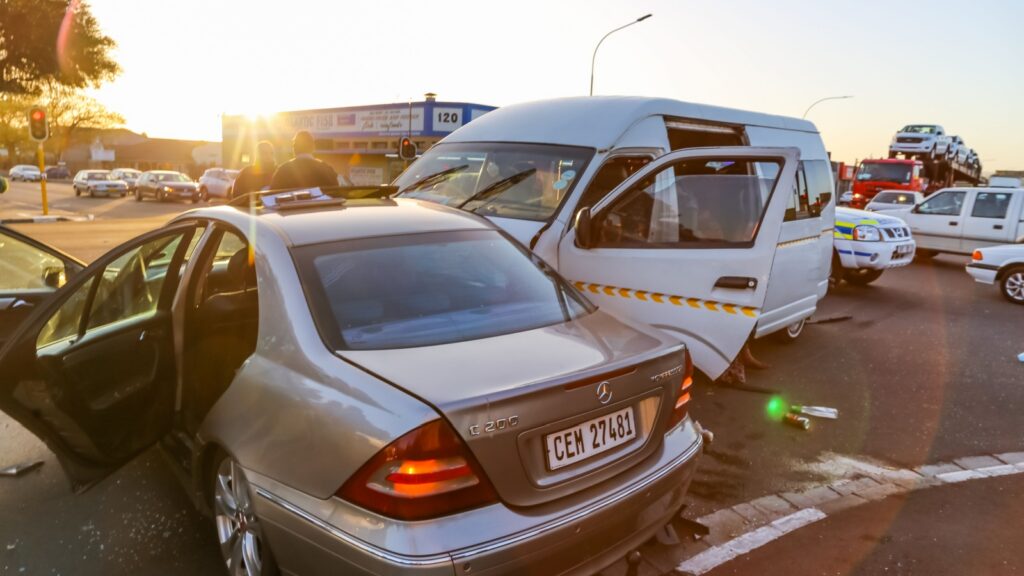
With more than 800,000 road accidents annually, traffic incidents cost South Africa’s economy an estimated R180 billion every year.
Road accidents also have a significant impact on individual motorists, who are sometimes forced to pay thousands of rands out of pocket for an accident they did not cause.
Worse yet, the majority of these drivers are uninsured, said Van Deventer Dowlath & Marx Associate Director Tanya De Villiers.
“We’re looking at over 2,000 accidents a day on roads where an estimated 65% to 70% of vehicles aren’t insured, according to data from the Automobile Association (AA) and the South African Insurance Association,” De Villiers said.
The situation could soon get even worse, due to the Administrative Adjudication of Road Traffic Offences demerit system, which is currently scheduled to begin penalising bad drivers with point deductions later in 2026.
“The chaos could escalate because drivers who lose their licences due to accumulated fines will automatically lose their insurance coverage,” she said.
De Villiers explained that most people think an insurance claim ends when their car comes back from the panel beater.
However, in reality, this is where the real legal process actually begins. “Imagine you’ve stopped at a red light and a reckless driver smashes into the back of your car,” she said.
“You report the accident, pay your excess, your insurer pays for the repairs, and then, as far as you’re concerned, the matter is closed. But it isn’t.”
That is because once the insurer pays the claim, they legally step into the motorist’s shoes. The insurer essentially inherits the insured’s rights and can sue the at-fault driver to recover the money, De Villiers said.
“Consider a typical example: A negligent driver causes R50,000 worth of damage to your car. You pay a R5,000 excess, and your insurer pays the remaining R45,000,” she said.
Through subrogation, the insurer assumes the legal burden of recovering the full R50,000 from the liable party, De Villiers noted.
“Once recovered, you get your R5,000 back, and the insurer keeps the R45,000. It’s a win-win for the consumer that costs the policyholder nothing,” she explained.

The importance of subrogation
While some people think subrogation is just a money grab by big corporations, De Villiers explained that it is actually a vital legal tool.
It stops drivers from escaping financial blame just because the person they hit happened to have insurance. It also protects the national economy.
“Without subrogation, insurance companies would have to absorb billions of rands in losses every year,” she explained.
“To survive, they would have to raise monthly premiums through the roof, forcing honest, insured motorists to pay for the country’s national road lawlessness.”
According to De Villiers, subrogation, which comes from a Latin word meaning “to substitute”, happens automatically the moment an insurance company pays to fix your loss.
In South Africa, there are two precedent-setting court rulings which relate to subrogation: Rand Mutual Assurance v Road Accident Fund (2008) and Smith v Banjo (2011).
The Rand Mutual Assurance case involved an insurance company that paid out to an injured worker and then sued the Road Accident Fund (RAF) in its own name to recover the money.
The RAF argued this was wrong, but the Supreme Court of Appeal (SCA) disagreed, ruling that an insurer who has fully paid for a loss has every right to sue the wrongdoer directly in its own name.
In Smith v Banjo, an insurer followed the traditional route and sued a reckless driver in the name of the insured policyholder. The guilty driver tried to argue that the claim was invalid because the insurer was the “real” person suing.
The High Court threw this argument out, ruling that a wrongdoer cannot escape blame just because the victim has insurance.
What South Africans should do if they get into a car accident

Subrogation has also become critical for the financially beleaguered RAF, which De Villiers said is technically insolvent, with debts that far outweigh its assets. “Delayed payouts and massive operational backlogs are normal at the RAF,” she said.
“Subrogation ensures that negligent drivers – not insurers, not good policyholders, and not an already overburdened RAF – are financially responsible for the damage they cause.”
When an insurer takes legal action after a crash, it triggers two payments. The first, paid by the insurer, covers the cost of the vehicle repairs.
The second is that the excess paid to the vehicle owner is returned if the repair is successful. Importantly, De Villiers stressed that these excess reimbursements are not guaranteed.
“Sadly, though, many South Africans never get their excess back, whether it’s because they don’t understand the process, don’t cooperate with their insurer, or simply give up once their car is fixed,” she said.
“With excesses often running into thousands of rands, this is a massive amount of money to lose needlessly.”
To make sure motorists do not lose out financially, De Villiers recommended that South Africans take the following five steps:
- Document everything: Take photos, get witness details, get the police report, and grab the other driver’s ID and insurance details.
- Cooperate with the insurer: Give statements and sign documents quickly. Motorists might even need to appear in court as a witness.
- Understand the financial split: Insurees must remember that the excess is their money, and they have the right to recover it if the other driver was at fault.
- Stay informed: The insured’s name is on the lawsuit. They must keep track of what their insurer is doing.
- Seek legal advice: If the driver’s insurer is ignoring the recovery process or they feel confused, they should speak to an independent attorney.
These steps can help protect motorists against this growing road risk. “Motor vehicle accidents are the most common legal fights in South Africa,” De Villiers added.
“Subrogation is the background engine that protects policyholders, keeps premiums stable, and forces accountability on roads where far too many drivers choose to operate without a safety net.”
The table below shows De Villiers’ excess claim guide, which South Africans should follow if they are involved in a motor accident.
| Never admit fault | Let the legal teams and the police decide who caused the crash based on the physical evidence. |
| Get the guilty driver’s details | Take a clear photo of their driver’s licence, vehicle licence disc, and phone number. |
| File a police report within 24 hours | You cannot launch a subrogated legal claim without an official SAPS Accident Report number. |
| Demand updates on recovery | Ask the person who’s handling your claims (in writing): “Are you pursuing the third party for recovery, and when can I expect my excess back?” |
 Loading ...




Comments