Dis-Chem playing with fire


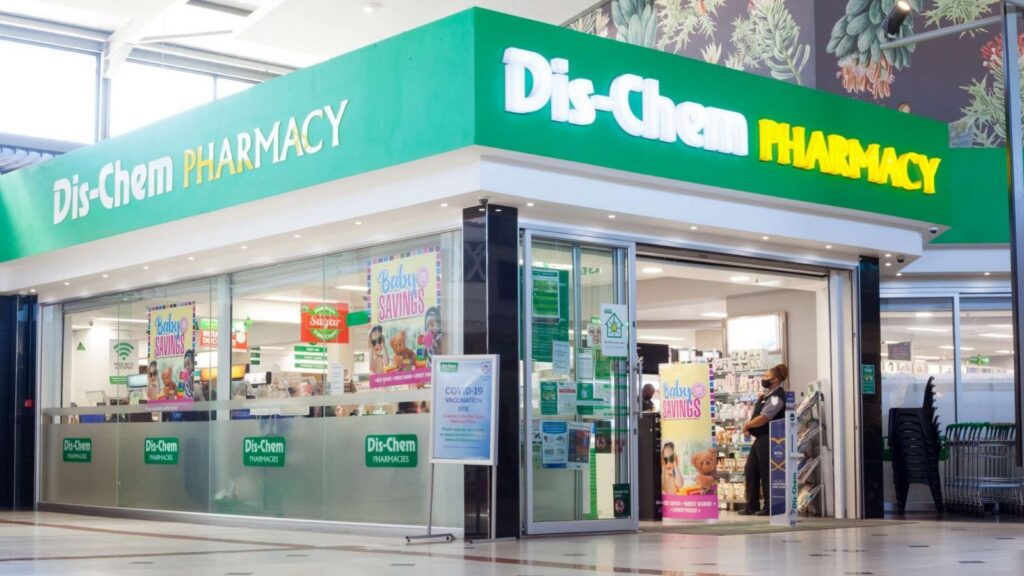
Dis-Chem’s new-format store rollout could be a sensible growth lever for the retail pharmacy giant, but it poses significant near-term risks.
Crucially, this rollout plan, which requires committing fresh capital, comes at a time when the company’s costs are already running above earlier guidance.
This puts two simultaneous demands on Dis-Chem’s management team. However, it could also see the retailer gain some ground against its biggest competitor, Clicks.
This is the view of PSG Wealth’s wealth manager, Schalk Louw, who told Daily Investor that Dis-Chem and Clicks both have interesting investment cases.
Currently, South Africa’s pharmacy retail sector is dominated by two players – Clicks and Dis-Chem.
The two companies have been battling for market share for years, and collectively controlled 63% of the retail pharmacy market in 2024.
For investors interested in the retail pharmacy sector, the choice of where to invest is often split between either Dis-Chem or Clicks.
While they operate in the same sector, both have very different investment cases. It is important to note that Louw does not own shares in either company.
Louw explained that Clicks currently trades at a lower forward earnings multiple than Dis-Chem at 13.5 times and 18.8 times, respectively.
Clicks also earns a far higher return on equity, at 53.4%, compared to Dis-Chem’s 18.0%.
The Cape Town-based retail pharmacy giant also carries less debt, pays a higher dividend yield, and shows more consensus upside at roughly 57% than Dis-Chem.
“With Clicks, I am therefore paying less for a business that is still growing earnings from a higher-quality base,” Louw explained.
“Dis-Chem’s earnings, by contrast, are being held back by heavy spending on its loyalty programme and broader ecosystem, with some of that spending running ahead of previous guidance.”
However, Louw pointed out that Dis-Chem presents the higher-potential recovery story if its planned investments deliver the expected returns.
He said buying into this recovery story requires confidence in management execution at a time when its cost base is already under pressure.
“On the numbers I can stand behind, Clicks offers the stronger risk-adjusted investment case,” he said.
Dis-Chem’s big plans
Another big differentiator between Dis-Chem and Clicks is their store networks, which differ significantly.
Clicks boasted 1,005 stores at the end of February 2026, with a stated goal to grow its footprint to 1,200 stores in the medium term. It is currently opening between 40 and 50 stores a year.
In contrast, Dis-Chem had 358 retail stores at the end of February 2026, which included 42 Baby City stores.
This significant gap cannot be attributed to one retailer being older than the other. Clicks was founded in August 1968, while Dis-Chem was established a decade later in 1978.
Rather, the difference comes down to their distinct business models. While Clicks targets high-frequency convenience locations with smaller stores, Dis-Chem has historically focused on fewer but larger “big-box” stores.
Dis-Chem stores are also more full-service than Clicks’, with each store housing a pharmacy and clinic.
Recently, Dis-Chem CEO Rui Morais announced that the company will take a different approach to store rollouts starting in August 2026.
Announced in early May 2026, Dis-Chem plans to roll out a new store format across all new stores and revamp and upgrade its existing store base.
Louw described this rollout plan as a “sensible long-term growth lever that adds near-term risk”.
“New stores and revamps are established ways to increase customer reach and sales, and Dis-Chem’s store estate is less mature than Clicks’, so there is meaningful room for expansion,” he said.
However, Louw said his concern lies in the timing, because it means Dis-Chem is committing fresh capital to new stores and revamps while its ecosystem costs are already running above earlier guidance.
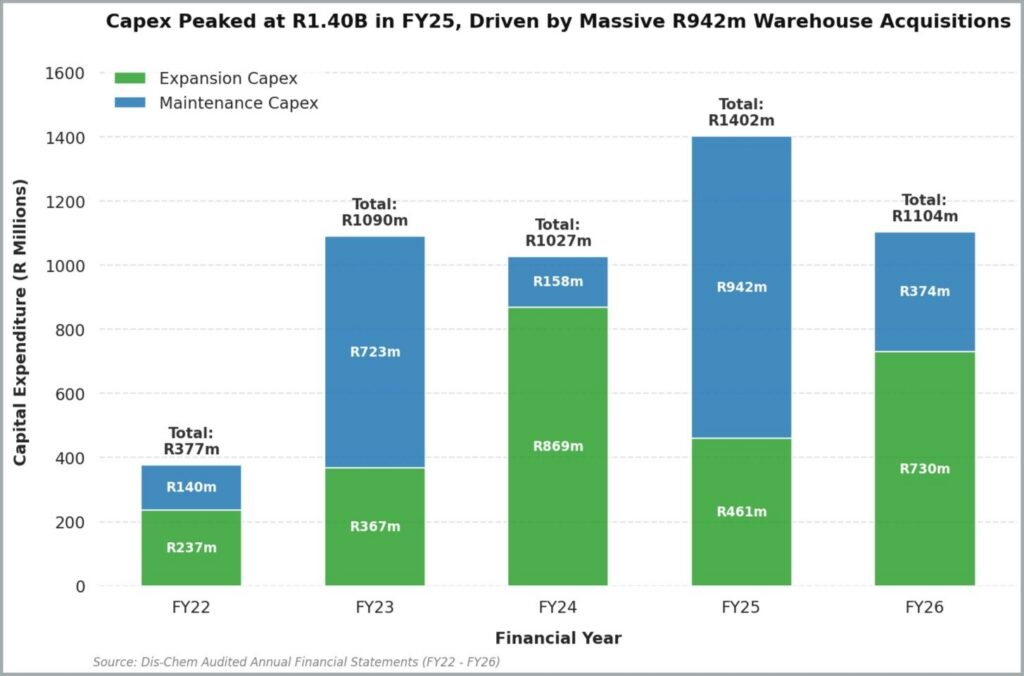
Daily Investor calculated that Dis-Chem has spent R5 billion on capital expenditure (capex) over the past five financial years.
Its capex has been directed toward aggressive retail expansion, the acquisition of independent pharmacies, and the scaling up of large-scale distribution and supply chain centres.
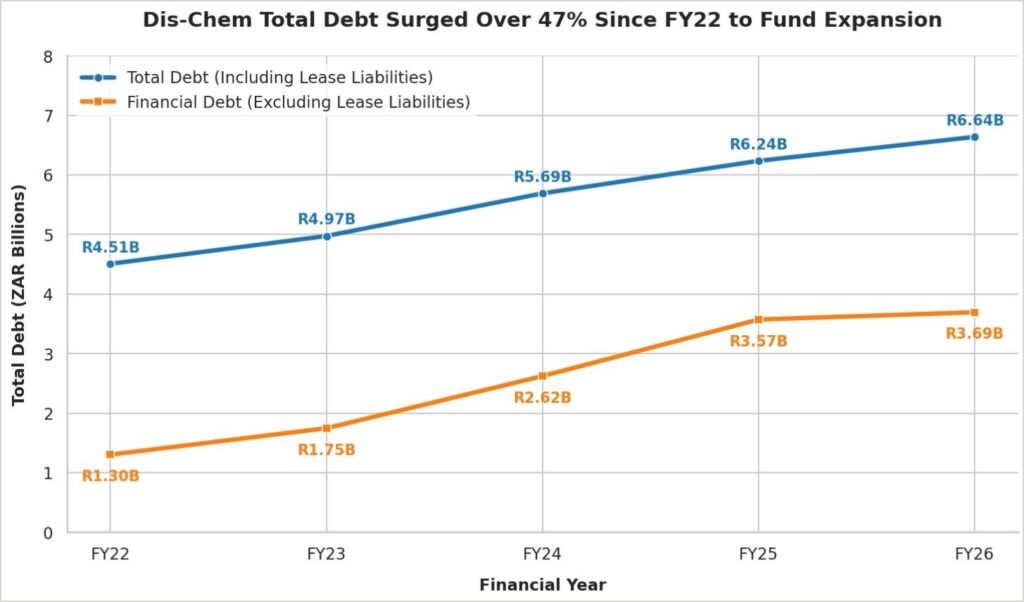
“That places two significant demands on the same management team at once, while the balance sheet is already carrying more debt than Clicks,” he said.
However, the risk may be worth it, as the rollout could strengthen Dis-Chem’s investment case materially if the new stores generate attractive returns and help Dis-Chem achieve its retail margin target.
“The risk is that the benefits take longer to emerge while the additional operating and investment costs are incurred immediately,” Louw said.
“I therefore see the rollout as positive for long-term growth, but also as something that widens the range of possible outcomes in the near term.”
Overall, Louw said Dis-Chem offers greater recovery and expansion potential, but Clicks currently offers the stronger risk-adjusted proposition.
“Its lower valuation, stronger recent earnings delivery, and lower reliance on successful execution of a large investment programme are why Clicks is my preferred investment at present,” he said.





Comments