Call for R5.25 cut to petrol and diesel prices in South Africa


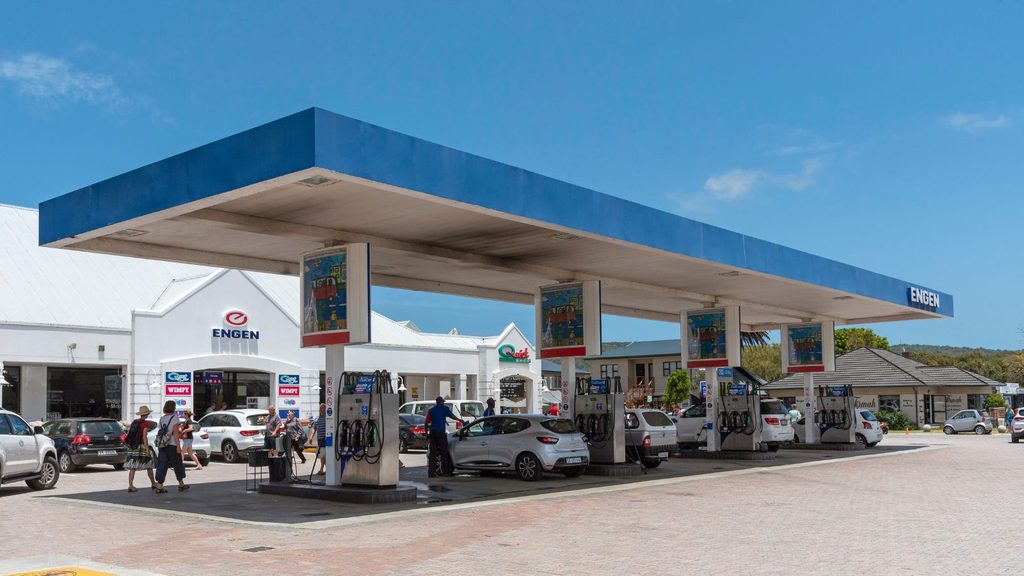
The AA has called for the General Fuel Levy to be cut by R3 per litre and the Road Accident Fund Levy to be scrapped.
This is to bring relief to South African motorists amid record petrol and diesel prices.
In a statement on 8 October, it called for significant changes to how fuel prices are calculated in the country.
In particular, the organisation wants fuel levies to be reviewed to bring some relief to motorists and logistics companies.
Government taxes, levies, and regulated margins have a substantial impact on the total cost of petrol, accounting for 41% of the total price at the pump.
Of the 11 components that determine South Africa’s petrol price, 10 are directly set or regulated by the government.
These administered elements of the final price of diesel and petrol at the pump have grown rapidly over the past decade, substantially outstripping inflation.
The fastest-growing component of the fuel price is the RAF Levy, which funds the Road Accident Fund. This has surged by 500% since 2008.
Coupled with the rise of the RAF Levy is the General Fuel Levy (GFL), which has risen by 250% since 2008.
This levy was introduced in 1983 to fund the maintenance and expansion of South Africa’s road network. However, the revenue is not ringfenced.
As a result, the GFL is now being used to bolster the state’s finances as it is a relatively easy tax to administer and is broad-based.
The GFL now makes up R4.29 per litre of the final fuel price, while the RAF Levy adds another R2.25 per litre.
The GLF is expected to generate R100 billion for the government in the current financial year, while the fund collects roughly R45-R50 billion annually from its levy.
Apart from the RAF Levy and GFL, other levies on the price of fuel in South Africa include the retail margin, transport cost, and wholesale margin.
These levies make up a significant portion of the final fuel price, which is now sitting at record highs for both petrol and diesel users.
The inland price of 95 octane petrol is R30.28 in October 2026, making it the first time that a litre of the fuel has crossed R30. Diesel 0.005% is at R33.29 per litre.
Cut levies for relief
The AA has called on the government to cut fuel levies to provide relief for consumers, as it did earlier this year when the National Treasury temporarily reduced the GFL.
“We remind the government that it is the very taxpayer being stifled that pays its salaries, and as a consumer body here for almost a century, the AA’s call is rigid: abolish the RAF levy immediately,” it said.
The AA called on the state to find more appropriate ways to solve for the RAF’s mandate and allow the embattled consumer to continue contributing meaningfully to the economy.
“This is actually when National Treasury steps in and softens the consumer blow through real levy relief, versus levy hikes as the way forward,” CEO Bobby Ramagwede said.
Ramgwede argued that the National Treasury should have found a longer-term solution earlier this year than temporarily sliding down the GFL.
The National Treasury lost out on R17.2 billion in revenue by cutting the GFL, and it has made it clear that it cannot afford to lose any more.
Ramagwede said the National Treasury should instead cut government spending to free up funds to offer relief to motorists.
“Recover it from waste. Year after year, the government has found billions to bail out failing state companies. It can find the money to keep South Africa moving,” he said.
“We maintain that government can afford to cut the general fuel levy, at midnight today, by R3 a litre, which would materially reduce the inflationary impact of fuel price changes.”
The AA said that low-income workers are most affected, as they spend up to 40% of their salary on transport alone.
Taxi, bus and e-hailing operators pass fuel costs on through fares, and these passengers have nothing left to cut.
Ramagwede also urged the state to find longer-term solutions to South Africa’s fuel challenges by improving strategic fuel stocks and boosting refining capacity.
What the AA is asking for:
- National Treasury: a further R3-a-litre cut to fuel taxes, such as the general fuel levy, before the November adjustment, paid for by cutting wasteful spending rather than borrowing.
- The Department of Mineral and Petroleum Resources: a public review of the basic fuel price formula, including why fuel refined in South Africa is priced as though it were imported.
- The Central Energy Fund: a public plan, within 90 days, to rebuild the strategic fuel reserve and settle PetroSA’s future.
- Employers: a review of transport allowances now and, where the work allows, one remote working day a week. For a five-day commuter, that cuts the weekly transport bill by a fifth.
“This is not an AA request. It is rather an instruction to those employed to run this country,” Ramagwede said.
“The consumer pays your salary, and the consumer is the one staring firmly today at the bread line. As the elected body, you need to provide the relief to those who keep you in your seat, or step aside and let those who will do.”





Comments