The price of one bottle of All Gold Tomato Sauce went from R1.39 to R34.95 in 40 years


The price of a 750 ml bottle of All Gold Tomato Sauce has risen from R1.39 in 1986 to R34.95 in 2026.
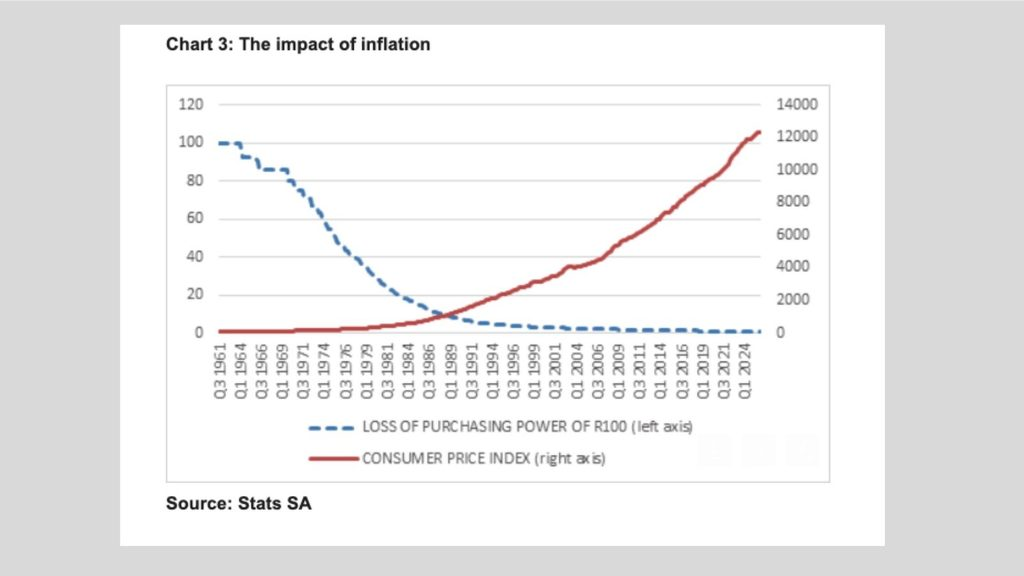
This is an example of the destructive force of inflation on South Africans’ spending power and indicates the kind of returns retirement funds must generate for their clients.
Analysts and economists often use the example of a well-known everyday product like All Gold Tomato Sauce to explain the impact of inflation on investment returns.
This is not only because it makes it easy to understand, but also because it points to a personal inflation rate that may be different from official statistics.
These products have also not changed much over time. All Gold Tomato Sauce still uses the same ingredients and, in this case, still comes in a glass bottle.
This makes All Gold Tomato Sauce almost the perfect product to analyse the impact of inflation over time.
Much research has been done on personal inflation rates and why they differ from the headline figure published by Stats SA on a monthly basis.
Research from NinetyOne shows that this feeling many people have is close to the truth, with a study of household items showing their prices rise far faster than headline inflation.
Headline inflation in South Africa rose by an average of 7.5% per annum from 1986 to 2026, while a basket of common goods rose by an average of 9.1% per annum over the same period.
This significantly increases the returns of your retirement savings that you need to generate to maintain purchasing power over time.
Failure for investment funds to beat this benchmark will result in individuals having to substantially change their lifestyles in retirement.
While this might be the case anyway, retirement does come with additional costs in the form of elevated insurance premiums and increased healthcare costs.
Retirement savings invested throughout your working career have to be able to cover these elevated costs while providing income from which one can live.
Equities are the answer
The only answer available to most South Africans saving for retirement is having sustained exposure to equities.
NinetyOne’s analysis showed that investors will not be able to maintain their purchasing power by putting their savings in cash or fixed-income investments.
These may beat inflation in the short run, but over the long term, they will be outpaced by inflation, eroding your purchasing power.
This makes the case for investing in equities, which have historically delivered returns that exceed inflation.
Beating inflation enables one to grow wealth, improve purchasing power, and retire without sacrificing quality of life.
“The great villain of investors is inflation. As prices rise, the value and quality of the goods and services your money can buy declines,” Symmetry chief investment strategist Izak Odendaal said.
Odendaal’s analysis of returns on the JSE and American stock markets shows that they have consistently beaten inflation over the past 100 years.
His calculation shows that the JSE turned R100 of today’s money into R229,000 over the past century. Its American counterpart turned $100 into $317,000 over the same period.
This is despite the last century seeing numerous crises that would have driven investors to exit the stock market.
In South Africa, for example, the past century included the rise and fall of apartheid, global isolation, political uncertainty, and many booms and busts.
“There were many scary moments along the way. At no point did it feel inevitable that the market would continue rising,” Odendaal explained.
“However, the data show that over the long run, equities are on a relentless march upwards, despite short-term volatility.”
If money is left to compound in global equities, its growth will outpace inflation over the long term.
This makes it critically important to not interrupt the compounding process as that undermines the power equities hold.
“Where do the riches come from? Not from the gods of Olympus, but from the magic of compound growth,” Odendaal explained.






Conversation
1 commentsHis calculation shows that the JSE turned R100 of today’s money into R229,000 over the past century
That makes no sense.