South African mining giant made a R20 billion bet that paid off 20 years later


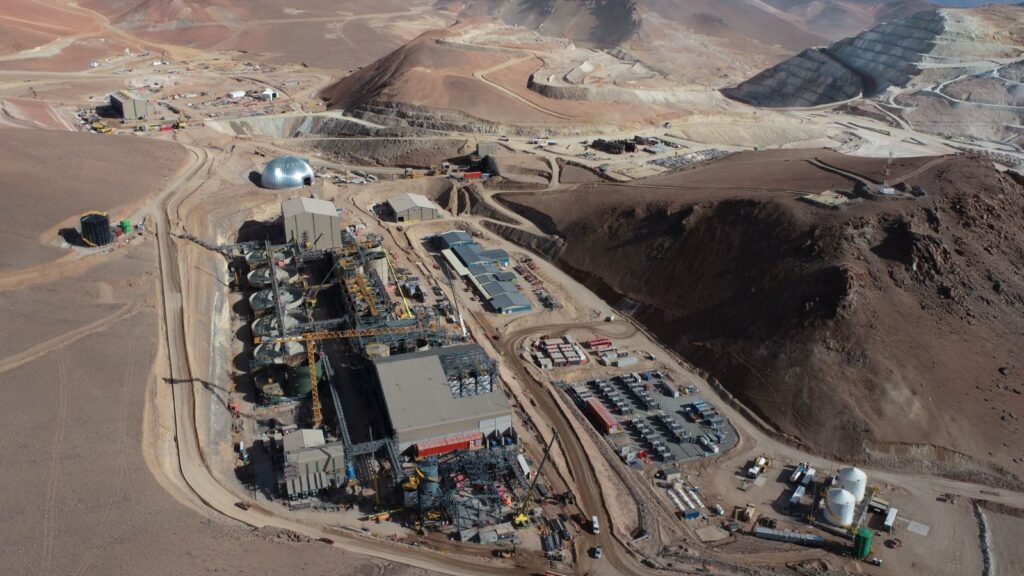
Gold Fields’ long-term investment in the Salares Norte mine in Chile has proven to be one of the mining giant’s most successful endeavours.
One of the largest gold mining firms in the world, Gold Fields is the third-biggest South African company at the time of writing, with a market capitalisation of R530 billion.
The company traces its origins to 1887, when Cecil John Rhodes and Charles Rudd founded Gold Fields of South Africa Limited in London.
Establishing an office at Doornfontein in Johannesburg, the company was renamed Consolidated Gold Fields of South Africa in 1892.
The Robinson Deep, Sub-Nigel, and Simmer & Jack gold mines opened between 1894 and 1896 to mine deep-level gold deposits in the Witwatersrand.
After an initial investment of £250,000 by Rhodes and Rudd in 1898, Consolidated Gold Fields was rated the most valuable company in the world.
Sub-Nigel became one of the world’s most profitable gold mines, producing £29 million for investors and £24 million in taxes for the South African government during its lifetime.
The company expanded its operations into Australia, Alaska, Colombia, New Guinea, and West Africa, reviving the name Gold Fields of South Africa for all domestic operations.
A new company, Goldco, was formed in 1998 from the amalgamation of the gold assets of Gold Fields with those of Gencor and was subsequently renamed Gold Fields Limited.
The company has been listed on the Johannesburg Stock Exchange since 1 January 1998, and on the New York Stock Exchange since 9 May 2002.
In 2012, Gold Fields unbundled its subsidiary GFI Mining South Africa, comprising its Kloof, Driefontein, and Beatrix mines.
This spun-off company was renamed Sibanye Gold and was listed on the JSE and NYSE in February 2013. It now operates as Sibanye-Stillwater after a merger in 2017.
As of March 2026, Gold Fields was listed as the fifth-largest gold mining company in the world by output, producing up to 2.5 million ounces of gold over the previous year.
Gold Fields’ 20-year bet
In September 2010, Gold Fields signed an option to purchase agreement for the Salares Norte property in Chile’s Atacama region.
By March 2011, the company had discovered gold and silver mineralisation at the site through early exploration drilling.
Development of the mine took place over the next 13 years, with its first gold-silver doré poured on 28 March 2024.
Delays, contractor increases, and higher costs pushed the project’s total capital expenditure to approximately $1.20 billion (R20.6 billion).
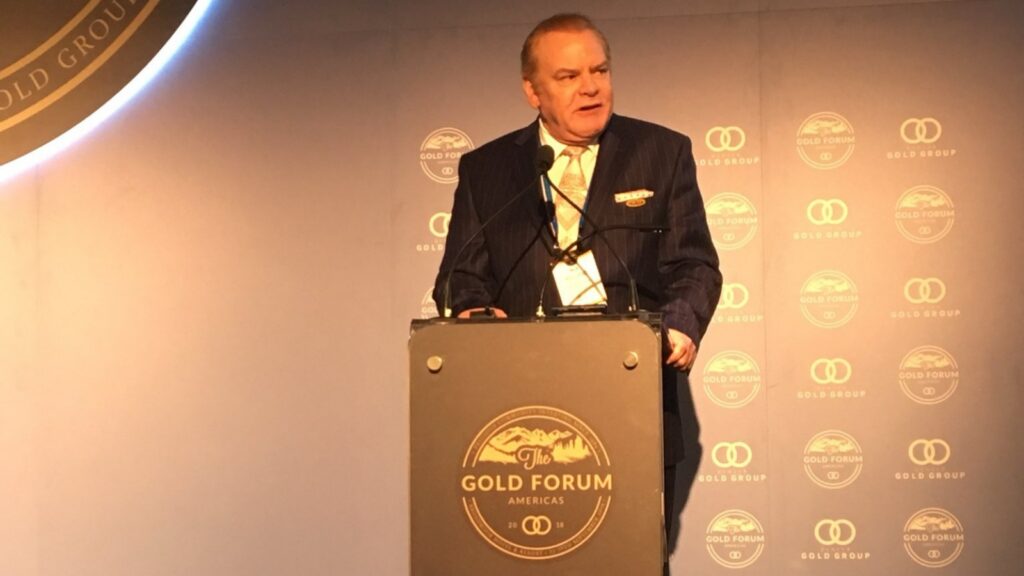
On an episode of the Investec Minds podcast, former Gold Fields CEO Nick Holland said the investment was a long-term commitment that was now beginning to pay off.
“I realised this was probably a 15-year bet,” Holland said. “In fact, it was longer than that. It’s more like a 20-year bet. That’s the commitment in time you have to make to these kinds of grassroots developments.”
“When we did our first few drill holes in Salares Norte, and we looked at the results of the drill core, I think that we were all terribly excited.”
He said he knew they were onto something special after the explorationists came back with even more impressive infill drill results.
While Holland’s tenure as CEO ended before the benefits of the investment could be fully reaped, he said he was satisfied that he made the right decision at the time.
He also commended the current Gold Fields team for being able to fully realise the project that he and his team had originally envisioned during his time as CEO.
“It’s not an easy jurisdiction,” Holland said. “It’s 5,000 metres up. The climates in winter aren’t easy, but they stayed the course and got it to production.”
“It’s generating the value that we could see 15 to 20 years ago. I think it’s a very exciting venture and result, and I hope that they can find more.”
Salares Norte has become Gold Fields’ biggest free cash flow generator, delivering $808 million (R13.9 billion) during FY2025, the highest in the group.
The mine’s production rose 173% year-on-year during the first half of 2026, with projections that it will outperform its full-year guidance.
Login or register for unlimited free access.