39% of South Africans expect to miss at least one bill repayment


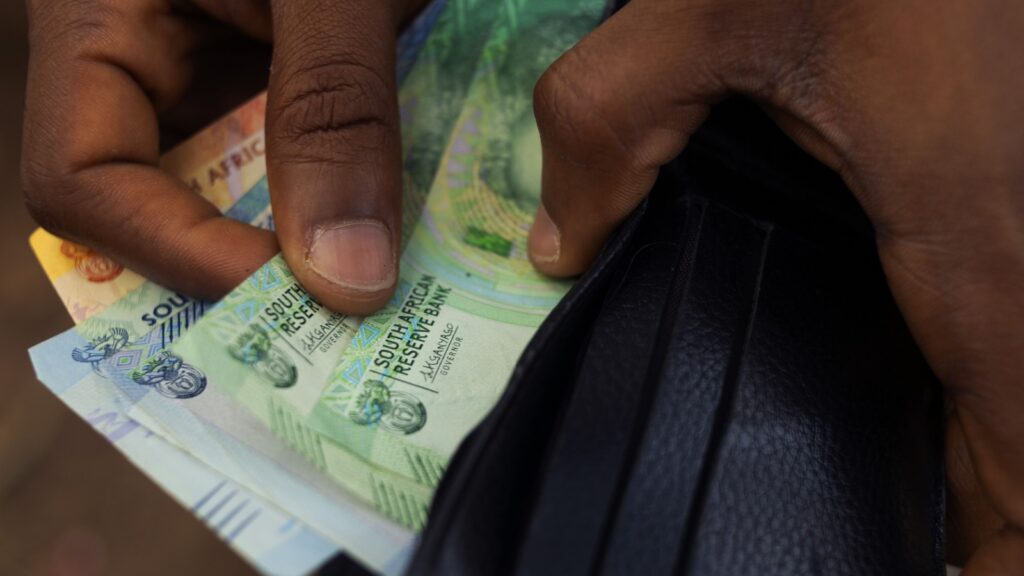
South Africans remain under financial pressure, with 39% expecting to miss at least one bill or loan repayment as inflation erodes household budgets and weakens consumer confidence.
This is according to TransUnion’s Q2 2026 Consumer Pulse Study (CPS), which showed that South African consumers are facing sustained financial strain.
The report revealed that nearly four in ten (39%) respondents expect to miss at least one bill or loan repayment as a result.
High inflation is reshaping how households spend, borrow and save, driving more cautious financial behaviour and softer optimism.
TransUnion’s findings point to a consumer environment which is marked less by recovery and more by ongoing adjustment.
While many households remain financially active, their ability to absorb pressure is narrowing, with affordability constraints increasingly shaping everyday decisions.
“Consumers are still managing, but the margin for error is shrinking,” said TransUnion South Africa’s director of research and consulting, Ayesha Hatea.
“Even modest increases in essential costs are forcing difficult trade-offs, which is reflected in lower confidence and more cautious credit behaviour.”
Household finances remain under pressure, with signs of continued strain. In Q2 2026, 43% of South Africans said their household finances were better than planned, down slightly from 44% in Q2 2025.
At the same time, 40% said their finances were worse than planned, pointing to ongoing pressure rather than a recovery trend.
Forward-looking sentiment softened. Financial optimism declined to 66%, down from 71% in Q2 2025, while pessimism increased to 19% from 15%.
Income expectations also weakened, with 70% of consumers expecting their household incomes to increase over the next 12 months, down from 75% a year ago.
A key driver of this shift is the widening gap between income growth and rising living costs. Only 37% of consumers believed their income was keeping up with inflation, while 41% disagreed.
Inflation for everyday goods, including groceries and fuel, remained the dominant household concern, ranking among the top three worries for 79% of respondents.
This imbalance is increasingly affecting liquidity, which shows the extent to which cost pressure continues to affect monthly cash flow and raises the risk of missed payments.
“Inflation remains the single biggest pressure point for households,” Hatea said. “Even where incomes are rising, essential costs quickly absorb that relief.”
“This makes budgeting discipline and financial awareness more important, because households need to know where they can adjust when pressure rises.”
Households cut spending to stay afloat

In response to these financial pressures, South Africans are making practical adjustments to their household budgets.
More than half of consumers (53%) said they had cut back on discretionary spending such as dining out, travel, and entertainment over the past three months.
A further 28% cancelled subscriptions or memberships, while 24% cancelled or reduced digital services such as wireless, cable TV, or internet.
Debt and savings behaviour also reflect caution. 32% of consumers said they had paid down debt faster, 27% saved more in an emergency fund or stokvel, and 20% saved more for retirement.
At the same time, 14% cut back on retirement savings, 14% increased their use of available credit, and 13% used their retirement savings, signalling that financial resilience is uneven and, for some, deteriorating.
Relief does not seem to be around the corner. Looking ahead, consumers indicated that they expect essential categories to remain under pressure.
Over the next three months, 37% expect their spending on bills and loans to increase, while 33% expect higher spending on medical care and services.
36% expect to increase contributions to retirement funds or investments, although 16% expect to decrease spending in that category.
According to Hatea, these findings show how carefully South African households manage trade-offs.
“Some consumers are still building buffers and paying down debt, while others are drawing on savings or credit to get through the month,” Hatea said.
“That is why the broader picture is one of sustained financial adjustment rather than simple improvement.”






Comments