Woolworths rolling out new stores that you cannot go into


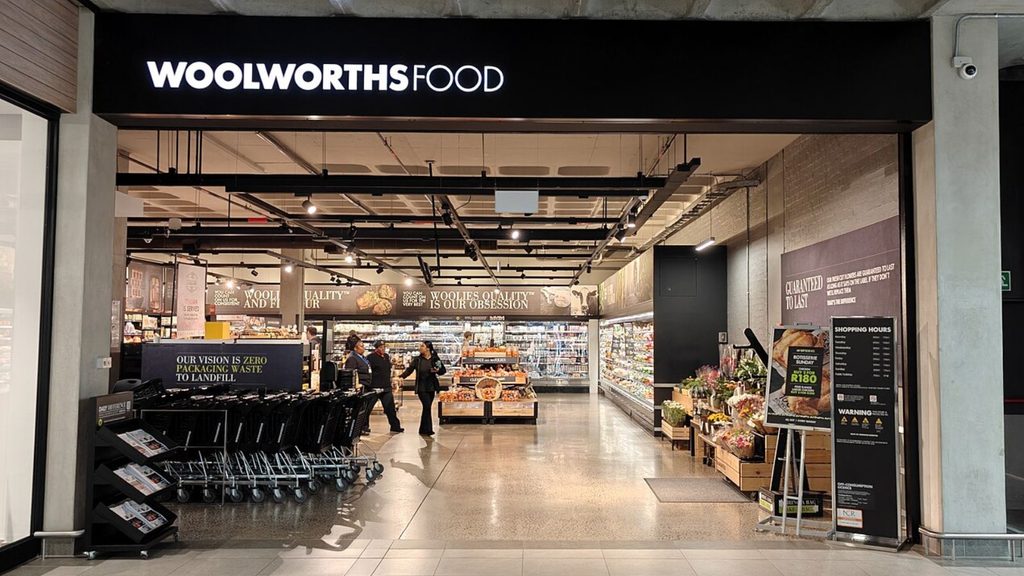
Woolworths is rolling out dark stores, which it calls dedicated fulfilment centres, across South Africa to meet online shopping demand.
This is a growing trend among South African retailers that have traditionally had centralised supply chains serving their stores.
Using stores to fulfil online orders is extremely efficient and does not require the development of large warehouses and fulfilment centres, unlike eCommerce giants like Amazon and Takealot.
Retailers already have warehouses and distribution networks that serve their stores. This can also be leveraged to fulfil online orders.
However, demand for online shopping has outstripped the capacity of traditional stores, without compromising the in-store shopping experience.
This has resulted in retailers opening dark stores to serve online orders exclusively, reducing pressure on traditional stores.
Dark stores are not open to the public and effectively serve as mini-warehouses near customers, designed purely to fulfil online orders.
These stores are often opened in high-demand areas, such as business districts and upmarket suburbs, where existing capacity is limited.
Woolworths opened its first dark store in Cape Town in August 2024 to do this, with the store only supporting Woollies Dash orders.
Online shopping growth has surged since then, pushing Woolworths to invest in meeting demand.
“We are seeing encouraging progress in our online business, supported by continued investment in the capabilities needed to serve customers, including our rollout of dark stores,” the retailer said in its annual report.
Currently, the retailer has one Woolworths Food dark store in South Africa and is planning an aggressive expansion into selected areas.
Dark stores are highlighted as a strategic opportunity to accelerate online growth in South Africa and enhance customer experience, Woolworths said.
The retailer also hinted at improved profitability from opening these kinds of stores, as they can service online customers more efficiently.
Crucially, they also alleviate pressure on existing stores, leaving them to focus on servicing in-store customers to the best of their ability.
Checkers’ mistake

The ongoing trend is not exclusive to Woolworths, with other retailers pursuing dark stores to meet online shopping demand.
Checkers, at the latest count, has six dark stores in South Africa. Four of these are in the Western Cape, one in Gauteng, and another in KwaZulu-Natal.
Pick n Pay currently serves all of its online clothing orders from a dedicated dark store in Johannesburg. It has not disclosed its total number of dark stores.
All of this stems from a mistake Checkers made early on in developing the Sixty60 delivery service that would be so successful.
The rollout of Sixty60 has appeared flawless in South Africa, but Shoprite CEO Pieter Engelbrecht has said the reality has been very different.
“We also make mistakes. It did not start out all that great. We were late entrants to eCommerce and the omnichannel world,” Engelbrecht said at the end of 2025.
Shoprite began rolling out the Sixty60 service using fulfilment centres, mimicking Amazon and other eCommerce giants. This was the accepted way of doing things.
“We realised that it was a mistake. There is one thing Shoprite does: we fail fast. This thing was not going to work like that,” Engelbrecht said.
The retailer thought its store footprint would be a major problem as it expanded into eCommerce, potentially disrupting its money-spinner.
However, it turned this into an advantage by making its stores fulfilment centres. Overnight, Checkers could have 3,000 fulfilment centres close to customers.
“What we thought at the time was our Achilles heel, in terms of our store footprint, became our advantage over time,” Engelbrecht said.
“We are a corporate business, and we own our stores, and we have real-time systems. That enabled us to fulfil deliveries from the store. That is the big difference.”
Over time, Checkers Sixty60 benefitted immensely from Shoprite’s existing distribution network and last-mile efficiency from its stores.
Shoprite’s store network became its greatest advantage, as it could weaponise its footprint and proximity to customers to better serve online shoppers.
 Loading ...



Comments