Clever way housing estates make millions from middle-class South Africans using high electricity prices


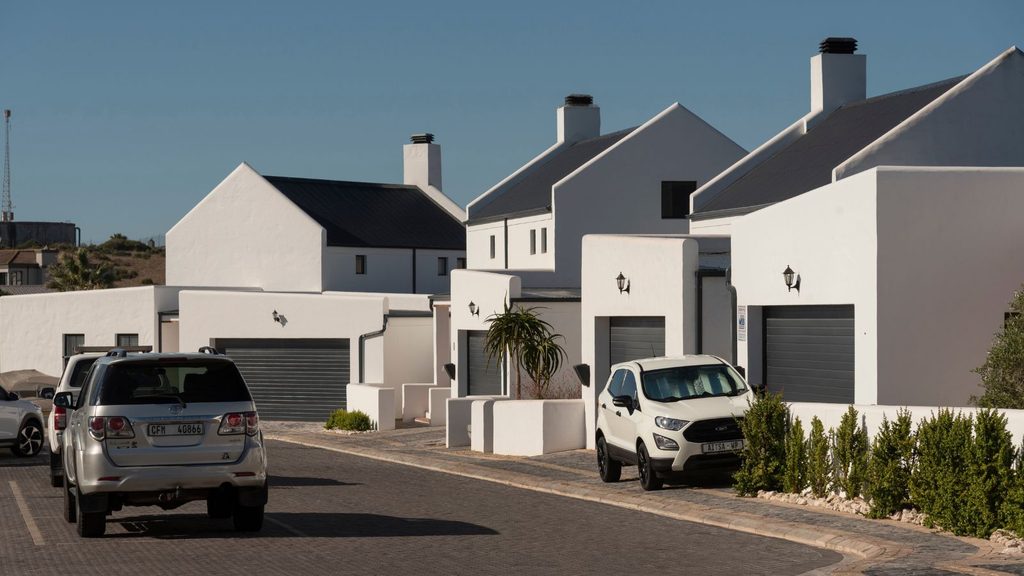
Housing estates in South Africa make millions by buying electricity in bulk and then selling it to residents with arbitrary surcharges.
This is highly lucrative for estate owners, but comes at the cost of residents, as the owners do not necessarily add value or invest in infrastructure on their behalf.
Electricity Minister Kgosientsho Ramokgopa explained how estates make millions by doing this, with the government now moving to ban the practice.
In a media briefing, Ramokgopa explained that the new Electricity Pricing Policy will ban “arbitrary” surcharges to protect middle-income households.
This ban will be implemented by imposing new requirements on the added-value justification that many estates use for these charges.
Ramokgopa said the government carefully considered these requirements as part of the new Electricity Pricing Policy.
This policy is being presented as the first step in efforts to make electricity more affordable by limiting future price increases.
Ramokgopa’s department plans to keep price increases at or below inflation to make it more affordable without necessarily cutting prices.
This will ensure that Eskom’s financial sustainability is not jeopardised, as its focus now shifts to reducing the cost of producing electricity.
Eskom will do this through traditional cost-cutting and savings initiatives and by investing in newer generation technologies that are cheaper to operate.
The launch of Eskom Green is the most concrete step in this regard, with the utility set to invest in its own renewable energy facilities.
“The shareholder expects a financially sustainable Eskom that can fulfil its obligations without treating repeated fiscal support or sustained double-digit tariff increases as its business model,” Ramokgopa said.
This is a difficult ask for a utility that is owed R120 billion by municipalities, which Ramokgopa estimates will reach R450 billion by the end of the decade if left untouched.
“Now that’s unsustainable. It means that Eskom will not continue to be a going concern, and it’s got implications on the cost of electricity,” Ramokgopa explained.
“That which they can’t recover on the debt side, they generally factor it into the tariff regime.”
Gated estate crackdown
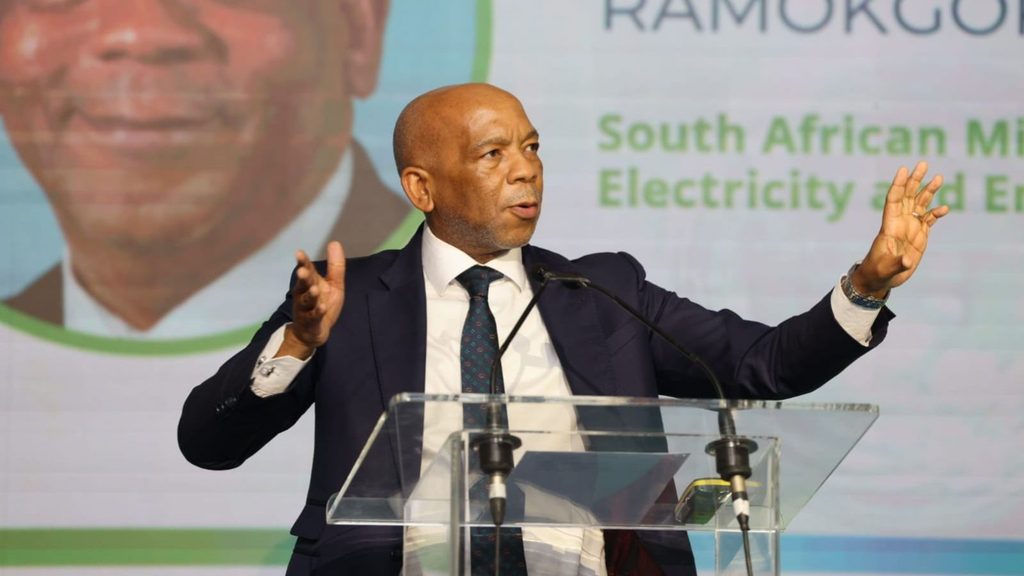
Ramokgopa explained that the government’s efforts to reduce electricity costs are not limited to the country’s poorest.
In fact, a major aim of lowering electricity costs is to encourage investment in heavy industry and manufacturing.
The minister explained that the government has also taken the time to consider the needs of the middle class, which has been squeezed in recent years.
“We make the point in the policy that a lot of the middle class stay in these estates, where the price of electricity is high,” Ramokgopa said.
This is due not only to the tariffs imposed by Eskom and municipalities but also to the surcharges imposed by estate management.
“The estate owners there, what do they do? They buy electricity in bulk and add these surcharges. We say that it is no longer permitted,” Ramokgopa said.
“You can only do that if you are able to show that you added value. If there is something you are doing, then you can justify the additional surcharge.”
Ramokogpa explained that the requirements will be strict, citing infrastructure investment as a potential example.
“If there is something you are doing, perhaps you put in a transformer or a substation to supply the state, then you can show that it is why you are levying an additional surcharge,” he said.
Ramokgopa explained that these initiatives will benefit middle-class consumers, who have historically been among Eskom’s best-paying customers.
Another aim of the new pricing policy is to reduce the economic case for households to invest in rooftop solar and other alternatives to Eskom.
As electricity prices have risen and the costs of solar panels, inverters, and batteries have fallen, these systems have become more economically viable for households.
Thus, they invest in new technologies and reduce their reliance on Eskom, eroding the utility’s revenue.