Lifeline on the cards for South Africa’s steel industry


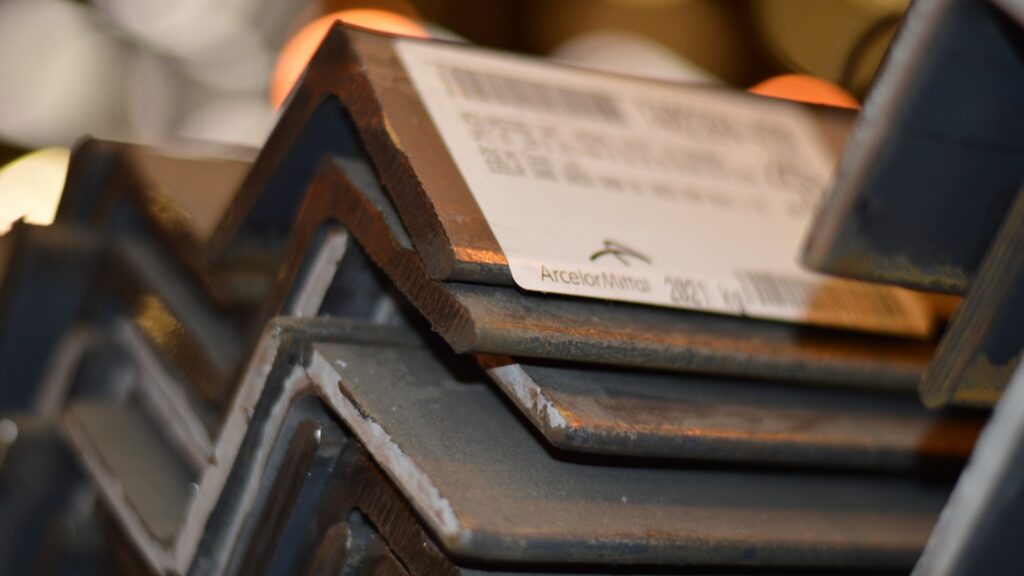
The International Trade Administration Commission (ITAC) has appealed to the World Trade Organisation (WTO) for better protection for South Africa’s steel industry.
In a notice, the WTO confirmed the launch of an ITAC safeguard investigation into whether rising imports of cold-rolled iron and steel products had harmed local producers.
If the investigation finds that the increase in imports is causing harm to local production, ITAC will be granted the power to temporarily restrict steel imports into the country.
This follows ArcelorMittal South Africa (AMSA), the sole producer of these steel products in the Southern African Customs Union, applying to ITAC for an investigation into the matter.
AMSA argued that cheap steel imports had drastically reduced its sales and market share, leading to substantial losses for the company.
Dr Saul Levin, Executive Director of Trade and Industrial Policy Strategies (TIPS), told 702 that this was due to multiple factors, including overcapacity in global steel production.
“The impact of overcapacity of steel is that those that are producing may need to dump it in open markets at below costs,” Levin said. “This is where ITAC would need to do an evaluation.”
“They need to see if these products are coming in at a fair price, or if they are coming in at below cost and negatively impacting our industry.”
This is the latest in a series of actions taken this year to protect local steel production, including an adjustment of steel tariffs in May up to their respective WTO-bound rates.
South Africa’s steel industry has seen a steady decline over the past two decades, with annual steel production falling from 9.7 million tonnes in 2006 to just 4.5 million tonnes in 2025.
Since 2009, more than 25,000 jobs across the country’s steel industry have reportedly been lost as the industry faced challenges, including weak domestic demand and high energy costs.
Downstream manufacturers at risk
While better safeguards against cheap imports could reduce the harm to local steel producers, they could also shift that harm further down the supply chain.
Smaller manufacturers downstream of AMSA have argued that piling restrictions and tariffs on steel imports would significantly raise their production costs and destroy jobs.
“If you’re making cars, for example, and you need the cold-rolled steel that goes into cars, it raises your costs of production,” Levin said.
“The challenge is that our car prices go up, and we then can’t compete with finished cars coming into the market that are fully built up. And we already see that as a particular challenge.”
Similar to steel, South Africa’s automotive manufacturing industry has struggled in recent years against the rise in imports of cheap, fully-built vehicles, particularly from India and China.
Levin explained that more stringent safeguards against steel imports would also affect South Africa’s construction industry, which relies on cold-rolled steel products for building.
And while major steel industry players such as AMSA have argued that cheap imports and global overcapacity are the root cause of the problem, Levin said this is not the whole story.
“AMSA is not a company that has invested significantly in its technology,” Levin said. “They have made some investments over the years, but not sufficient to become a competitive player.”
“They may argue that domestic demand is down, they’ve lost export markets, and there isn’t a case to be made to bring in the most competitive and efficient technologies.”
The result of this is that while higher tariffs on steel imports may protect AMSA, they would substantially raise the costs of the companies to which it sells its steel products and further reduce their competitiveness.
Levin explained that the investigation will involve a detailed analysis of the global pricing of these cold-rolled steel products, which will be contrasted against AMSA’s stated production costs.
Interested parties and stakeholders have until 30 July to submit comments and responses to ITAC’s safeguarding case.





Comments