Good news about US tariffs on South Africa


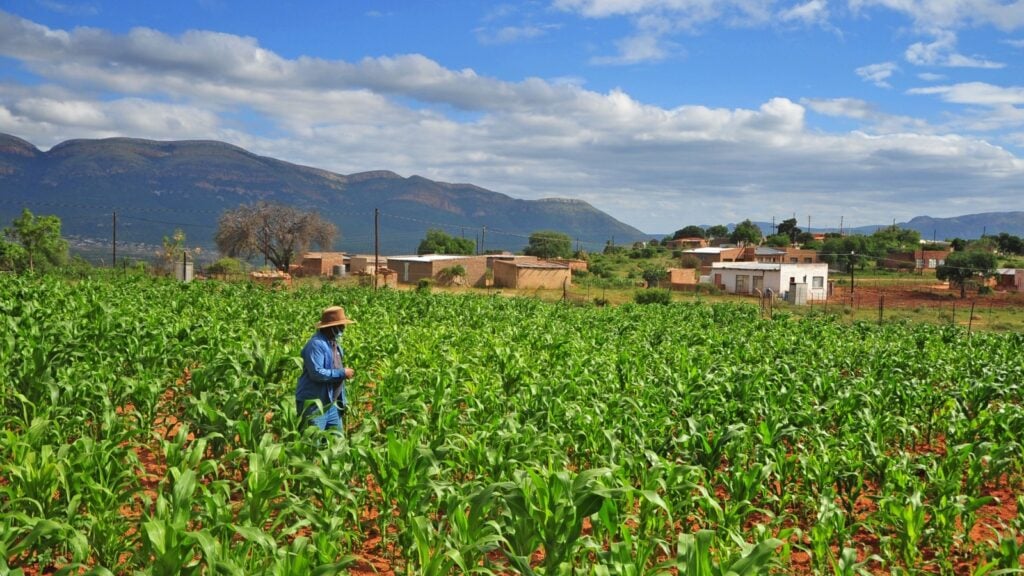
South Africa’s agricultural sector has breathed a collective sigh of relief, as new tariffs being levied against exports by the United States have been deemed a substantial improvement over those implemented previously.
On 24 July 2026, the US implemented new Section 301 tariffs on goods imported from 60 countries, including South Africa.
The tariffs have been touted by the US as an attempt to crack down on the importation of goods, which it alleges were produced using forced labour.
A preliminary investigation carried out by the US reportedly found South Africa’s forced labour prevention measures to be inadequate.
This has landed the country in the highest of the three tiers, subjecting South African exports to a flat tariff of 12.5% alongside countries such as China, Japan, and South Korea.
The imposition of these tariffs is likely to inflict some pain on South Africa’s agricultural sector, with the US accounting for 4% of the country’s agricultural exports in 2025.
However, Agbiz Chief Economist Wandile Sihlobo said the new tariffs are still far less punitive than those previously implemented by the US throughout 2025.
“A rise in tariffs that South Africa faces in the US from 10% to 12.5% is not ideal, but the agricultural sector could still do better given we are coming from a 30% tariff,” Sihlobo said.
“Importantly, the US has raised tariffs for a range of countries, including some of South Africa’s agricultural competitors such as Australia, Peru, and Chile, which are all at these levels.”
Certain agricultural goods are also reported to be exempt from the new tariff structure, including oranges, fruit juices, and nuts.
After the introduction of the “Liberation Day tariffs” in April 2025, South African agricultural exports to the US dropped 11% in the third quarter of 2025 and 39% in the fourth quarter.
The value of South African agricultural exports to the US in 2025 totalled $504 million, down just 3% from the year prior.
According to Sihlobo, this was in large part due to strong export numbers during the second quarter of the year as exporters took advantage of a 90-day pause on tariffs.
“We believe that in 2026, we may see better agricultural export activity as tariffs are far lower than the 30% we faced in much of 2025,” Sihlobo said.
The real reason behind the tariffs

While the US has claimed these new tariffs are a protective measure against the use of forced labour, some have raised questions around the validity of this statement.
Notably, these new tariffs come just a few months after the United States Supreme Court ruled that the implementation of the previous “Liberation Day tariffs” was illegal.
According to Sihlobo, various concerned stakeholders lobbied United States trade authorities in an attempt to oppose these new tariffs.
“The South African government, private sector, and organised agriculture made submissions to the US authorities against this rise in tariffs,” Sihlobo said. “But that message and clarification didn’t find a fertile ear.”
South African officials have campaigned against the US’ claims of forced labour, arguing that it has sufficient laws in place to prevent these practices from occurring.
Meanwhile, experts such as African Prosperity Fund President Yavi Madurai have argued that broader US trade and political interests are the primary reason behind the tariffs.
In an interview with SABC News, Madurai explained that goods produced using forced labour should be completely prohibited from entering global supply chains.
This, she said, would be in line with World Trade Organisation standards, and as such did not substantiate the United States’ argument around forced labour prevention.
“These tariffs have been put in under ‘ad valorem’, which simply means according to value in Latin,” Madurai said. “It’s based on the value of that particular product.”
“They very cleverly have not attached it to specific categories or products, but have said it’s across the board. What that then does is attack those industries by default.”
Madurai explained that export-heavy industries, such as vehicle manufacturing, are the most vulnerable with regard to the economic impact of these tariffs.
This, she said, was intended to limit South Africa’s capacity for exporting certain goods to the US and as a result give the latter country a political bargaining tool.
Madurai advised that South Africa should reduce its dependence on the US as a primary export market and should prioritise the African Continental Free Trade Area instead.
“We cannot put all our eggs in one basket,” Madurai said. “We need to start taking our own advice in terms of how we want to be able to operate in a trade environment.”
“If this hasn’t forced us to look at other markets and start becoming serious about other markets, especially Africa, then I don’t know what else is going to do that.”




Comments