The real reason behind South Africa’s most important city’s collapse


Political division and a lack of accountability culture across Johannesburg’s 13 municipal entities have been identified as key factors behind the city’s financial decline.
Service providers such as City Power, Johannesburg Water, and Pikitup have consistently failed to meet their delivery targets amid their growing financial struggles.
Most of these entities were formed in the early 2000s as part of the city’s “iGoli 2002” restructuring strategy: an attempt to make service delivery more cost-efficient through corporatisation.
The three-year transformation plan, launched in 1999, aimed to address Johannesburg’s financial and institutional crisis following the end of Apartheid.
Stellenbosch University Professor Mark Swilling told 702 that this was seemingly effective at first, due to relatively strong accountability mechanisms in place across these entities.
“The city manager at the time had a committee that ensured all 13 entities reported monthly on their numbers,” Swilling said. “There was strict control over salary levels and board appointments.”
“But over time, politicians of various parties that needed to build their patronage networks realised the boards were very useful ways of rewarding loyalists with nice revenue streams.”
As a result of this, the CEOs and other executives of these entities began to receive inflated salaries while the number of people employed in these positions skyrocketed.
Swilling said the number of senior managers at these entities had increased from around 300 to over 1,000 in recent years, while board appointments had gone from roughly 70 to nearly 400.
Many of the CEOs at these entities receive higher salaries than even the President, with the CEO of the Johannesburg Property Company alone receiving around R5.4 million annually.
Meanwhile, the residents of Johannesburg continue to experience severe shortfalls with regard to the services they expect to receive.
“If remunerating more people at higher levels translated into improved services, one could argue the right people are being brought in, and a good job is being done,” Swilling said.
“But that is not the case. Whether it’s potholes, water not being delivered, or electricity breakdowns, everyday experience shows that this is a system which is not working.”
Scrapping entities is the only solution

Swilling believes that the only way to effectively solve Johannesburg’s current financial woes is to collapse the city’s 13 entities back into one central administration.
He explained that the formation of these entities between 2000 and 2003 was done in accordance with the theory of new public management.
This entails the separation of an administration into multiple entities, with each one having a specific mandate and area of focus, such as City Power for electricity distribution.
In theory, this would allow these individual entities to perform better separately than if they were all operating under one management.
Swilling explained that the theory was first popularised in the United Kingdom and New Zealand during the 1990s, before making its way to South Africa.
“That’s really the root of the problem,” Swilling said. “That theory does not work in South Africa, because it created a context for state capture and corruption.”
“What we need is much greater accountability, and to fold those entities back into a conventional public administration with departments.”
According to Swilling, this more centralised system would allow for much easier control with regard to the rapid increase in infrastructure spending.
The Auditor-General of South Africa (AGSA) appeared in Parliament on 2 June to raise concerns over Johannesburg’s financial management with the Standing Committee on Public Accounts.
The city’s recently tabled R97.1 billion budget for the 2026/27 financial year was described by the AGSA as unfunded and based on unrealistic revenue collection targets, a point which Swilling corroborated.
“The budget that we have now estimates an increase in revenue in the context of declining services,” Swilling said. “That’s not going to happen.”
Swilling warned that Johannesburg’s situation is likely to worsen over time, and said a structural problem such as this requires a structural solution.
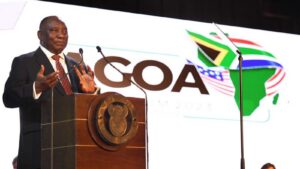
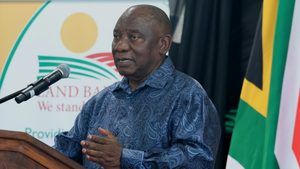
While he believes this was the intention behind President Cyril Ramaphosa’s Presidential Johannesburg Working Group, Swilling said ANC factional politics are likely to impede this.
Instead, Swilling warned that a continued deterioration of services would lead to mass protests, which he said could be the true catalyst needed to enact political change.



Comments