South African taxpayers pay for 3 km of road and only get 1 km


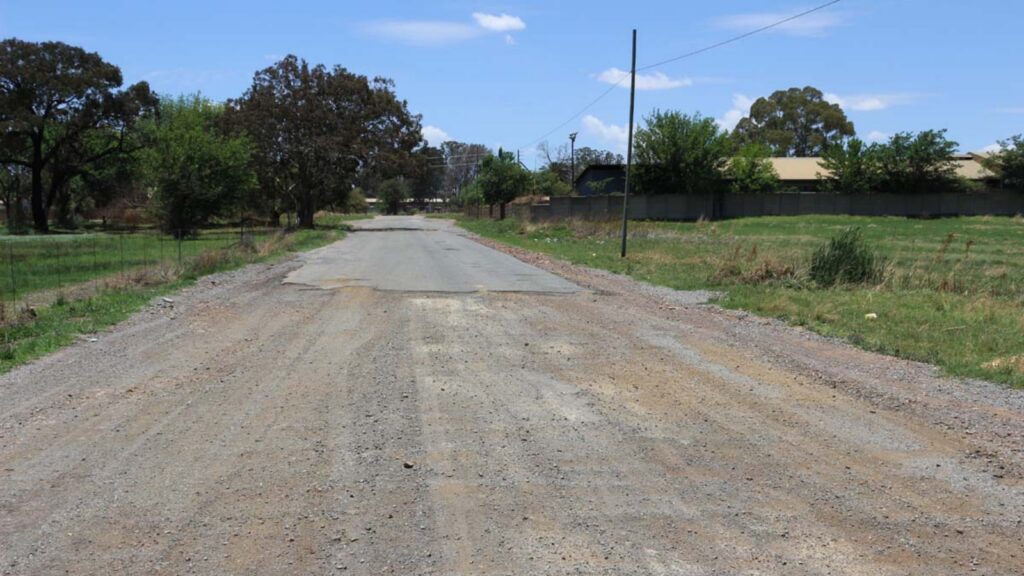
Inefficient spending across South Africa’s municipalities means South African taxpayers are often not getting the full value for the money they spend on services.
On a recent episode of his State Of The Nation podcast, political analyst Mike Sham likened this to the analogy that South Africans pay for 3 kilometres of road but effectively receive only 1 kilometre.
Sham’s guest, Efficient Group chief economist Dawie Roodt, agreed with this analogy and explained that, on average, about 25% of municipal spending goes toward salaries.
This sits towards the lower end of the National Treasury’s guidelines for municipal wage expenditure, which is between 25% and 40%.
However, while it may appear that municipalities are spending little on salaries, Roodt said most of this goes to just a few overpaid individuals, while many positions remain vacant.
“That 25% that goes to the wage bill only goes to a few people,” Roodt explained. “We need more people working at the local authorities, but the people need to be paid less per individual.”
“So we’ve got a few highly paid individuals getting that 25% wage bill. The other 75% goes to other things, such as fixing roads.”
Roodt explained that civil servants make up only around 3% of South Africa’s population, at approximately 2 million individuals, yet their wage bill accounts for 17% of the country’s economy.
With regard to the remaining 75% of municipal expenditure, Roodt said much of this was overpaid due not only to operational inefficiencies but also to cadre deployment and tenderpreneurship.
As a result, municipal funds are regularly funnelled into inflated contracts with service providers that fail to deliver, leading to higher service costs and lower returns.
“Those are the two issues that we need to fix in our local authorities,” Roodt said. “We need to employ more people but pay them less.”
“And we have to award tenders to people that can actually do it in a cost-efficient way, which is not happening at the moment.”
Local governments continue to deteriorate

According to Roodt, inefficient municipal spending is a major reason why many of South Africa’s 257 municipalities have become increasingly dependent on funding from the National Treasury.
While these municipalities were once mostly self-sufficient through their own revenue, it’s estimated that around 40% now rely on Treasury funding to operate.
While this varies across municipalities, the National Treasury, on average, provides South Africa’s local governments with around 25% of their annual revenue.
Last month, the Minister of Finance announced that funding would be withheld from 69 municipalities due to continued financial mismanagement and non-compliance.
This funding was eventually released towards the end of last month, despite the majority of these municipalities still failing to meet Treasury’s financial compliance requirements.
Roodt questioned the timing of this move, suggesting that there may have been an underlying political reason behind the Treasury’s decision.
“Why now?” Roodt asked. “They should have done this a long time ago. Has it got anything to do with the election which is going to happen in November?”
“Are they putting pressure on the municipalities to clean up the streets so that people vote for the right party?”
The issue of inefficient spending is not unique to local governments, with Roodt explaining that it also carries over to South Africa’s state-owned enterprises.
This continued deterioration of services has led to “backdoor privatisation” of many of these SOEs, such as Eskom and Transnet, and even some of their municipalities.
Roodt said this is a good thing for South Africa’s progress and pointed to the Mafube Local Municipality in the Free State as an example.
Since 2011, the private company Rural Maintenance has managed electricity generation and distribution for the municipality, effectively taking over responsibility from Eskom under a 25-year agreement.
“This is the irony of all of this,” Roodt said. “The private sector is taking over all of these things, and it’s happening on a local authority level as well.”
“They are running the place, cleaning up the streets, fixing the potholes, everything. We are actually fragmenting, which is not a bad thing. We are creating a kind of federal system in South Africa.”





Comments