End of Eskom’s 103-year-old monopoly


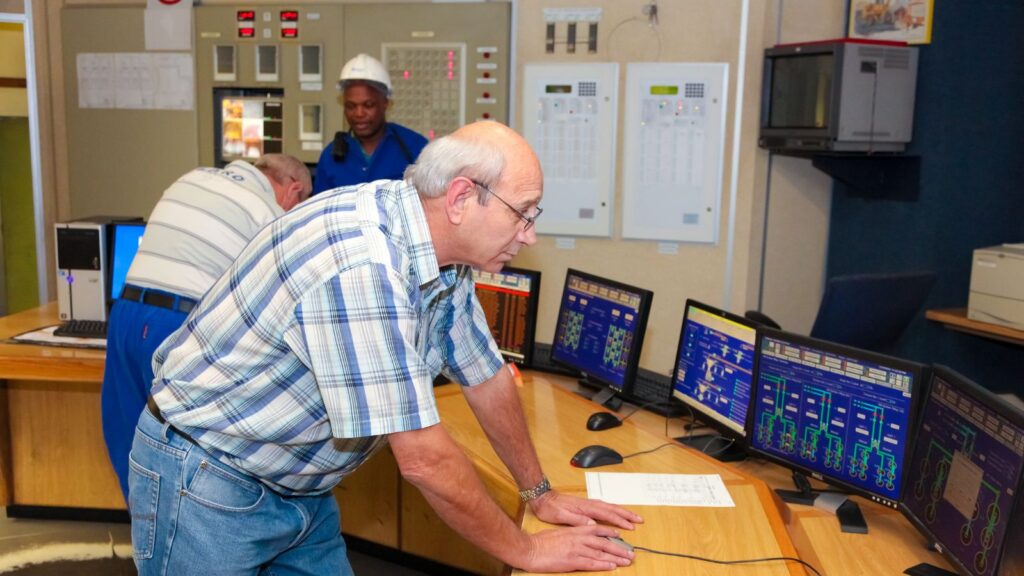
Eskom’s 103-year-old monopoly on the generation and transmission of electricity is coming to an end, with President Ramaphosa making it clear that a competitive market will be created.
This requires the creation of an independent Transmission Systems Operator (TSO), which Eskom supports and will be responsible for unbundling.
However, the utility has repeatedly pushed back against what it calls a rushed unbundling, arguing that it could jeopardise its finances and breach covenants with its lenders.
This is because Eskom’s transmission division, which will be fully separated to create the TSO, is highly lucrative for the company.
Its latest annual report shows that the transmission assets are responsible for R35 billion of Eskom’s earnings. Removing this could jeopardise its financial sustainability.
However, critics said this is part of Eskom’s plan to retain its monopoly in the electricity sector by stifling the creation of a fully independent transmission division.
“The President has made it clear in his State of the Nation Address that Eskom would be unbundled and a competitive electricity market created,” energy expert Chris Yelland told Business Day TV.
“He also made it clear after Eskom and the Electricity Minister indicated that they wanted to retain ownership of the transmission assets.”
“Now, for the third time, the President has made it abundantly clear that there will be an open, competitive market in which Eskom will be one of many players.”
Yelland said there is still uncertainty about the timing of the complete unbundling, which was first announced in 2019, and several delays have already been recognised.
Eskom chairman Mteto Nyati told Bloomberg that it supports an independent TSO to oversee the market and ensure fair access to the grid.
However, he said Eskom wants to only give up ownership of the transmission assets once key financial hurdles have been cleared.
Nyati explained that the transfer could trigger change-of-control provisions in lending agreements, creating accounting issues and potentially upsetting lenders.
End of the monopoly
The creation of an open, competitive electricity market is seen as vital for South Africa’s energy security in the future.
It is also increasingly important to ensure that cheaper forms of energy generation, such as renewables, can come online backed by private investment.
In an open electricity market, households and businesses will be able to choose who they source their electricity from.
Such a market would see Eskom compete directly with private generators for the first time in its history, as it has had a monopoly on electricity generation since its founding 103 years ago.
This may result in the utility’s poor financial health coming back to bite it, as it lacks the luxury of investing heavily in new technology.
“The first thing to say is that Eskom is saddled with a lot of toxic debt. Its own debt and the money that municipalities owe it,” Yelland said.
“When you lump the three units of generation, transmission, and distribution into one, it means that Eskom has problems with raising debt on its own balance sheet.”
Yelland explained that the separation follows the ‘good bank, bad bank’ model, separating profitable assets from toxic ones.
“Putting the transmission business into a standalone entity will allow it to raise capital on its own balance sheet, unencumbered by the toxicity of the distribution debt from municipalities and Eskom’s weak balance sheet,” he said.
This is vital for freeing up the transmission entity to raise debt to invest in upgrading and expanding the grid, enabling new electricity generation to come online.
In particular, it has to expand grid capacity in the country’s Cape provinces, which offer some of the world’s best renewable energy generation potential.
Yelland and other energy experts are concerned that Eskom may be outcompeted by private players, which can offer cheaper, more reliable power.
However, energy expert Matthew Cruise said that Eskom cannot be allowed to fail either, creating a tricky balancing act for the government.
“Eskom has made the argument recently that self-preservation is not immoral and that the utility has to still continue to be a going concern,” Cruise said.
“The utility cannot be allowed to liquidate. It will be an issue for South Africa if it cannot pay its workers or suppliers.”
Cruise said that if it ever comes to that, Eskom’s workers will strike, and there is a good chance that South Africa will have a complete power outage.
“I agree with that. Eskom has to remain a going concern, and it is a delicate balance because it has to be unbundled.”
Cruise said that South Africa can no longer have all its eggs in one basket with regard to electricity supply, as it needs diversity of generation.



Comments