Pain is here for South Africans amid record-high petrol and diesel prices



Up until now, South African consumers have been partially shielded from the full effect of higher petrol and diesel prices.
However, from here on, it will become disproportionately painful for consumers as prices of goods and services rise faster than the typical wage increase.
This is the view of Standard Bank’s head of South Africa macroeconomic research, Elna Moolman, who explained how the impact of higher petrol and diesel prices has been softened up until now.
South Africa’s petrol and diesel prices hit another record high on Wednesday, 7 October, following a R3.12-per-litre increase for petrol and a R3.24-per-litre diesel price increase.
These increases were necessary due to rising oil prices and a weakening rand, which created a perfect storm for fuel prices.
This brought fuel prices to their highest levels in South African history, with 95-octane petrol breaching the R30-per-litre mark for the first time ever.
The prices announced for October surpassed the country’s previous all-time high seen in June 2026.
Therefore, while October ushered in a record-high, fuel prices in South Africa have been elevated for months, ever since the outbreak of the war in Iran.
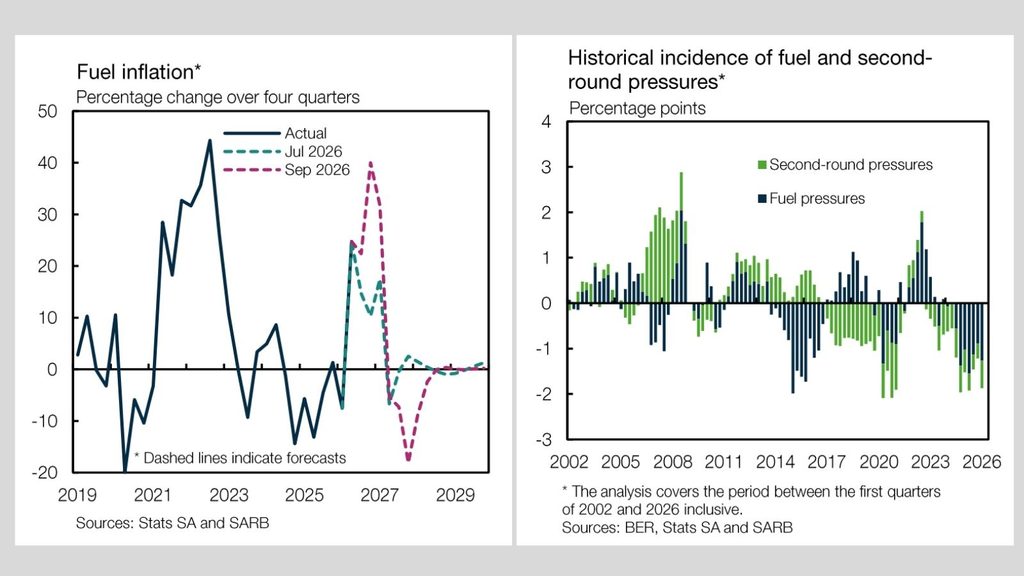
Moolman explained that August’s inflation data showed that fuel prices were 20% higher than a year ago.
However, she said the impact on consumers has been somewhat counteracted by softer increases in other types of spending.
“In August, for example, food prices were less than 1% higher than a year earlier,” she pointed out.
“So, the total basket of goods and services consumed by the typical South African was about 4.5% more expensive than a year earlier.”
Consumers could better absorb this increase because it is broadly in line with wage increases, and in some cases slightly below wage increases.
“Therefore, the impact of these fuel price increases has been somewhat diluted by other increases that were softer,” Moolman said.
However, she warned that this is set to change in the coming months.
‘Disproportionately painful’
Moolman said that, from here onwards, it will become “disproportionately painful for consumers”.
This is because the total basket of goods and services consumed by most South Africans will likely increase by more than the typical wage increase following the October fuel price increase.
“And so we expect to see significant pain for consumers in the coming months,” Moolman said.
Stanlib chief economist Kevin Lings has issued a similar warning, predicting that inflation will rise beyond 5% in September.
He explained that this may prompt the Reserve Bank to hike interest rates again, as it becomes concerned about the second-round effects of higher fuel prices.
This will make the cost of living even higher for South African consumers, as they contend with higher inflation, fuel prices, and interest rates.
In its October 2026 Monetary Policy Review, the Reserve Bank warned that if current interest rates fail to contain these brewing price pressures, inflation could increase further.
This, the central bank said, will hurt consumers and businesses, requiring “significant increases” in the policy rate to bring inflation back down to target.
“The actions of the MPC are akin to firefighting: it is best to extinguish a fire before it gains its full force, otherwise it becomes more challenging to tame,” the bank said.
“Similarly, the committee has had to act to prevent the energy shock from creating a persistent inflation challenge.”
The Reserve Bank further warned that the risk of second-round effects stemming from the global energy shock has increased as the shock has persisted.
It said that monetary policy cannot wait for clear evidence of second-round effects, given that policy operates with long lags.
“Once evidence shows, it means policy is late. That would be a costly policy mistake. Inflation is a regressive tax; it hurts the least well-off citizens the most,” the bank said.
Currently, the Reserve Bank forecasts that inflation will average 4.4% in 2026 and only return to the 3% target by 2029.






Comments