R200 billion disappears into thin air in Johannesburg


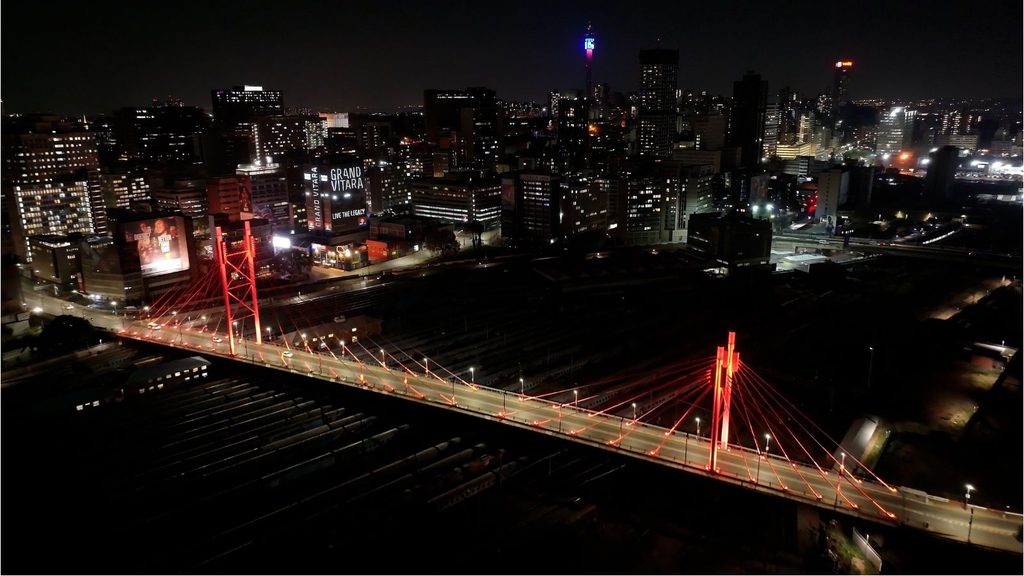
City Power has an infrastructure and investment backlog of R150 billion to R200 billion, which has been built up over years of inadequate maintenance and development.
Such a backlog should not exist and indicates that the money has instead disappeared into other areas of spending, governance expert Professor Alex van den Heever said.
These areas of spending include municipal salaries and short-term consumption, which do not help develop the city’s economy in the long run.
Van den Heever told Newzroom Afrika that the backlog is unlikely to be tackled anytime soon as City Power’s financial health continues to deteriorate.
City Power is the electricity distributor for the Greater Johannesburg region, with it responsible for powering a large chunk of the South African economy.
The utility does not generate its own power. It buys bulk electricity from Eskom, which is then distributed around the city.
This makes its main job the operation and maintenance of 19,000 km of power lines, high-voltage substations, and transformers around Johannesburg.
In theory, this model was expected to make electricity distribution more efficient by centralising it and giving the organisation more resources to improve revenue collection.
However, 25 years after its creation, the opposite is true: electricity distribution is collapsing in parts of the city, and financial mismanagement has left the network unmaintained.
City Power has run huge deficits in recent years, with it accumulating an estimated overdraft of R19.1 billion at the end of the most recent financial year.
This was driven by expenses outpacing revenue. As electricity prices charged by Eskom have risen, City Power’s billing system has collapsed.
Van den Heever estimates that City Power runs a R3 billion to R4 billion deficit with Eskom every year, with the City of Johannesburg and the central government stepping in to help it pay.
In other words, City Power is paying Eskom more for electricity than it can collect from its inefficient billing system.
The R200 billion that disappeared

City Power has major challenges in operating its billing system, which has resulted in rising non-payment in the city.
This is coupled with illegal connections where individuals use electricity from the grid without paying for it, and overload equipment.
Ultimately, this creates a deficit owed to Eskom. However, Van den Heever said there is a large portion of money that is lost to corruption and fraud.
“A large portion of the deficit is corruption. There is corruption in almost every aspect of the city. There is no reasonable explanation for what we are seeing,” he said.
This is best seen in City Power’s infrastructure and investment backlog, which Van den Heever estimates at between R150 billion and R200 billion.
“That backlog should not exist. That money should have been steadily invested in infrastructure maintenance and upgrades. The shortfall means that money has disappeared.”
Van den Heever describes this money as having disappeared because historical funds should have been allocated to infrastructure maintenance.
Ideally, the utility should have an investment account where money is accumulated to upgrade infrastructure and expand access to electricity.
At City Power, there is a lack of oversight over key officials and operations, resulting in the looting of municipal funds that should be allocated towards infrastructure.
Van den Heever said there are many examples of unvetted officials operating without any accountability. “These people can get away with murder, and there are no consequences.”
He explained that the earmarked funds for investment are subject to political interference and are not ringfenced, making it easy for corrupt individuals to loot.
“It all stems from the fact that procurement structures are not insulated within the city itself, and in City Power, they are vulnerable to capture and manipulation,” Van den Heever said.
“There is no effective supervision of what happens there, so the money basically does not hit the ground, and that is why you have outages.”
City Power suffers from severe shortages of equipment spares and personnel, making repairs impossible and leading to neglected maintenance.






Comments