Social unrest warning for South Africa


South Africa’s law enforcement agencies, plagued by corruption and mismanagement, are increasingly unable to contain widespread organised crime and rising social instability.
This may be exacerbated by the ANC’s weakening grip on power, with its patronage networks fracturing as the party appears to be losing South Africans’ support.
The party itself is gearing up for an intense leadership battle at its next elective conference in 2027, with no clear frontrunner emerging as many contenders are marked by scandal.
As a result, the ANC is also becoming increasingly preoccupied with its succession race, rather than focusing on leading the country as the largest member of the Government of National Unity (GNU).
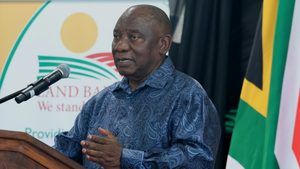
President Cyril Ramaphosa has increasingly become a lame duck, failing to exercise executive authority over parts of the state, particularly its law enforcement agencies and the military.
The President and the government have taken little action to address South Africa’s economic crisis and patch up the country’s relationship with the United States.
Instead, they constantly search for consensus to ensure that any decision made is supported by the majority of the ANC and the GNU.
Rising political instability is coupled with increased social discontent, as communities protest poor service delivery.
Some parts of Johannesburg have come to a standstill as residents demand water, with some areas going nine weeks without the precious resource.
Ramaphosa himself has warned that water shortages and widespread corruption within the sector are likely to result in social unrest.
“These factors make for what is called a perfect storm, where dry taps, broken infrastructure, and poor management of water resources at local government level is fuelling growing public discontent,” he said.
“Grievances with water and sanitation delivery are behind a number of social protests across the country.”
Electricity Minister Kgosientsho Ramokgopa has also warned that rising electricity prices may be met with increasingly intense resistance from communities, particularly those that have connected illegally to the grid.
Law enforcement losing control

The Centre for Risk Analysis’ (CRA) latest Risk Alert outlines a worrying trend of declining capacity within law enforcement and, in particular, an inability to counteract organised crime.
This is only made worse by the ongoing war for control of the police, with Police Minister Senzo Mchunu accused of having substantial ties to the criminal underworld.
The rise in organised crime not only threatens to create widespread violence and social unrest, but is also becoming increasingly targeted towards business leaders.
Allied Universal, the world’s largest security company, flagged a 28% rise in physical threats against top company executives in South Africa in its latest World Security Report.
The company pointed out that South African corporates are among the best prepared globally to counter such threats.
G4S Africa, on the other hand, noted that over 75% of South African companies have reported being targeted with criminal violence last year.
This all ties into South Africa’s ranking in the top ten countries for organised crime, with the country ranked 7th on the 2023 Global Organised Crime Index.
South Africa is only ranked behind Myanmar, Colombia, Mexico, Paraguay, the Democratic Republic of the Congo, and Nigeria.
The index shows declining state resilience to organised crime, with law enforcement scoring 4.5/10 for its efforts to combat this type of crime.
Government’s declining capacity to contain organised crime creates space for malign actors to fill these vacuums, the CRA warned.
The organisation cautioned that this may be exploited by the ANC’s extensive patronage networks to destabilise the country in the coming years.
“As ANC dominance wanes, its patronage networks fracture. Groups reliant on state contracts may resist challenges to their illicit interests through intimidation and violence,” it said.
The CRA pointed to various mafias in the construction, water, and transport sectors as evidence of these patronage networks and their willingness to use violence to achieve their goals.
“As local government elections approach, violence against businesses and political actors is likely to rise, especially where state tenders are contested,” it said.

Comments