Trouble ahead for South Africa’s property market


While the absence of a VAT hike in Budget 3.0 was welcomed, experts warned that lower GDP forecasts, rising fuel costs, and reduced Home Affairs funding could weaken consumer confidence and property market momentum.
On Wednesday, 21 May, Finance Minister Enoch Godongwana tabled the third version of the National Budget for 2025/2026.
Previous versions of the budget were heavily criticised for increasing VAT. The second version of the budget decreased the VAT increase, and it was scrapped altogether in the latest version.
Dr Andrew Golding, chief executive of the Pam Golding Property group, explained that this is encouraging for home buyers acquiring new-build units in property developments which incorporate VAT in the purchase price.
First-time and other home buyers embarking on property acquisitions will also benefit, as there are a number of VAT-inclusive services associated with the purchase of a home.
Positively, Golding said that the Budget has also retained the 10% increase in the threshold for transfer duties, which means that properties up to R1.21 million are exempt.
This is meaningful for first-time buyers as the average price paid by a first-time buyer from January to April 2025 was R1.245 million, according to a home loans provider.
However, while this comes as a positive shift for the country’s property market, which showed positive signs of recovery, other aspects of the budget have been met with less optimism.
“While I welcome the fact that we avoided a VAT increase, this budget does signal some underlying challenges that could temper market momentum,” said Adrian Goslett, Regional Director and CEO of RE/MAX of Southern Africa.
According to Goslett, one of the most sobering updates in this re-tabled budget is the revised GDP forecast of just 1.4% for 2025, down from the earlier projection of 1.9%.
“This weakened outlook inevitably affects consumer confidence and employment prospects – two essential drivers of real estate demand.”
Another downside is the proposed fuel tax increases which will go towards the shortfall left by the cancelled VAT hike. Starting in June, the fuel price levy will increase by 16 cents per litre for petrol and 15 cents for diesel.
“Although this measure is more targeted than a blanket VAT increase, it still filters through to household budgets. Rising fuel costs increase the cost of transport, food, and services – all of which erode disposable income,” Goslett said.
“This means less room in the budget for mortgage payments, maintenance, or savings for a deposit and/or transfer costs.”
South Africa isn’t out of the woods

In addition to these factors, Goslett said he is also concerned about the scaling down of modernisation funds for Home Affairs.
“This could have very real implications for the property market. Home Affairs plays a pivotal role in property transactions.”
“Delays or inefficiencies in this department can slow down transactions, frustrate cross-border investment, and erode confidence in the ease of doing business in South Africa.”
He explained that modernising Home Affairs is not just a tech upgrade; it is vital to make South African property and financial systems more agile and trustworthy.
Despite these concerns, Goslett acknowledged the effort made by the National Treasury to present a measured and politically workable budget.
“The property sector thrives on policy certainty, consumer confidence, and economic momentum. Budget 3.0 offers some of that – but the warning signs in the macroeconomic data remind us that we’re not out of the woods yet.”
“For our industry to flourish, we need to go beyond avoiding harm. We must create the conditions that enable more South Africans to become homeowners.”
That means continued infrastructure investment, service delivery improvements, financial sector confidence, and administrative efficiency.
“This new budget offers some hope in this regard, but I will be watching closely over the coming months to see how these fiscal plans are implemented.”
 Loading ...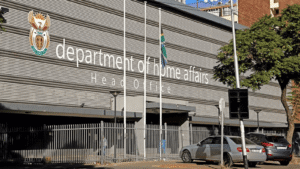




Comments