South Africa had a second rand that saved the country from bankruptcy


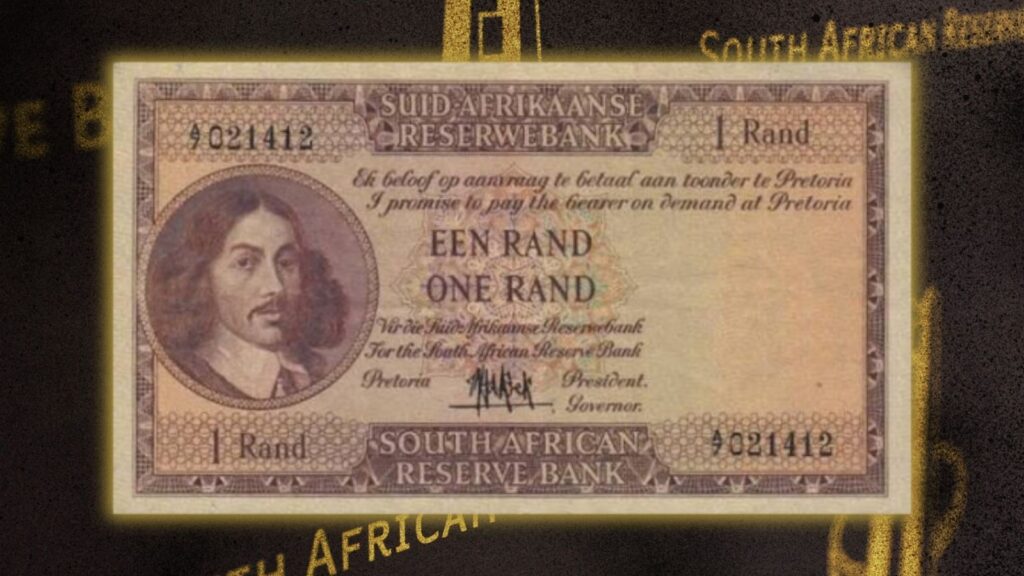
The South African Reserve Bank introduced a second currency, termed the ‘financial rand’, in 1985 to prevent large capital outflows from bankrupting the country.
This was the most visible form of the government’s capital controls, designed to keep money in South Africa and prop up state finances.
Other methods of capital controls included strict limits on how much foreign exchange individuals could buy and how much South African companies could invest outside of the country.
This distorted the local economy and created a situation where a handful of ‘megacorporates’ dominated South African business.
As they could not invest offshore, companies such as Anglo American and South African Breweries (SAB) had to find ways to deploy their capital in South Africa.
This resulted in Anglo American controlling half of the JSE, and SAB owning a food retailer, OK Bazaars.
The situation where strict capital controls were required was a perfect storm that nearly bankrupted the South African government.
In 1985, South Africa was facing a debt crisis, capital flight, and increasing global isolation as the apartheid government refused to entertain political reforms.
The country was in a state of emergency amid widespread protests and social unrest. This was turbocharged by former President P.W. Botha’s infamous Rubicon Speech on 15 August 1985.
This speech was the turning point, as it destroyed any confidence from business and investors in political reform and the strength of the South African state.
The state’s hardline saw foreign governments intensify their sanctions on the country, leaving South Africa isolated and unable to access global capital markets.
In July 1985, Chase Manhattan had refused to roll over its short-term loans to South African businesses and banks. Other international banks followed suit.
These banks demanded the immediate repayment of short-term loans, resulting in a cash crunch. South Africa owed $24 billion in foreign debt and lacked the reserves to pay it.
After the speech, the rand weakened by 20% and the government shut down the JSE and suspended all forex trading for three days.
Confidence collapsed. Foreign investors and local businesses sought to withdraw their money from the country as the rand was becoming worthless.
With the government unwilling to adopt political reforms, the Reserve Bank faced the biggest crisis in its history. It had to step in, or South Africa’s economy would collapse.
The financial rand

The Reserve Bank’s response was to institute strict capital controls, which are commonly referred to as exchange controls in South Africa.
South Africa has a rich history of limiting access to foreign currency for fear of a rapidly weakening rand, with a “Blocked Rand” in place since the 1970s.
Prior to 1985, the country gradually weakened these controls to restore order in the local economy and boost growth.
However, the 1985 crisis required these controls to be tightened even further and enforced more forcefully, with a ‘financial rand’ operating alongside the ‘commercial rand’.
Foreign investors could only sell their local investments for the financial rand, not the commercial rand, thereby protecting the value of the currency used by South Africans.
This system ensured that the commercial rand, which was used for everyday transactions such as buying milk and eggs, would be shielded from the rapid outflow of capital, which would typically weaken it.
The Reserve Bank was unwilling to see a disorderly collapse of the rand, which would result in the government defaulting and consumer purchasing power plummeting.
As such, foreign investors could only buy and sell the financial rand, which occurred within its own, closed system.
When a foreign investor sold a South African asset, they could not convert the proceeds into US dollars at the standard rate. They were forced to sell those rands to another foreign investor seeking to acquire a local asset.
The pool in which these transactions occurred was fixed. Capital could only change hands. It could never leave the South African banking system and weaken the rand.
The financial rand and commercial rand initially had the same value. As foreign investors tried to exit, the financial rand weakened significantly.
Exchange controls remain

As political reforms took place and investors regained confidence in South Africa, there was no real need for a financial rand.
It had become a barrier to increased foreign investment, with the fixed pool effectively limiting the amount of investment in the economy.
The first Finance Minister of a democratically elected government, Christo Liebenberg, began plans in 1994 to end the financial rand.
“Over the past year, and particularly since the Government of National Unity came to power in 1994, South Africa’s position has changed dramatically,” Liebenberg said in 1995.
South Africa no longer faced intense economic sanctions, investment restrictions, and loan withdrawals. It was plugged into global capital markets.
This resulted in significant inflows into South Africa, enabling the Reserve Bank to redeem foreign borrowings and build up its reserves.
The value of the financial and commercial rands began to converge as a result, ending the need for the dual-currency system.
As such, Liebenberg announced the return to a single exchange rate on 13 March 1995 that would be determined by the free market.
“The abolition of the dual exchange rate system is the first step of the government in its pursuit of full financial liberalisation and will remove yet another obstacle to new investment,” he said.
Liebenberg promised a gradual relaxation of exchange controls applicable to residents, with the government planning to give them greater freedom in accessing foreign currency.
However, 30 years later, South Africa still has significant exchange controls to prevent a disorderly collapse of the rand.
Individuals are limited to taking R2 million a year out of the country without express approval from the Reserve Bank. This covers travel, gifts, and offshore investments.
To invest R10 million offshore per year under the Foreign Capital Allowance, individuals must provide SARS with five years of asset and liability data to obtain approval.
Companies are limited to taking R1 billion out of the country without approval for their offshore business investments and operations.
Crucially, foreign nationals face nearly no exchange controls, facilitating investment in South Africa and the repatriation of profits.
The government published the 2026 Capital Flow Management framework to relax these exchange controls and fundamentally overhaul the country’s surveillance system.
It is looking to shift from a ‘negative’ framework where everything is banned and requires approval to a ‘positive’ regime where transactions are generally allowed unless explicitly capped.





Comments