South African investment CEO says Johannesburg became so bad that he lost 70% of his house’s value


36ONE Asset Management founder and CEO, Cy Jacobs, said that the value of his Johannesburg house has lost approximately 70% in real terms since 2010.
This decline in house prices was caused by the deterioration of infrastructure and services in the City of Johannesburg, which lowered demand.
He shared his views on Johannesburg and the city’s political race during a discussion with Alec Hogg on Biznews.
Jacobs is one of South Africa’s most successful and respected asset managers, consistently outperforming the market.
Under his leadership, 36ONE grew into a leading boutique asset management firm managing hedge funds, unit trusts, and segregated institutional mandates.
High-profile asset managers like Jacobs typically keep a low profile, especially when it comes to politics.
However, he broke this mould by backing Helen Zille’s 2026 campaign to become the executive mayor of Johannesburg.
He congratulated her on her campaign efforts, saying that at 75, she left her family, friends, and grandchildren in Cape Town to come and fix Johannesburg.
He said that the DA, as part of the campaign, has cleaned up suburbs, resurfaced roads, and brought water infrastructure projects to neglected townships.
“Residents and voters owe her a big thank you. We also owe Johannesburg, which is why people must vote for change next week,” he said.
Jacobs said that if Zille became mayor, business leaders would throw their weight behind the administration.
“They will be willing to invest alongside a Zille-led DA administration to fund initiatives, bring in skills, and professionalise municipal structures to turn the city around,” he said.
House prices in Johannesburg
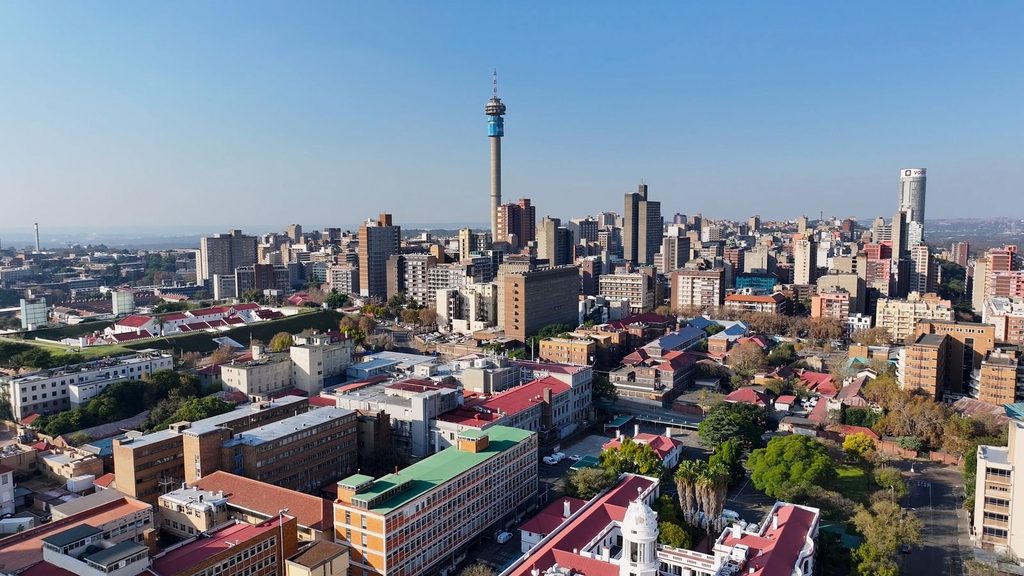
Jonathan Kohler, CEO of Landsdowne Property Group, previously said that Johannesburg’s residential property market has faced stagnation, with prices remaining at 2010 levels.
He explained that the lack of capital appreciation resulted from declining demand driven by deteriorating infrastructure, rising crime, and high unemployment.
“We are selling properties for the lowest prices we have ever sold them, and it is across the board, from affordable to high-end properties,” Kohler said.
Jacobs concurred, sharing details about his own house in Johannesburg, which he bought in 2010.
“I doubt that I can get the same price that I paid for my house in 2010 if I try to sell it today,” he said.
“So, I experienced 16 years of negative growth. Imagine what that is on an inflation-adjusted basis. I’ve most likely lost 70% of my home’s value.”
Jacobs said that is why, over the last 15 years, he has advocated that people in Johannesburg not buy a house.
“You’re buying an asset that’s depreciating. It is better to rent a house and invest the rest of your money in passive ETFs in global markets,” he said.
However, it is not all doom and gloom. Many people believe that the Johannesburg property market has bottomed out and that demand is growing.
Should Zille be elected mayor, property experts believe the market could experience rapid growth amid optimism that the city will be turned around.
“I speak to real estate agents around Johannesburg, and there has been renewed interest in the last few months,” Jacobs said.
“The gap between the Western Cape and Gauteng has got so large, it’s made some people revisit having to live in the Western Cape.”
Like many others, Jacobs said that the property market in Johannesburg has probably bottomed out and that owners may see real growth in the coming years.




Conversation
1 commentsThis means there are some CoJ property owner whose bond is now larger than the value of their property…. meaning the debt is no longer covered by sale of that collateral.
Our banks are holding bond books that are poorly secured.
Some “re-adjusment” must be expected.
Meanwhile, in properly run municipalities around SA, property value is appreciating, and bonded value is becoming cheaper in real terms.
Thank you ANC!