WesBank’s Chinese car warning, and Trump’s $1 trillion dividend


The rand was trading at R16.18 against the US dollar on the morning of Friday, 11 September 2026, significantly weaker than the day before.
Equities on the JSE posted steep declines, with the All Share Index down 1.31% and the Top 40 Index down 1.41%.
South Africa’s Q2 current account deficit widened to R205.5 billion, or 2.6% of GDP, as the country’s trade surplus contracted sharply to R146.4 billion from R428.8 billion.
July mining production shrank 7.5% year-on-year and 1.9% month-on-month, while manufacturing output rose 1.1% annually and 2.2% monthly.
United States indices fell, with the S&P 500 down 0.58%, the Dow Jones down 0.60%, and the Nasdaq down 0.65%.
Higher-than-expected August PPI of 5.4% year-on-year pushed 10-year Treasury yields toward 5%, raising Fed rate hike expectations to 70%.
European markets declined after the European Central Bank announced a 25 bps rate hike to 2.5%, with the STOXX 600 falling 0.7% to its lowest point since 8 July.
In Asia, risk appetite remained under pressure from higher energy prices, elevated US-bond yields, and tighter policy expectations.
The Bank of Japan is expected to hike interest rates by 25 bps up to 1.25% next week, which would be its highest level in 31 years.
In the commodities market, Brent crude oil reached over $106 per barrel, while gold posted its third consecutive weekly decline to $4,302.68/oz.
On Friday morning, the rand was trading at R16.18 to the US dollar, R18.79 against the euro, and R21.86 against the British pound.
Important finance and investing news
WesBank’s Chinese car warning: WesBank has warned that the entry of cheap new Chinese cars into the South African market has created significant pricing pressure on the country’s secondhand vehicle market, with motorists choosing the competitively-priced Chinese models over secondhand cars. [BusinessDay]
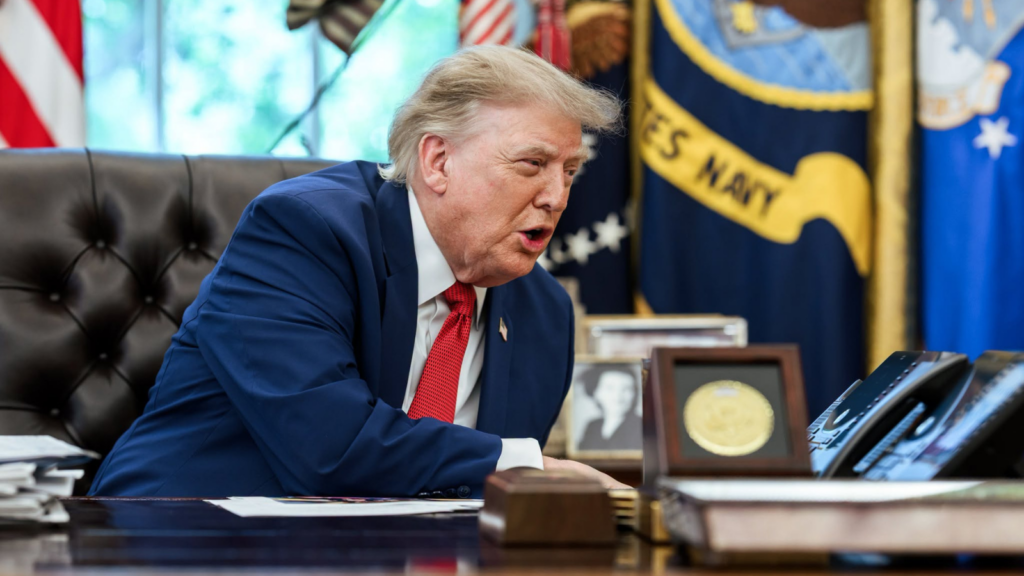
Trump’s $1 trillion dividend: The total cost of US President Donald Trump’s $5,000 dividend promise to Americans is estimated to reach over $1.2 trillion, which would be significantly more than the country spends on its national defence every year. [Wall Street Journal]
US Treasury falls short: The United States Treasury bought back $5.19 billion worth of 10- to 20-year securities during its buyback programme on Thursday, falling short of the $6 billion maximum it promised and pushing yields on 10-year notes up 11 basis points to 4.95%. [Yahoo Finance]
Iran dodges oil sanctions: Iran has managed to skirt around sanctions against its oil sales by exchanging it for credit on Chinese imported goods. An estimated $2 to $2.5 billion passed through special purpose vehicles over the last year, while the Chinese Foreign Ministry claims they are unaware of the deal. [Reuters]
Fuel price hikes on the cards for South Africa: KPMG Lead Economist Frank Blackmore has said that South Africa’s limited refining capacity and its reliance on imported fuel products could leave motorists facing further steep fuel price increases as global oil costs continue to rise. [EWN]

Comments