Reserve Bank Governor warns of forgotten way the United States can really hurt South Africa


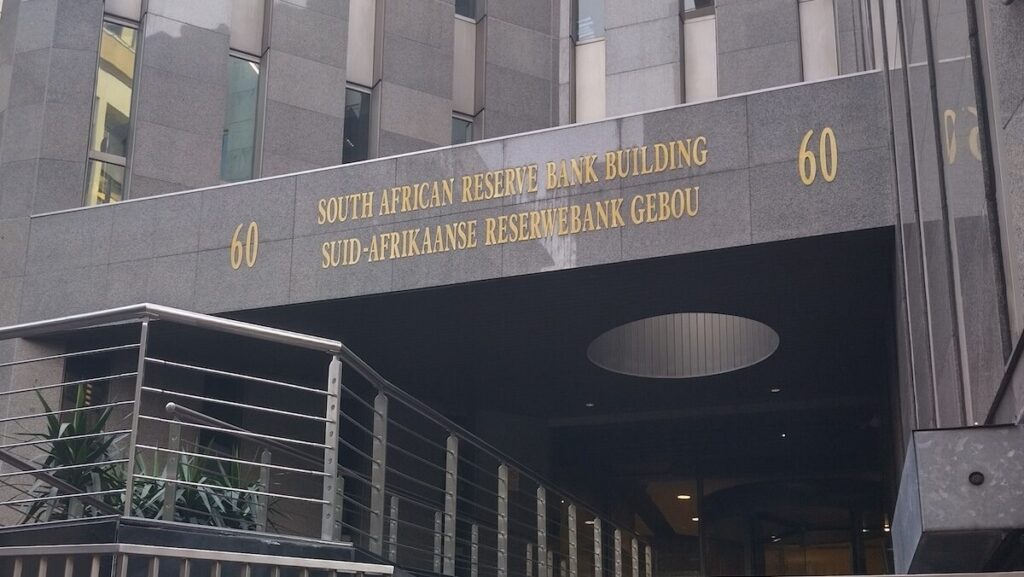
Reserve Bank Governor Lesetja Kganyago said the extreme valuations of artificial intelligence (AI) companies could see many South African investors experience a bear market for the first time.
The governor warned that there is plenty of room for gravity to reassert itself when it comes to these companies, and for stock prices to decline.
This warning was shared in Kganyago’s recent address at the PSG Think Big Series held in Sun City on 6 May 2026.
In this address, the governor shared two major warnings of note for investors: the rapid growth of unregulated private credit markets and the high valuations of AI companies.
Kganyago pointed out that private credit markets have gone from “almost nothing” 20 years ago to now being worth $2.5 trillion (around R41.07 trillion) globally.
While not as large as in the United States, South Africa’s private credit market has experienced rapid expansion over the past few years.
Webber Wentzel’s partners Michael Denenga and Gitte Truter previously explained that private credit in Africa has traditionally been dominated by development finance institutions and institutional investors.
However, in recent years this has changed, with the market opening to broader participation, including asset managers serving retail, high-net-worth, and mass-affluent investors.
Kganyago said private credit markets have limited transparency and regulation, and are likely not as liquid as many lenders may believe.
“We had some stress in this space late last year following the collapse of two US vehicle parts companies, but that passed without triggering a broader crisis,” he said.
The governor was referring to the bankruptcies of US-based automotive-related companies First Brands and Tricolor in September 2025.
First Brands is an auto parts supplier, while Tricolor is a subprime lender and dealership. Both these companies filed for bankruptcy protection last year, which raised concerns over the broader risks in credit markets.
Kganyago said that while these bankruptcies did not trigger a broader crisis, as many feared, “it is nonetheless hard for policymakers to feel that this space is safe”.
Bursting the AI bubble
In his November 2025 Monetary Policy Statement, Kganyago warned that there are signs of a bubble inflating in global financial markets, saying aggressive valuations for major technology stocks have accompanied an investment boom in AI.
The governor warned that, combined with lower interest rates and, in turn, cheap credit even for riskier borrowers, financial markets appear vulnerable to a correction.
He reiterated these concerns at the PSG Think Big Series, saying the valuations of AI companies are extreme.
“The market is pricing for a best-case scenario for AI adoption and profitability, but we probably will not get the best case,” he warned.
“Investors are going into these stocks because they think it is smart to buy the dip, and many have never experienced a bear market. There is plenty of room for gravity to reassert itself, and for stock prices to decline.”
In November, the governor said a correction in global financial markets could see emerging markets suffer from spillovers.
Concerningly, Kganyago said it is difficult, and near-impossible, to predict when a correction will happen – only that it will. “You just know that it will happen at some point,” he said.
“There was a governor who visited South Africa and wanted to go to a game reserve, and he said, ‘Can you please describe an elephant to me?’”
“And we told him, ‘When an elephant approaches, you will know it is an elephant’, and a bubble is almost like that – when it comes, you can see that it is coming.”



Comments