Financial Access Beyond Nationality: Banking for inclusion in South Africa


For many people in Africa, managing and moving money now extends beyond a single country. Someone working or temporarily residing in South Africa may also be supporting family in another country or their home country.
A small business owner in Johannesburg may source stock from neighbouring countries while managing staff, suppliers and household expenses. Many people move between personal and business banking throughout the day, using digital tools to manage money across countries, currencies and communities.
Today, financial responsibilities no longer fit neatly into one account or one category. Throughout Africa, people have long moved, traded and built lives across borders, and that the economies connecting them are now more integrated than ever.
Banking for lives across borders
These shifts in customer behaviour are becoming increasingly clear, with more people managing responsibilities across households, businesses, and borders simultaneously, while expecting banking that is accessible, digital, and flexible enough to support how they actually live.
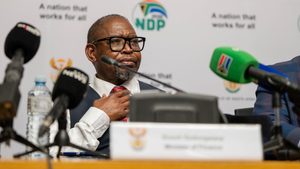
“FNB’s individual foreign customer base is projected to reach approximately 517,000 customers by the end of this financial year, which reflects growing demand for banking that supports more connected financial lives,” says Dr Stanton Govender, Executive Head of Foreign Nationals and Non-Resident Banking at FNB.
Traditional banking systems were built around fixed categories, with personal, business and cross-border banking treated as separate needs.
Financial behaviour, however, has changed. People now move fluidly between these responsibilities, and their expectations of banking have also changed.
Many people today balance different financial realities: managing household finances while building businesses, banking digitally while still operating in cash-driven environments and supporting family across borders while creating stability where they live and work.
People want more than basic access to banking. They want continuity across the different parts of their financial lives, with banking solutions that help them manage these responsibilities together rather than as separate experiences.
Being able to earn, transact, support family, run a business and move money without disruption has become essential to daily life, particularly for those balancing responsibilities across borders.
Banking therefore plays an important role in helping these households maintain stability and participate more fully in the economy.
The economic reality behind the shift
This shift is reflected in global remittance trends. Worldwide remittance flows reached approximately US$905 billion in 2024, with around US$685 billion flowing to low- and middle-income countries, continuing to support households, livelihoods and economic activity across borders. Forecasts also show continued growth in remittance flows through 2025, driven by migration, digital money movement and expanding cross-border economic activity.
Across South Africa, this trend is visible among economically active foreign communities working across sectors such as retail, services, logistics, small business and informal trade.
Despite their contribution, many still face barriers to banking that fail to reflect how they manage money and participate in the economy.
Financial inclusion today goes beyond simply opening a bank account. It is about whether banking supports the way people earn, spend, save, qualify for credit, transact, support others and manage responsibilities across borders.
This includes the ability to move money safely, manage personal and business finances, bank digitally with confidence and meet family obligations without unnecessary friction.
A single banking experience that helps people manage different aspects of their financial lives – whether earning an income, paying suppliers, supporting family or balancing household and business finances – is increasingly becoming essential.
The easier it is to access secure, digitally enabled banking, the easier it becomes to participate fully in the formal economy.
This is particularly relevant in South Africa, where many people build businesses, livelihoods and support systems across borders, and where economic activity is shaped by mobility, adaptability and entrepreneurship.
Banking that’s designed around real financial lives
Traditional banking has often resulted in foreign customers being served through standard product offerings originally designed for South African customers.
FNB has taken a different approach by building dedicated infrastructure, onboarding pathways and support services specifically for foreign customers, rather than adapting products that were never designed for their realities.
The result is banking built around how this segment actually lives and banks, rather than solutions retrofitted to accommodate it.
Opening a bank account is often the first and most significant barrier foreign customers face when entering the formal financial system.
FNB’s account-opening process for foreign customers is designed to accommodate the realities of this segment, accepting an array of documents according to a customer’s residency status.
These include passports, visas and various permits. FNB also allows foreign customers access to various points of presence without multiple branch visits and post account opening, the ability to self service via one of FNB’s digital channels.
For someone newly arrived in the country, building a business or supporting a family while navigating an unfamiliar system, this kind of practical access matters.
“South Africa’s foreign customers are not a niche. They are entrepreneurs, breadwinners and contributors to the broader economy, and they deserve banking that recognises that.”
“What we have built at FNB is not a workaround. It is a considered offering for people whose financial lives are genuinely more complex, and we are committed to making sure that complexity is met with capability and inclusion,” says Govender.
Growing use of digital banking among foreign customers is also raising expectations around convenience and continuity. FNB has approximately 85% of its foreign base that engages in its digital banking capabilities.
FNB’s offering for foreign customers includes digital banking access, global payments, foreign exchange services, global receipts, foreign currency accounts and low-cost remittances via FNB’s safe and convenient Globba™ solution for sending money back home to loved ones.
The bank also offers dedicated support, giving customers practical tools to manage and move money across borders with less friction.
For many entrepreneurs and economically active individuals, personal and business finances exist side by side.
A business transaction may also support a household. This overlap is becoming increasingly clearer in FNB’s SME and business banking growth among foreign customers across retail, services and informal trade, highlighting strong entrepreneurial participation within this segment.
FNB’s transact sales to foreign customers are on track to reach 85,000 for this financial year – a figure that speaks to meaningful and growing economic participation.
The next shift in banking: beyond transactions
The continent’s economies and people have long been connected through trade, movement and shared economic activity. Banking must continue to evolve alongside these economic shifts.
The opportunity for banks now is broader than just offering products. It lies in creating banking experiences that are practical, accessible and genuinely relevant to how people manage their financial lives. Experiences that prioritise continuity as much as access.
The institutions that will matter most, especially to this segment, will be those that understand this shift and invest in solutions that reflect how people live, work and manage family and businesses across borders.