SARS squeezing South African taxpayers harder than ever


South Africans’ tax burden relative to the economy is expected to be higher under Finance Minister Enoch Godongwana’s new Budget compared to Budget 2.0.
Godongwana presented the third version of South Africa’s 2025 Budget on Wednesday, 21 May 2025.
This came after his first two Budgets were rejected by Parliament or opposed by members of the Government of National Unity.
In the third Budget, the National Treasury opted to scrap the controversial value-added tax (VAT) hike proposed in the first two versions.
To fill its revenue gap, the Treasury proposed some spending cuts, an increase in the general fuel levy, no inflationary adjustments to South Africa’s personal income tax brackets, and other minor measures.
However, these measures are still not entirely sufficient, and Godongwana explained in the May Budget that tax revenue is expected to be R61.9 billion lower than in the March Budget.
Momentum Investment’s Sanisha Packirisamy and Tshiamo Masike explained that this is largely due to the reversal of the VAT hike and weaker economic forecasts.
These factors also mean that South Africans’ tax burden, which reflects the tax-to-GDP ratio, is expected to average the medium-term expenditure framework (MTEF) at a higher 25.5% compared to 25.3% in the March Budget.
In other words, the amount of tax South Africans are expected to pay in 2025 compared to the size of the economy is going to be slightly higher than previously thought.
Packirisamy and Masike explained that, while consumers will no longer pay a higher VAT rate, bracket creep and fuel levy adjustments are still expected to be a drag on household income.
Bracket creep will significantly affect South Africans in 2025, as South Africa’s personal income tax brackets and rebates will again not be adjusted for inflation, effectively implementing a “stealth tax” on the country’s taxpayers.
By not adjusting these brackets for inflation, the government gives rise to ‘bracket creep’, which happens when inflation-driven salary increases push earners into higher tax brackets.
This means South African workers may take home less money at the end of every month despite personal income tax rates remaining unchanged.
Taxpayers forking out more than ever

Packirisamy and Masike said that under the new Budget, medical aid credits that are unaligned with inflation will cost consumers R1.2 billion in the 2025/26 fiscal year and R3.8 billion in the MTEF.
The National Treasury’s Budget overview revealed that no inflationary adjustment to tax brackets and rebates will add R15.5 billion to the government’s tax revenue in 2025/26.
“No relief is being granted across the earnings spectrum,” Packirisamy and Masike said.
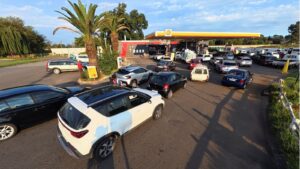
This effect will be made worse by the fuel levy increase introduced in the May Budget, which will see South African motorists pay an additional 15 cents per litre for diesel and 16 cents per litre for petrol.
This will result in additional revenue of R3.5 billion. They said taxes as a share of the pump price are expected to increase to 29.9% in the 2025/26 fiscal year.
In addition to this squeeze on taxpayers’ earnings, the taxman was also equipped with more resources than ever to collect these higher taxes.
Packirisamy and Masike explained that the May Budget earmarks an additional R20 billion in tax revenue for the 2026/27 fiscal year, with accompanying tax measures to be proposed in the 2026 Budget.
However, Treasury noted that these tax measures could be mitigated if the South African Revenue Service (SARS) could raise additional revenue.
This would be made possible through more efficient tax administration and higher tax compliance, or if the government achieves significant savings from implementing recommendations from spending reviews.
Packirisamy and Masike said previous reviews have identified potential savings of R37.5 billion.
However, until then, to facilitate an improvement in tax efficiency gains, SARS was allocated an additional R4 billion to support its revenue-raising exercise in the May Budget.
This equates to R7.5 billion allocated to the taxman in total since October 2024. Packirisamy and Masike said the original R3.5 billion allocation will be used for operational and capital expenditure projects to modernise SARS.
With this increased capacity, the taxman is expected to increase debt collection and collections from illicit trade by between R20 billion and R50 billion every year, with Godongwana noting that R35 billion is feasible.
“Treasury will be closely monitoring cash collected from debt every month to assess whether this potential revenue should be included in its revenue estimates,” they said.
 Loading ...


Comments