New national 20% tax under siege


National Treasury’s plan to implement a new 20% national tax on online gambling revenue has come under intense scrutiny from market participants.
These participants, through their lawyers, argue that taxing Gross Gambling Revenue (GGR) threatens their businesses and may push bettors to use unlicensed, offshore alternatives.
They are engaging with the National Treasury about the design of the new tax, which is set to be unveiled in the 2027 Budget Speech.
The tax was first proposed in a 202 discussion paper from the National Treasury that outlined a national tax to limit the growth of online gambling.
This tax is aimed at acting like a sin tax on alcohol or tobacco to limit their use in society, while generating revenue for the state to use more productively.
“Due to the surge in online gambling and its impact on society, it is proposed that a 20% tax is applied to gross gambling revenue from online betting, including interactive gambling,” the paper read.
The National Treasury estimates that the tax will raise R10 billion in additional revenue for the government, which it could use however it deems fit.
“We look at it like a sin tax. If there is a reduction in online gambling because of this tax, we would be happy with that, even if it reduces tax revenue,” the Treasury’s Christopher Axelson said.
The proposed tax was met with stiff opposition from gambling companies and tax professionals who warned that it would create an illicit market.
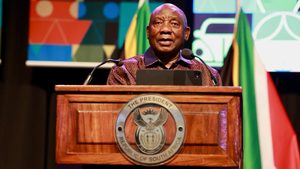
Despite this initial pushback, Finance Minister Enoch Godongwana said in his Medium-Term Budget Policy Statement that there was a general acceptance of the need to address the growth of online gambling.
“Consultations are ongoing on the proposed tax design, its linkages to the existing regulatory framework, and the implications for provinces and the currently regulated market,” Godongwana said.
“An announcement of the final design will be made in the February 2027 Budget.”
Pushback from local gambling industry

Opponents were quick to respond, with Lurie Inc Attorneys’ gambling law expert Wayne Lurie calling on the Treasury to engage meaningfully before proposing its national tax to Parliament.
Lurie explained that the proposal is for a 20% tax on GGR above existing provincial gambling taxes, with the total tax burden on companies rising to 26% to 29% of GGR.
This is before VAT is included, which would bring the total tax burden to 40% of GGR. Lurie said this is untenable.
GGR represents the stakes that gambling operators receive minus the winnings they pay out, which is not equivalent to a company’s net profit.
This figure is calculated before operating expenses, including salaries, technology spend, and regulatory compliance, among others.
“Any assessment of the proposed tax must consider the cumulative burden on licensed operators, rather than looking at the national tax in isolation,” Lurie said.
“A rate that appears sustainable when applied to gambling revenue may have a very different effect on profitability, investment and employment.”
The public consultation period on the discussion paper closed in February 2026, but Lurie has called for a more detailed analysis before the final tax is proposed.
Separately, Whitesmans Attorneys’, Garron Whitesman, urged the National Treasury to consider the second-order effects of such a tax.
Whitesman said the Treasury has to demonstrate that the proposed tax will achieve its objectives, without undermining the regulated industry.
In particular, it has to avoid driving consumers towards illegal betting platforms, which would place them in more danger.
“The latest figures show that South Africa has a substantial, growing and regulated gambling industry that contributes billions in taxes and supports thousands of jobs,” Whitesman said.
“The government must demonstrate that any additional tax will achieve its objectives without putting those contributions at risk.”
The National Gambling Board’s annual report showed that GGR increased in the 2025/26 financial year from R74.5 billion to R84.6 billion, a 13.56% rise.
It also noted 13,328 people employed in casinos and 12,230 in bookmaking, representing approximately 25,500 direct jobs across these two sectors.
“The industry already makes a substantial tax contribution. Increasing the effective burden to almost 40% of gambling revenue could have serious consequences for investment, employment and the competitiveness of licensed operators,” Whitesman said.
Reducing the competitiveness of local operators will push more individuals to illegal offshore platforms that pay no tax in South Africa and are not regulated locally.
“If higher taxes push consumers into the illegal market, government risks undermining the very regulatory system designed to protect them,” Whitesman said.
Login or register for unlimited free access.