South Africa’s oldest bank going back to basics


FirstRand is refocusing on its core strengths after deciding to exit the United Kingdom market following a R17 billion hit from motor-finance claims.
The banking group reported a 5% decline in earnings to R39.7 billion for the year ended June 2026. This was its first annual profit decline in six years.
The result was largely affected by an R807 million provision for claims relating to mis-sold car loans at its United Kingdom motor-finance business, Aldermore.
However, FirstRand’s continuing operations delivered stronger growth. Normalised earnings from these operations increased by 13% to R44.5 billion after Aldermore was classified as a discontinued operation.
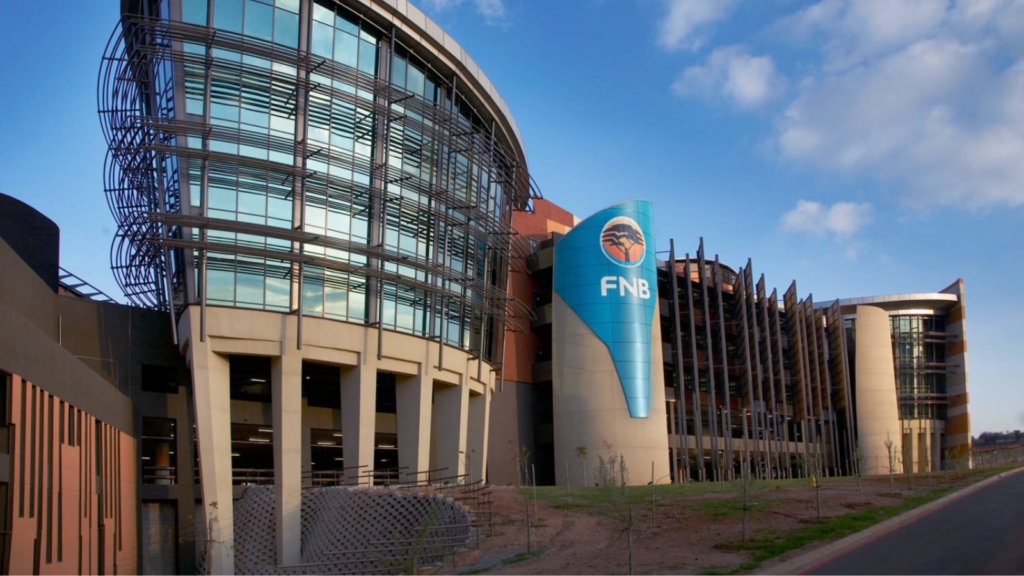
The results reflect the group’s renewed focus on its established banking businesses, including FNB, RMB and WesBank.
FirstRand was formed in 1998 through the merger of several established financial services businesses, including First National Bank (FNB), Rand Merchant Bank (RMB), Momentum Life and Southern Life.
However, its banking history stretches back much further. FNB traces its roots to 1838, when the Eastern Province Bank was established in Grahamstown.
This makes FNB South Africa’s oldest bank. The financial services group, FirstRand, was formed around it in 1998.
Today, FirstRand is one of Africa’s largest financial institutions by market capitalisation. Its portfolio includes FNB, RMB and WesBank.
The group’s operations span across Africa, and it even has a footprint in the United Kingdom.
The group’s strategy has centred on using these businesses to provide integrated financial services to retail, commercial and corporate customers.
Its latest annual results show continued growth across its core operations, despite the impact of the United Kingdom motor-finance provision.
Net interest income increased by 8%, supported by stronger lending and deposit growth in South Africa, the rest of Africa and the United Kingdom.
Non-interest revenue grew by 12%, driven by trading and fair-value income, higher fees and commissions, and private-equity realisations.
FirstRand also declared a final dividend of R2.80 per share. This brought its total dividend for the year to R5.39 per share, above the R5.06 median analyst estimate reported by Bloomberg.
The United Kingdom business was a major exception to the group’s broader performance.
FirstRand increased its provision for Aldermore after the United Kingdom’s Financial Conduct Authority finalised its motor-finance redress scheme. The group has since decided to sell the business and leave the European market.
It appointed Bank of America and RMB as advisers to help with the sale. Non-binding offers were expected by the end of September 2026, followed by due diligence and final binding offers expected by December.
The decision follows FirstRand’s view that owning and operating a United Kingdom consumer finance business no longer aligns with its risk appetite.
FirstRand is focusing on its strengths

Ingot Africa’s Timothy Kiarie discussed FirstRand during a Business Day TV stock-pick segment.
He commented on the group’s September results, pointing to earnings growth of 16%, a return on equity of around 21.5% and strong contributions from FNB and RMB.
Kiarie also noted the group’s dividend payouts and its established position in the financial services sector.
His investment case centred on FirstRand’s profitability, diversified revenue streams and potential to continue paying dividends. The group’s performance reflects the importance of its established franchises.
FNB provides retail and commercial banking services, RMB focuses on corporate and investment banking, while WesBank specialises in vehicle and asset finance.
FirstRand’s interim results earlier in 2026 also showed the strength of these businesses.
FNB’s normalised earnings increased by 8% to R13.1 billion for the six months ended December 2025. Its South African operations benefited from stronger non-interest revenue and improving credit performance.
RMB delivered particularly strong growth, with normalised earnings rising by 23% to R5.4 billion. WesBank’s normalised earnings increased by 5% to R1.2 billion.
Kiarie identified South African consumer credit conditions, loan defaults and interest-rate changes as risks to consider. He also noted the remaining United Kingdom motor-finance exposure.
His stock pick was based on FirstRand’s established market position, profitability, and diversified income.
Log in or register for free access to all articles.