Reserve Bank Governor shares good news about inflation and interest rates


South Africa’s central bank chief said its models suggest that its current policy approach will bring inflation down to its 3% goal once the initial shocks triggered by the ongoing conflict in the Middle East fade.
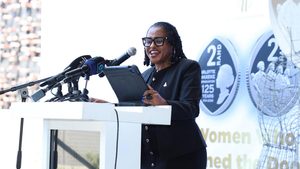
“So far, our modeling indicates that prevailing policy settings are sufficient to return inflation to target after the initial shock has passed,” Lesetja Kganyago told the Italian-South African Chamber of Trade and Industries on Thursday.
“We remain firmly focused on our mandate, and will act as needed to prevent higher inflation from becoming entrenched.”
South African officials last month unanimously voted to raise borrowing costs by 25 basis points to 7.25% as higher energy and fertiliser prices, spurred by the wars in Iran and Ukraine, resurfaced.
While monetary policy cannot prevent the initial price increase caused by the fuel shock, “it must ensure that the temporary rise in inflation does not become entrenched in expectations, wage formation and broader price-setting behaviours,” Kganyago said.
Inflation quickened to 4.5% last month and has been above the central bank’s 3% target since March. The central bank will deliver its next interest-rate decision on Nov. 19.
The governor also said South Africa is turning a corner after years of low growth, entrenched by deep and prolonged dysfunction in the political economy as state capacity was hollowed out during the scandal-marred nine-year presidency of Jacob Zuma.
“Several foundations are stronger today than they were only a few years ago,” Kganyago said.
They include improved electricity supply and the country’s reforms in areas such as logistics and municipal services.
Fiscal credibility has also improved as the government has made progress in stopping debt growth, he said.
“We have moved from credit ratings downgrades to upgrades.”
Last week, Finance Minister Enoch Godongwana, in his medium-term budget, announced that South Africa’s debt as a percentage of GDP has finally peaked and will start declining in the current fiscal year.
He also said revenue collections were expected to outperform previous expectations and the budget deficit would be smaller than previously forecast at 3.9% of GDP.
“These developments should lift confidence, investment and growth,” Kganyago said.





Conversation
1 commentsWhat he should share is his reasoning behind a flawed control.
The thinking behind raising the repo rate to curb inflation is that it will mean people spend more on servicing debt, thus have less to spend, thus drive down demand for goods and thus according to supply-and-demand theory prices will fall.
This is utterly and completely flawed when inflation is 100% driven by a war in the middle East spiking fuel cost. NO ONE will cut back on fuel spend – no matter the repo rate. Spending on goods and services has already been cut back resulting in business closing and people losing employment.
What a retarded moron. Reverse Bank, taking is backwards. Now with central control of EFTs.