Government departments want R717 billion from taxpayers in extra cash that the Finance Minister says does not exist


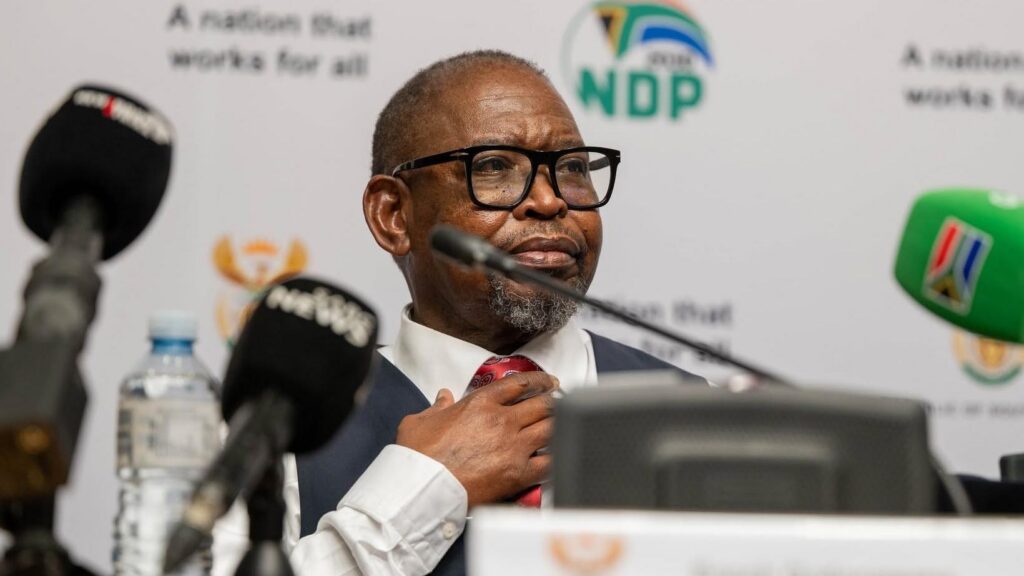
Government departments want an extra R717 billion in funding from taxpayers over the next three years to spend on their ambitious projects.
This money does not exist, Finance Minister Enoch Godongwana said, with the National Treasury having the hard job of telling ministers and departments, “No.”
Godongwana made the National Treasury’s position clear in his Medium-Term Budget Policy Statement (MTBPS) and in an interview on 702.
“In the current budget cycle, the request from departments was for an additional R717 billion over the medium-term expenditure framework,” Godongwana said.
“This translates to an average of R226 billion for each coming year. This amount does not exist in the budget. This is all above the existing baseline.”
Departments have requested additional funding to meet their service delivery obligations and to make progress on ambitious projects.
These projects are often announced before the departments secure funding from within their own budgets or the National Treasury.
This leaves Godongwana and his team in the difficult position of having to tell ministers and director-generals that they do not have the money for these projects.
“In this process of trimming projects and fighting, it takes a toll on you. Because your colleagues in Cabinet come and ask you for this money that does not exist,” Godongwana said.
“People think that there is a money pot somewhere that we at the National Treasury are trying to hide, which is not the case. We do not have the money.”
The National Treasury makes it very clear how much money the state brings in through tax revenue through monthly publications and how much debt it raises.
“We make it clear by publishing every month what SARS has collected and what we have spent. We are transparent in that regard. There is no money being hidden,” Godongwana said.
“We also publish how much we borrow, and this should tell you how difficult a financial position we are in. We borrow almost R2 billion a week to fund the government.”
South Africa’s government debt has peaked, according to the National Treasury, at 78.4% of GDP and is beginning to decline.
However, the government continues to spend R1.2 billion a day to service its debt burden. This squeezes out current spending on healthcare, education, and other government services.
Godongwana says no
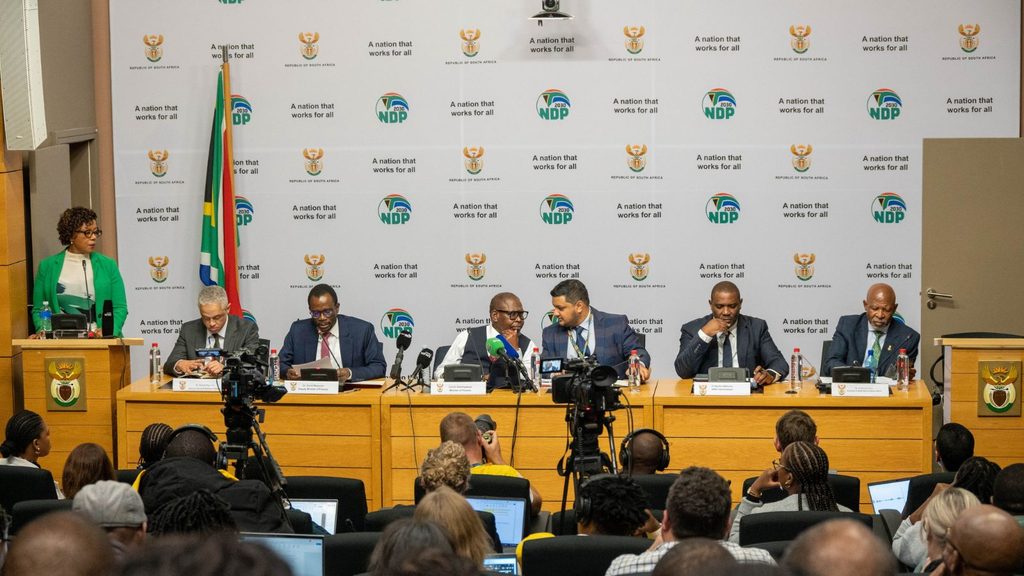
Apart from being transparent about how much money the government has to spend, Godongwnana has maintained his commitment to fiscal discipline.
In theory, the state can raise debt and accept the requests for extra money to keep government departments happy.
However, this will come at the cost of South Africa’s financial health and the National Treasury’s credibility with investors.
With a debt-to-GDP ratio of 78.4%, it may also push the country into a debt spiral, where it will have to issue new debt to service its existing debt load.
Since Godongwana was appointed Finance Minister in 2021, the National Treasury has imposed fiscal consolidation.
This process is painful, with spending growth being kept below the rate of inflation while SARS squeezes taxpayers hard for additional revenue.
It has resulted in three consecutive primary budget surpluses and a stabilisation in the state’s debt load, which should decline in the coming years.
This process involves many rejections by the National Treasury of additional budget requests.
In the current financial year, the Treasury has approved R10.6 billion in special appropriations for departmental requests and emergency needs, of the R200 billion requested.
These emergency requests include R823 million for the army’s deployment to help the policy and R516 million for the Madlanga, Khampepe, and Nkabine commissions of inquiry.
Regarding the R717 billion requested over the coming three years, the National Treasury has only added R71.1 billion to main budget spending.
This additional spending prioritises healthcare, education, state capacity, and infrastructure investment.
Godongwana made it clear in his MTBPS that additional funding will not be automatically granted to address operational pressures.
Departments and provinces were encouraged to manage emerging costs by eliminating administrative inefficiencies and reprioritising funds within their existing budgets.





Conversation
1 commentsMr Godongwana,
The RSA civil servants’ total cost is~ 16% of GDP, while “developing peers” cost ~ 6% of GDP. The difference equates to more than a quarter of a trillion Rand. This is the money we should be using to develop the economy. In stead, your ANC-lead government uses the economy as an extraction scheme. You invest large amounts in SARS. How about right-sizing, fighting corruption, getting rid of ideology and legislation which is repugnant to any decent citizen and country?