South Africa is going from zero to hero


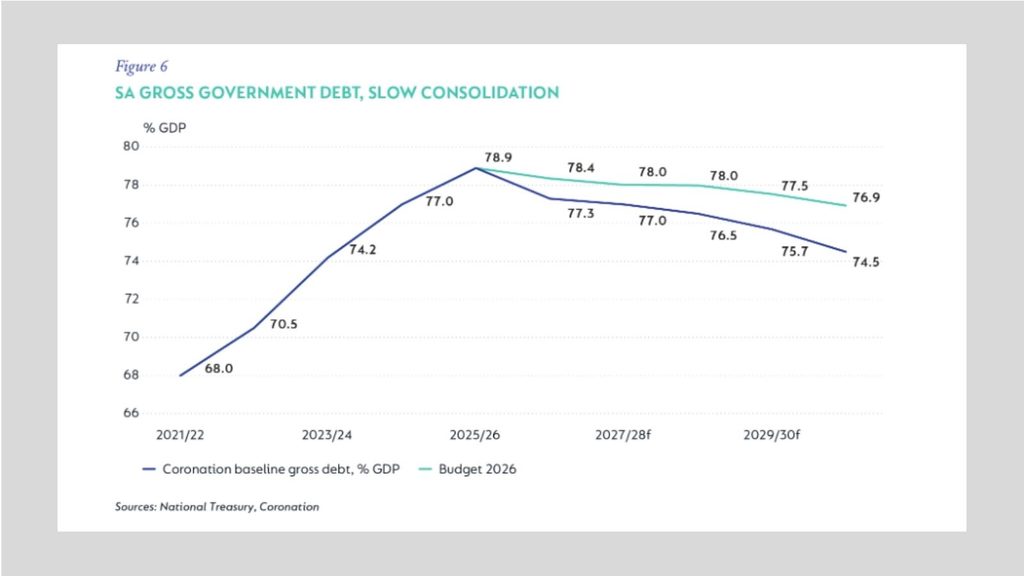
South Africa’s government appears to have turned the corner and avoided hitting a fiscal cliff in the near future, with debt stabilising and beginning to decline.
However, this recovery is fragile, with the country desperately needing faster economic growth to ensure the turnaround is complete.
Faster growth will directly translate into better state finances, as it will organically boost tax revenue and improve the government’s debt-to-GDP ratio.
While the National Treasury has done a good job in turning around government finances, growth has still proven elusive, Coronation economist Maire Antelme said.
Antelme said South Africa’s economy gained strong momentum in the first quarter of 2026, but is now back to puttering along at 1% growth.
This is largely due to the oil price shock that hit South Africa’s economy in the second quarter of the year and to sluggish progress on key reforms.
Antelme said this temporary shock clouds the real progress that South Africa is making. Although the progress is slow, the country is heading in the right direction.
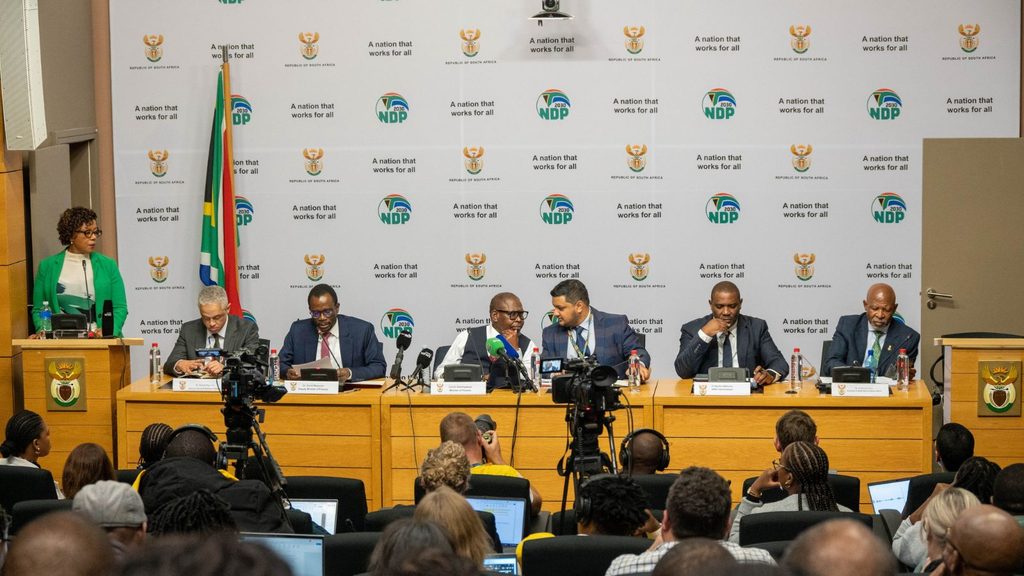
Finance Minister Enoch Godongwana’s Medium-Term Budget Policy Statement (MTBPS) was full of positive news for the country’s finances.
Antelme said this made it clear that South Africa’s financial situation is a meaningful positive development in the current cycle.
“Expenditure consolidation, combined with revenue windfalls and lower borrowing costs generated, has enabled the National Treasury to outperform budget targets for the third consecutive year,” Antelme said.
“We expect a deficit of approximately 3.4% of GDP in 2026/27 – narrower than the Budget forecast – and a primary surplus of 1.5%, making three consecutive years of primary surplus.”
As Godongwana pointed out in the MTBPS, this means government debt has peaked in the current financial year and is now expected to decline.
More important for Antelme is the fiscal credibility earned through this process, which will stand the country in good stead with credit rating agencies.
Antelme said that, against a difficult backdrop, South Africa has genuine positives – visible fiscal consolidation, a credible central bank, and a reform agenda that is moving.
Next step is economic growth
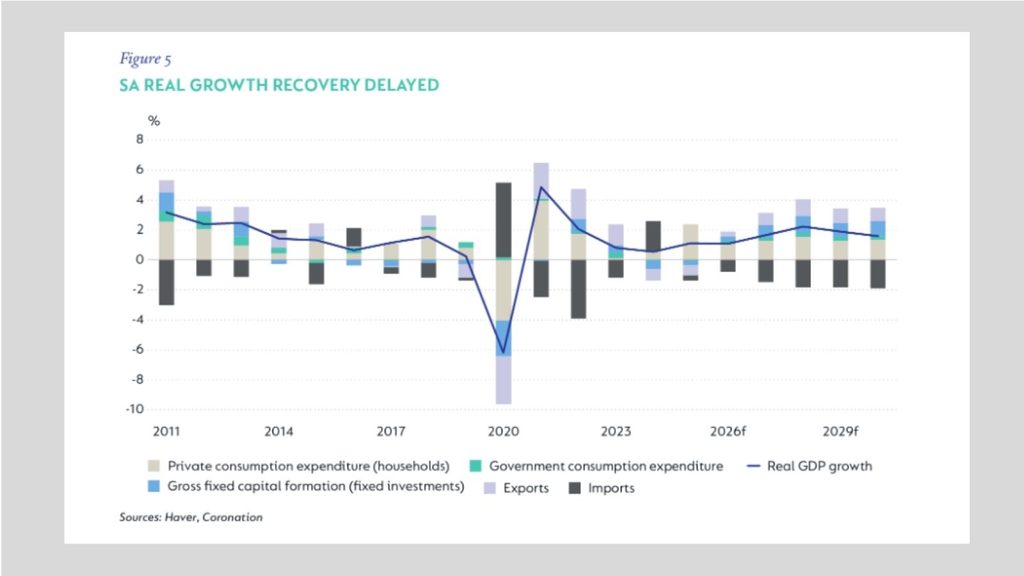
Antelme said that South Africa’s economic recovery has not been derailed, but has been delayed by geopolitical events in 2026.
The strong momentum of the first quarter was crushed by the war in Iran and the subsequent spike in oil and fuel prices.
This will work its way out of the system eventually, either through the conflict ending or base effects and inflation rolling off, enabling interest rate cuts.
However, this will still only see South Africa’s growth increase marginally to 1.6% in 2027 and 2.2% in 2028, according to Coronation’s forecasts.
For more sustainable economic growth, South Africa will have to greatly increase its fixed investment rate, which remains half that of faster-growing emerging markets.
This, in turn, relies on progress being made on structural reforms in energy and logistics. As these sectors are opened up to private players, investment should flow.
The reform programme centres on Operation Vulindlela, which has seen strong progress being made in some areas.
Antelme said that political friction remains the binding constraint, rather than technical or institutional capacity.
Electricity and logistics, which are the two sectors most directly linked to economic throughput, are both registering progress.
“However, while renewable projects are largely on track, the binding constraint has shifted from generation to transmission,” Antelme said.
“Port throughput at Durban’s DGT Pier 2 is up 6.6% year-on-year, and the open-access freight rail reform is advancing, if unevenly.”
“Digital infrastructure, where the least improvement is needed, is a genuine bright spot, with Smart ID bank partnerships and the MzansiXchange expanding materially.”
However, major issues remain with water and local government reform. These areas have the most significant underperformance relative to their economic potential.
Antelme does not expect this progress to be derailed by the municipal elections on 4 November, as the period of political transition has been relatively well handled.
“We forecast GDP growth of 1.6% in 2027 and 2.2% in 2028. This is underpinned by incremental progress on structural reforms in energy and logistics, both of which support a recovery in gross fixed capital formation,” Antelme said.
“Execution is now the variable that determines whether the credibility test is passed.”



Conversation
7 commentsTurned the corner and heading for the Circle going nowhere slowly.