Big VAT changes coming to South Africa, and Wall Street riding on ten companies


The rand was trading at R16.58 against the US dollar on the morning of Monday, 26 October 2026, unchanged from where it closed last Friday.
Local equities ended last week lower, with the JSE All Share Index dropping 0.47% while the Top 40 Index dropped 0.56%.
This followed better-than-expected inflation data, as well as the medium-term budget promising R10 billion in fuel levy relief over the next two months.
A Synthetic Financial Centre framework was proposed to exempt qualifying ring-fenced investment vehicles from the 45% offshore allocation limit.
Investor attention now turns to upcoming business cycle indicators, money supply, private-sector credit, and producer inflation data, as well as fiscal and trade balances.
On Wall Street, American indices retreated as investors continue to question the financial cost associated with AI infrastructure spending.
The Dow Jones led the declines at 1.23%, followed by the S&P 500 at 0.52% and the Nasdaq at 0.21%.
In Europe, French political instability and rising energy costs led markets to close lower, with the STOXX 600 finishing Friday 0.31% lower.
The index lost 1.4% over the last week, its weakest performance since early September, while October PMI fell to 51.9 against a 52.7 forecast.
Asian markets presented mixed results, with the Shanghai Composite up 0.89% and the Hang Seng up 0.69% while the Nikkei 225 was down 0.34%.
China has challenged proposed US restrictions on outbound investments, arguing that these could damage commercial relations between the two superpowers.
In commodities, Brent crude oil fell to around $114 per barrel after approaching six-month highs last week, while gold strengthened to $4,013.53 per ounce.
On Monday morning, the rand was trading at R16.58 to the US dollar, R18.61 to the euro, and R22.19 to the British pound.
Important finance and investing news

Wall Street riding on ten companies: Roughly two-thirds of corporate profit growth in the United States has been attributed to just ten companies, with two of these companies – Nvidia and Micron – accounting for 34% of that growth. Analysts expect companies in the S&P 500 to report a 30% jump in third-quarter earnings compared to a year ago. [Wall Street Journal]
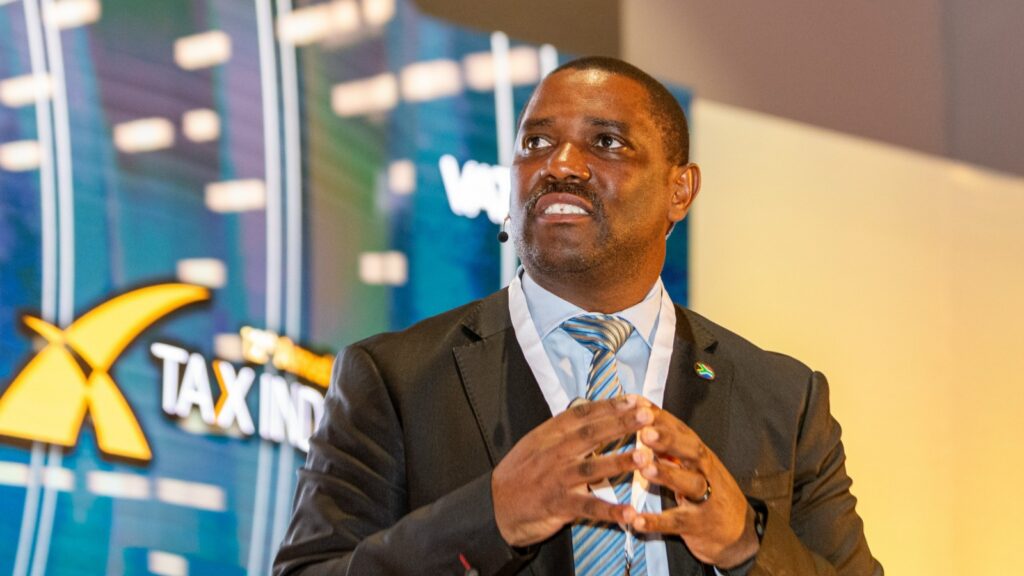
Big VAT changes coming to South Africa: SARS said it will use the additional R6.9 billion special appropriation funding to accelerate its modernisation programme, with plans to automate VAT assessments. Commissioner Johnstone Makhubu said SARS expects to receive between R4 billion and R4.5 billion of the fund. [EWN]
Audi defends $4 billion US plant: German automotive manufacturer Audi has defended its decision to invest $4 billion into building a plant in Georgia, which was announced by US President Trump as part of his November midterm election campaign. Audi said pressure from tariffs had prompted the move, and said the new plant will create 4,500 jobs. [Reuters]
Pepsi loses the KFC war to Coke: KFC announced last week that it would begin replacing PepsiCo’s soft drinks with Coca-Cola products across its 3,700 US restaurants in January. This comes 40 years after PepsiCo bought KFC, and nearly 30 years after it spun the fried chicken chain out in 1997. [Yahoo Finance]
Alarm bells ringing at SAA: Liquidity pressures at SAA led to staggered salary payments in September and October, with industry stakeholders and experts saying this is a signal of serious financial trouble at the airline. While sources have said a second round of business rescue was reportedly discussed at a recent board meeting, an SAA spokesperson denied this. [The Citizen]