Iconic South African construction company that built Mall of Africa going from zero to hero


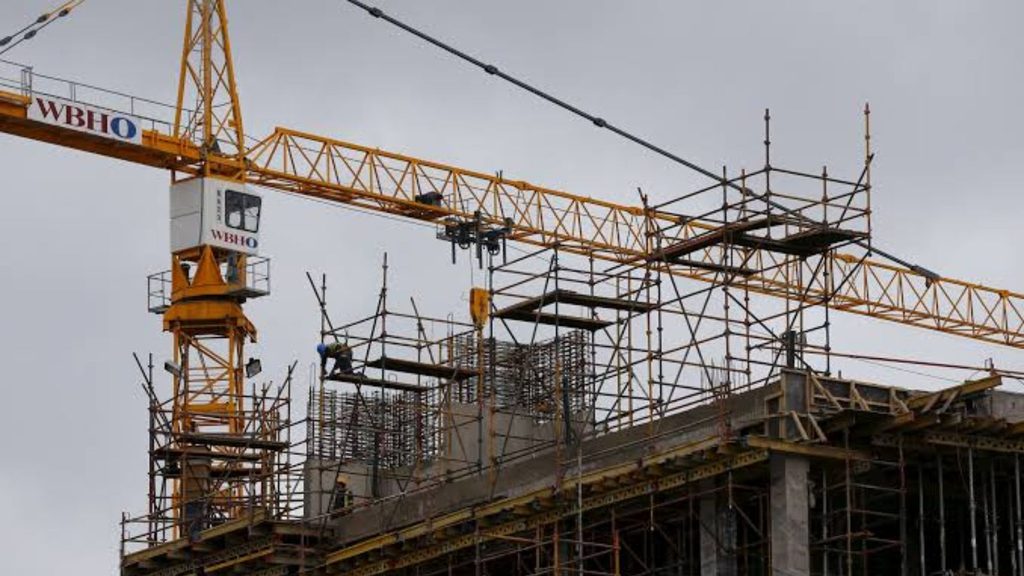
Wilson Bayly Holmes-Ovcon (WBHO) is set to benefit from continued investment in renewable energy projects in South Africa and an uptick in infrastructure projects.
This is partly due to its improved operating performance in the past few years, but is also a function of its managing to keep its doors open while competitors shut down.
WBHO and Raubex are the last two major diversified construction companies listed on the JSE, leaving them as major beneficiaries of any growth in infrastructure investment.
South Africa’s government plans to spend R1 trillion on infrastructure in the next three years, with it hoping to crowd in trillions more in private investment.
FNB analysts Peet Serfontein and Mmamosa Khanye explained this bullish view in a trading note as part of the bank’s equity research.
They explained that WBHO is unique in its ability to operate across commercial, industrial, and infrastructure projects. This includes data centres, renewable energy, and mining and transport infrastructure.
The company is primarily a project-based business, meaning its performance depends on securing contracts, managing costs, and finishing its work efficiently.
It has built significant buildings throughout South Africa’s history, including Mall of Africa and the Discovery head office in Sandton.
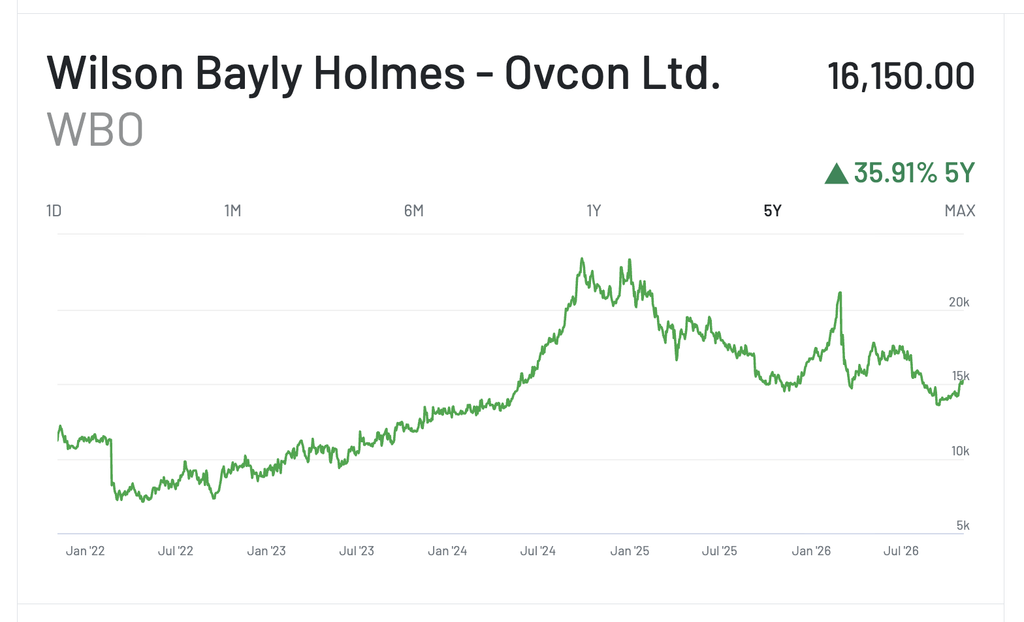
Serfontein and Khanye explained that the company’s share price is trading at an attractive value, with it offering a good opportunity for investors to get exposure to it.
WBHO is not only diversified across various sectors, but is also geographically diverse, with operations in the rest of Africa and the United Kingdom.
These two markets contribute 31.8% of the company’s earnings, with its South African operations contributing the rest.
Apart from the share’s trading behaviour making Serfontein and Khanye bullish, the company also has good fundamentals on its side.
In 2026, it acquired Zamori 172, a major solar-focused project management and installation business. This acquisition complements WBHO’s in-house capacity to develop renewable energy projects.
With investment in this sector expected to surge as Eskom gets involved through Eskom Green and private companies compete with the utility, Serfontein and Khanye expect WBHO to win big.
This is coupled with increased government spending on infrastructure as the state shifts its expenditure away from consumption to investment.
Combined with infrastructure development in the rest of Africa, WBHO’s order book is expected to grow.
Last man standing
WBHO is benefiting from a classic case of survival of the fittest in South Africa’s economy, with it being one of the two construction companies left standing on the JSE.
As its competitors have fallen, it has kept its doors open, picking up the pieces and steadily adding to its order book despite a stagnant economy.
By simply surviving in South Africa’s economy, it has been able to grow revenue and profit as they take market share from collapsed competitors.
Old Mutual Investment Group’s (OMIG) Meryl Pick described this as a “survivorship factor” in an update late last year.
Pick said investors have to increasingly take this into account when investing in South African companies.
Some of these companies are attractive purely because they can pick up the pieces from competitors that are collapsing.
“Apart from companies that have historically delivered, there are those that have a very specific investment case like WBHO,” Pick said.
“The company has a record order book, not because there are record levels of infrastructure spend or economic growth, but because all the other construction companies have folded.”
“So, at a company-specific level, they have just cleaned up market share and have seen tremendous growth on the back of it.”
Another example of this is Shoprite, which is one of the best-run retailers in the world and has managed to find a way to grow when others have not.
While it is well-run, Shoprite has benefitted immensely from strategic missteps at its competitors, Pick n Pay and SPAR.
These have enabled it to take market share and grow significantly without having to fundamentally outcompete other players.
“So there is a market share story in the absence of growth. We are trying to find out who the best players are in the survival of the fittest world,” Pick said.
“You cannot do a broad brush stroke in a specific sector or across the economy, because there is no rising tide to lift all boats.”