Plan to permanently cut petrol prices by R6.55 per litre in South Africa


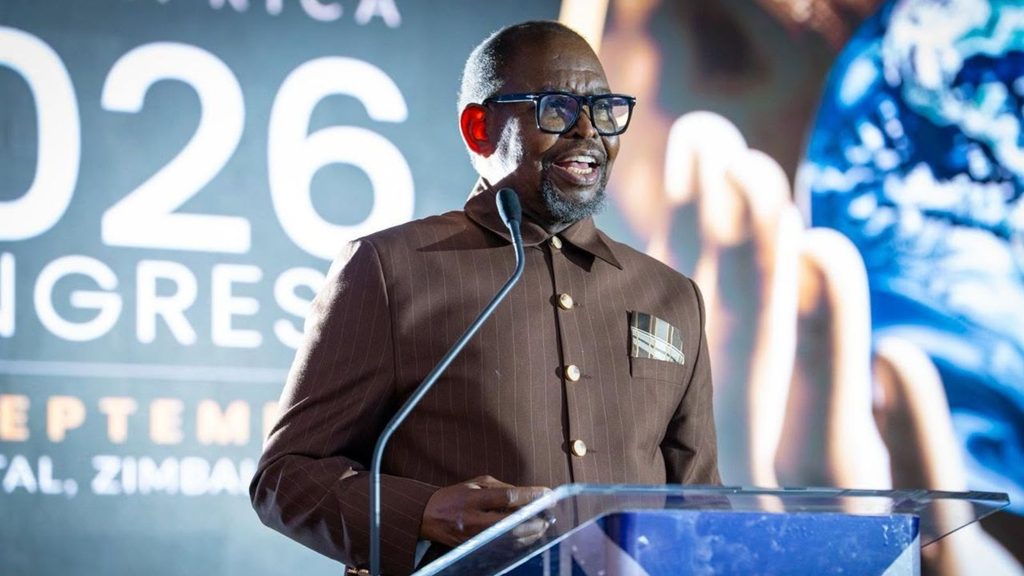
Finance Minister Enoch Godongwana said the National Treasury’s long-term plan is to remove levies on petrol permanently.
This will be difficult as these levies fund the Road Accident Fund (RAF) and the General Fuel Levy provides R80 billion in revenue for the state.
Replacing these levies with other revenue sources in a stagnant economy will prove difficult for the National Treasury.
Despite this challenge, Godongwana told 702 that he remains committed to a review of South Africa’s fuel levies and their complete removal.
“The long-term plan is to remove levies on petrol. This requires us to think about the two main levies we have on it in the RAF and the General Fuel Levy,” Godongwana said.
The government’s review of fuel levies and Godongwana’s plan to remove them completely comes after renewed pressure on the state to provide relief to motorists amid rising fuel prices.
This was first promised by President Ramaphosa in his opening address to Parliament on 18 July 2024.
Ramaphosa said the Government of National Unity would undertake a comprehensive review of administered prices to identify areas where costs could be reduced.
This included the fuel price formula, which is broadly made up of the Basic Fuel Price and the levies and margins administered by the government.
The Basic Fuel Price is calculated by using the international product price of relevant fuel types and the rand-dollar exchange rate.
While this plays a large role in the monthly fluctuations in petrol and diesel prices, the administered levies and margins make up the majority of the final price paid at the pump.
Analysis from Codera Analytics shows that the RAF Levy, the GFL, and margins have been the fastest-growing components of the petrol price in South Africa since 2008.
The RAF Levy has surged by 500% since 2008, while the GFL has increased by 250% since then.
This makes these two levies the main driver behind higher petrol and diesel prices paid by South African motorists.
Excluding the temporary relief provided by the National Treasury, the levies make up R6.54 per litre of petrol in South Africa.
As a result, amid growing calls for relief, the state has decided to take a closer look at these levies and how they can be reduced or eliminated.
Nearly impossible
While Godongwana said the long-term plan is to remove fuel levies completely, he admitted that this would be a challenging task.
“The first levy we have to look at is the RAF Levy. To remove that, we have to change the insurance model of the fund so that it does not rely on petrol,” he said.
“Doing this would remove R2 per litre from the petrol price. That is massive. Just removing the RAF Levy, you will realise a major decrease in the price of fuel.”
Changing the insurance model of RAF is easier said than done, with the fund being technically insolvent at the time of writing.
Godongwana gave no details regarding how he would change the RAF’s model to make it more sustainable and less reliant on levies collected from the sale of fuel.
“Secondly, there is the GFL, which goes into the national fiscus. On its own, that revenue is R80 billion. We have got to find a way of phasing it out,” Godongwana said.
“In doing so, we will lose R80 billion in revenue and then have to find a way to close that gap. That is a discussion we will have to have.”
This levy was first introduced in 1983 to fund the maintenance and expansion of South Africa’s road network.
However, the revenue generated from it is not ring-fenced and goes into the state’s general account, meaning the government can effectively do what it wants with the money.
As a result, the GFL has increasingly been seen as a relatively easy way for the government to boost its revenue and support its ailing financial health.
The GFL is an easy tax to administer and has a broad base, making it more attractive and financially viable to increase than personal income tax or corporate income tax.
Stanlib chief economist Kevin Lings previously explained that the government has little room to reduce these levies for an extended period.
“They cannot reduce levies for a long time because it is likely to cost the government close to R6 billion a month, and they will have to find those additional funds elsewhere,” Lings said.
“They do not have R6 billion earmarked within the budget currently, so they will have to scratch around and find R6 billion somewhere else.”
“This problem will become significantly worse if they try to provide this relief on an ongoing basis. This can only really be a temporary measure.”