Government paid salaries to 4,323 fake employees



National Treasury’s audit of South Africa’s government employees found that 4,323 individuals on the state’s payroll were highly suspicious.
These individuals were receiving salaries despite some of them not being on the National Population Register or not being state employees.
The elimination of these fake employees or “ghost workers” is expected to generate significant savings for the national government.
This will help bring down the public-sector wage bill, which consumes 33.4% of non-interest expenditure and free up capital for more productive use.
The National Treasury provided an update on its ghost worker verification process in the full Medium-Term Budget Policy Statement published on 21 October.
This update was included in the annexure on the compensation of state employees, which showed that South Africa’s public service remains disproportionately well paid.
South Africa’s 1.3-million-strong civil service is below the OECD average relative to the size of the country’s employed population.
While this means South Africa has a relatively small civil service, it also means that these individuals are disproportionately well paid.
The National Treasury explained that the period of significantly above-inflation pay increases from 2010 to 2020 has inflated the wage bill and created a major challenge for it.
It has repeatedly flagged the public sector wage bill as one of the main risks to South Africa’s finances, with the government spending R716.6 billion on salaries in the current financial year.
However, it is in a tricky situation as it cannot just cut headcount, with the vast majority of the state’s employees being frontline workers who provide critical service delivery.
Cutting headcount recklessly would impact service delivery and result in the state being unable to meet its constitutional obligations, the Treasury said.
Thus, to address the wage bill, the Treasury has instead focused on addressing the issue of long-serving individuals being disproportionately well-paid.
These individuals increase the unit cost of state employment and have benefitted from being pushed up salary bands over the past decade without a corresponding improvement in productivity.
This has been done through the Treasury’s Early Retirement Programme and Voluntary Exit Programme, where long-serving public servants are encouraged to leave the workforce.
They are then replaced by younger public servants who enter the service at a lower salary, saving the state money and rejuvenating the civil service.
Treasury said these initiatives alone will save the state R110,097 per employee per year, and R4.3 billion in wages.
Eliminating ghost workers
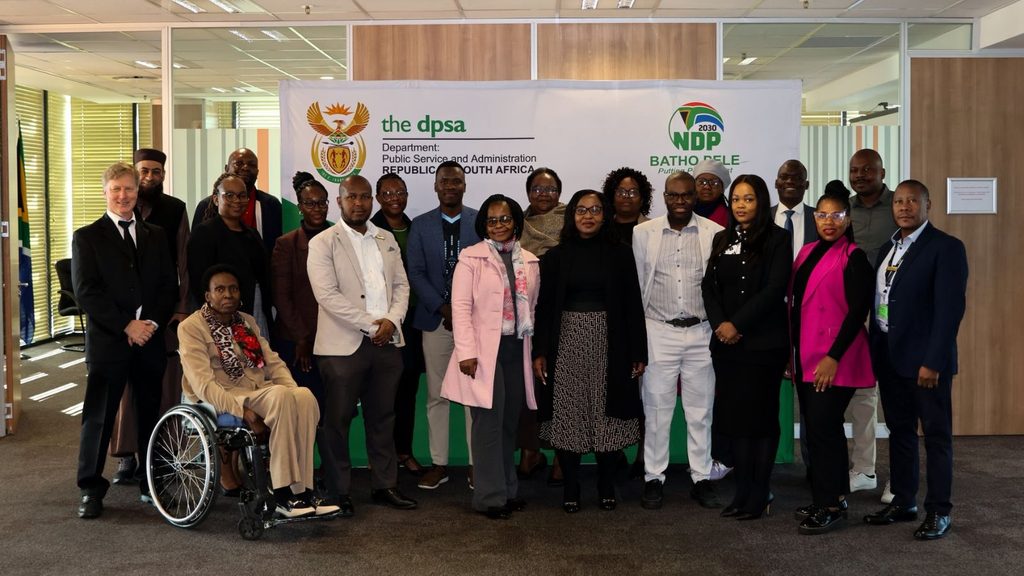
The other major initiative launched by the National Treasury to tackle the public sector wage bill is the verification of all state employees.
This process has been ongoing since the 2025 Budget, when the National Treasury and the Department of Public Service and Administration (DPSA) launched an audit of state employees.
The aim was to identify ghost workers. These are fake, deceased, or unverified individuals drawing state salaries.
It would also identify payment irregularities across all national and provincial departments to prevent money from being lost due to incorrect salaries paid or administrative issues.
This resulted in the creation of an online verification platform that was developed in partnership with Home Affairs to cross-check employee details with the National Population Register.
The platform enabled real-time verification and was open from 15 June 2026 to 15 August 2026 to complement physical verifications done by the DPSA.
So far, the initiative has flagged 4,323 high-risk, suspicious cases in the payroll system, the Treasury revealed on 21 October.
The National Treasury is still busy consolidating findings from all government departments and various other ghost worker crack-downs. A full update will be provided in the 2027 Budget.
It is also working with the Financial Intelligence Centre to investigate high-risk officials.
This will make some headway into cutting South Africa’s huge public sector wage bill, with Home Affairs estimating billions more can be saved.
Its data shows that ghost employees and payment irregularities cost the national government R3.9 billion annually.
The Treasury’s war on ghost workers forms part of its Targeted and Responsible Savings (TARS) initiative, aimed at cutting down wasteful government spending.
Sometimes referred to as South Africa’s version of the United States’ DOGE, the Treasury’s TARS initiative recommends programmes that can be cut or scaled down to reduce government expenditure.





Conversation
1 commentsAn article about criminal negligence gobbling up taxpayers money.
Its been going on for years. All it takes to eliminate it, is some queries onto several databases, and compare the results.
State employees are claiming SASSA grants.
NSFAS Students are running similar scams.
Why is it not enacted continuously? Do they not have DBA’s? Are the results embarrassing? Are they paid to overlook the results?
Why are these people not being arrested. They breaking the law. Its become an industry.