Cyril Ramaphosa’s phone call to Adrian Gore that was the beginning of the end of load-shedding


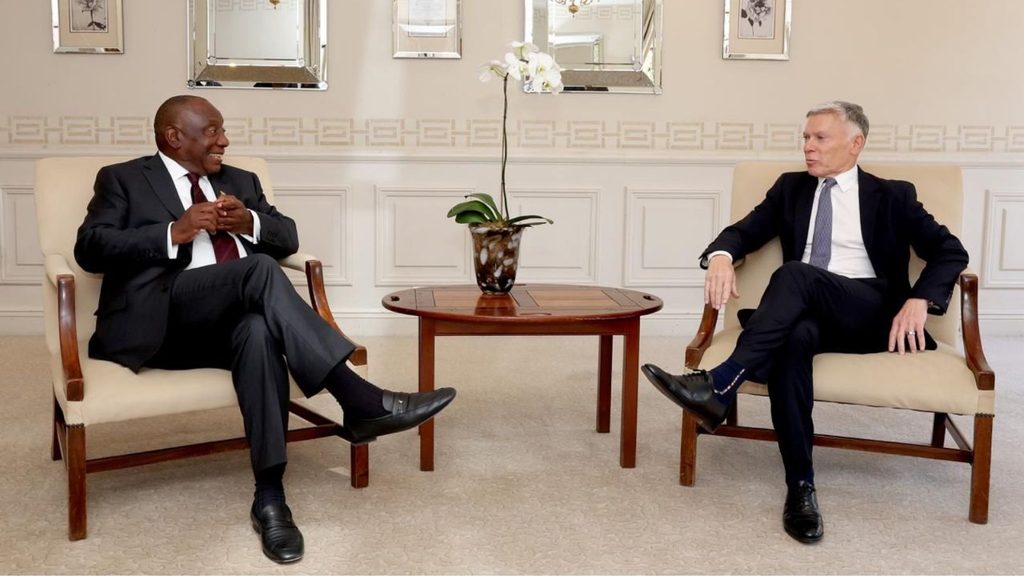
A phone call from Cyril Ramaphosa to Discovery CEO Adrian Gore led to private businesses playing a much larger role in ending load-shedding.
The phone call led to a coordinated effort by the business to work with the government to unlock private investment in renewable energy.
This was coupled with the deployment of private-sector engineers to Eskom to help the utility manage some of its power stations.
It also dovetailed with a significant change in Eskom’s leadership, with Dan Marokane assuming the CEO role and an overhaul of senior management to improve the utility’s performance.
Gore explained in his book, The Four Principles, that this ultimately ended load-shedding in South Africa and provided a template for future work between business and the government.
The Discovery founder outlined the end of load-shedding in discussing the first principle of Disciplined Optimism.
Gore explained that this principle was key to the founding of Discovery in 1992 amid significant local and global turmoil.
The principle can be briefly summarised as the recognition that our natural instinct is to find negative signals and trust pessimism, which does not drive greater productivity or better outcomes.
Rather, Gore pushes individuals to look for positive signals within a broadly negative environment, which leads to opportunities and the chance to make an impact.
In the case of Discovery, it was the positive signal that health insurance and risk coverage more broadly were going to be revolutionised in the coming years.
Gore explained that turmoil and negativity distract competitors and reduce asset prices, making it relatively easier to start a business or make an impact in that environment.
This enabled Discovery to revolutionise health insurance and then financial services more broadly in South Africa.
The business leader said the same applies in Discovery’s efforts to improve society, whether it be through fixing potholes in Johannesburg or tackling load-shedding.
Gore’s search for positive signals ensures that he sees these opportunities and is able to take them when they arise.
The load-shedding crisis

Gore used the work of business, the government, and Eskom to end load-shedding as an example of what Disciplined Optimism can do in action.
South Africa’s electricity grid is complex and one of the largest in the world. For context, in 2025, the country produced more electricity than Israel, New Zealand, Ireland, and Portugal combined.
This is a complex system that does not lend itself to quick fixes. However, it had rapidly deteriorated into a poor state, with widespread load-shedding from 2018 onwards.
The crisis peaked from 2022 to 2023, with Eskom keeping load-shedding between stages 4 and 6, which cost the economy R27 billion in output on a monthly basis.
Gore said the crisis was dispiriting and depressing, with South Africa’s population and business leaders becoming pessimistic.
“There was a real fear that the grid would shut down completely and that anarchy would be the result,” Gore recalled.
“A widespread belief took hold that the problem was too big to fix and that it would only get worse. There was a creeping dread that this shocking state of affairs would be the thin edge of the wedge.”
Gore recalled that Discovery’s risk committees prompted the management team to prepare for a total grid collapse. This felt apocalyptic to the CEO.
The government began implementing some changes, such as lifting the licensing cap for private generation, and an independent team was set up to help improve Eskom’s plant performance.
At this point, Gore penned an opinion piece in News24 about the need for action and called on individuals to focus on solutions rather than succumb to negativity.
The piece ended with a plea: “Business is ready. We need to work together with the government urgently to get this done – and we can.”
A phone call from Ramaphosa
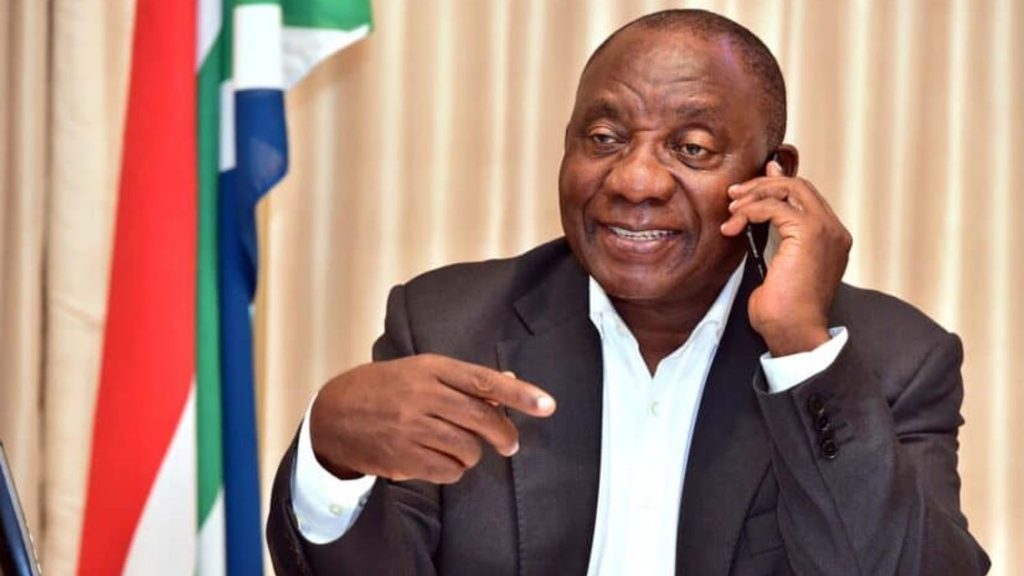
Following the publication of that article, President Cyril Ramaphosa phoned Gore and asked him to rally the business community more purposefully.
This meant scaling up the existing assistance being given to Eskom and giving additional impetus to what was already underway to tackle the crisis.
“It was a great response from the President, but immediately I realised I had created the risk of being hoisted by my own petard because of the obstacles in collaborating with the government,” Gore said.
There were a handful of initiatives to tackle the crisis by the private sector that had not gained any momentum. Gore said there was significant distrust between the state and business.
The government did not want business to look like a saviour, and business knew there needed to be more liberalisation of the sector to enable it to really participate in ending load-shedding.
Business decided to work with the government through the Business for South Africa (B4SA) platform created during Covid-19.
“We went back to the President and agreed to formalise the Government-Business Partnership that would focus on energy, railways and ports, and crime and corruption,” Gore said.
Gore’s first port of call was to create a positive pledge that business leaders could get behind, with many overcome by despair.
The pledge was published on 27 July 2023 and focused on pursuing joint interests with hope, agency, and positivity. Ultimately, it was signed by 155 CEOs.
This formed the bedrock of private participation in key reforms that ultimately contributed to the end of load-shedding.
“Some might disregard these mechanisms as mere symbolic gestures, but in my view, they are among the most important things we, as a business community, have ever done,” Gore said.
Businesses invested heavily in private generation projects and deployed 350 top engineers to help Eskom at no cost to the utility.
This was coupled with a significant overhaul at Eskom, with the utility gaining a new CEO in Dan Marokane and six of its power plant management teams were completely changed.
The upshot of this was the 76% reduction in load-shedding by the end of 2024 and a 98% reduction by the end of 2025. Load-shedding is now a thing of the past in South Africa.