Pay as little tax as possible in South Africa


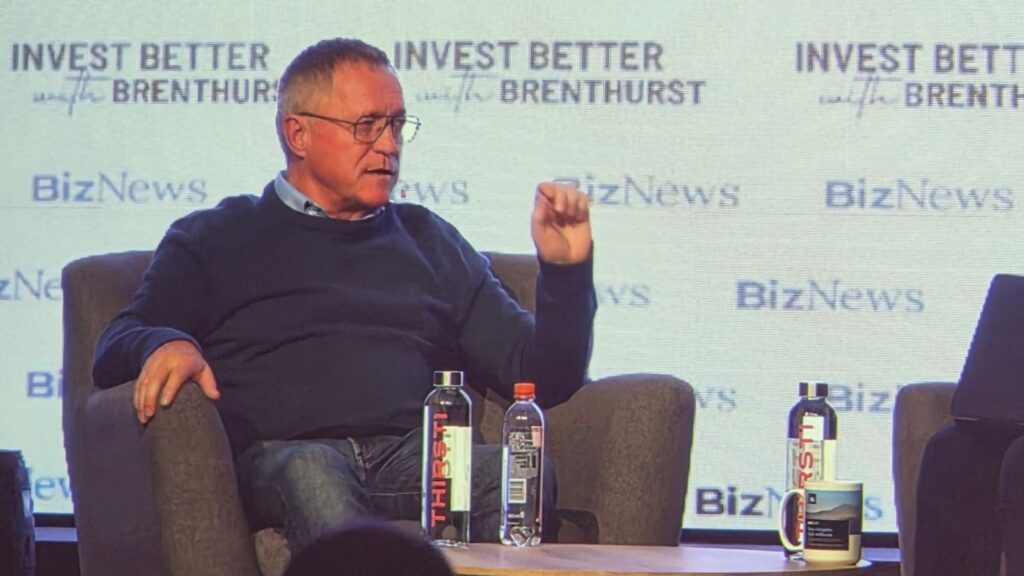
Efficient Group chief economist Dawie Roodt urged South Africans to minimise their tax liability as much as possible, within the confines of the law.
Roodt believes South Africa is already seeing a tax revolt, with many taxpayers aggressively organising their tax affairs.
He shared these views at the 9th BizNews Conference, which is currently taking place in the Drakensberg.
Roodt explained that a tax revolt has been brewing in South Africa for years, starting as far back as 2015 when the Organisation Undoing Tax Abuse (OUTA) took a stand against the government’s e-toll plan.
Since then, the tax burden in South Africa has become even more unevenly distributed, placing a disproportionate amount of pressure on middle- and higher-income households.
To illustrate his point, Roodt pointed out that those earning more than R1.5 million a year, which is 268,000 people in South Africa, are responsible for 33% of all personal income tax (PIT).
For reference, South Africa has a tax base of 8.3 million income taxpayers, of whom those earning more than R1.5 million constitute 3%.
This means only 3% of the tax base accounts for a substantial share of the state’s revenue, with PIT being the government’s largest source of income.
This tax revenue is then used to support 28 million South Africans who receive social grants from the state, and 2 million civil servants.
“Those 2 million civil servants are approximately 3% of the population, and their wage bill is equal to approximately 17% of GDP,” Roodt said.
“We’ve got new state capture in South Africa. There are two groups that have captured the state: the one is the civil servants, including the politicians and the bureaucrats, and the other one is the tenderpreneurs.”
Dawie Roodt’s advice

Roodt said the South African taxpayer will no longer stand for the ‘new state capture’, especially because the state has proven ineffective and inefficient in distributing its revenue.
“The redistribution effect of South Africa is probably the highest in the world,” Roodt claimed, using the example of a family with an income of between R1 million and R2 million to illustrate his point.
“For every R1 tax that you pay to the Minister of Finance, you receive back approximately 3 or 4 cents in the form of goods and services.”
“If that one family should decide to immigrate, we lose funding for approximately 20 poor families in South Africa.”
Roodt emphasised that he does not believe all civil servants are overpaid or underworked, but he said that many are failing to do their jobs.
“The civil servants in South Africa are there in the first instance to serve me and to protect me and to protect my staff and make it easy for me to do business,” he said.
However, Roodt said this is not what South Africans are getting from the state, which is why he believes the country is experiencing a tax revolt.
This revolt is taking the form of taxpayers aggressively structuring their affairs in such a way that they reduce their tax liability as much as possible.
“I’m not suggesting that we should stop paying taxes. In fact, I’m opposed to a tax revolt. If you stop paying taxes, it’s going to be extremely difficult to get people to start paying taxes again,” he said.
“My advice to people, and this is what I think we should start doing, is do not evade taxes. Do not break any laws, but do whatever you can to pay as little tax as possible.”
“Deduct every possible thing that you can deduct from your revenue. Make sure that you reduce the tax burden.”
“If you can throw the book at SARS, do it, because SARS has stopped working for us. SARS is working for the state and for politicians, and they have no respect for the taxpayer in South Africa anymore.”



Comments