Good news for South Africans with solar panels on their roofs


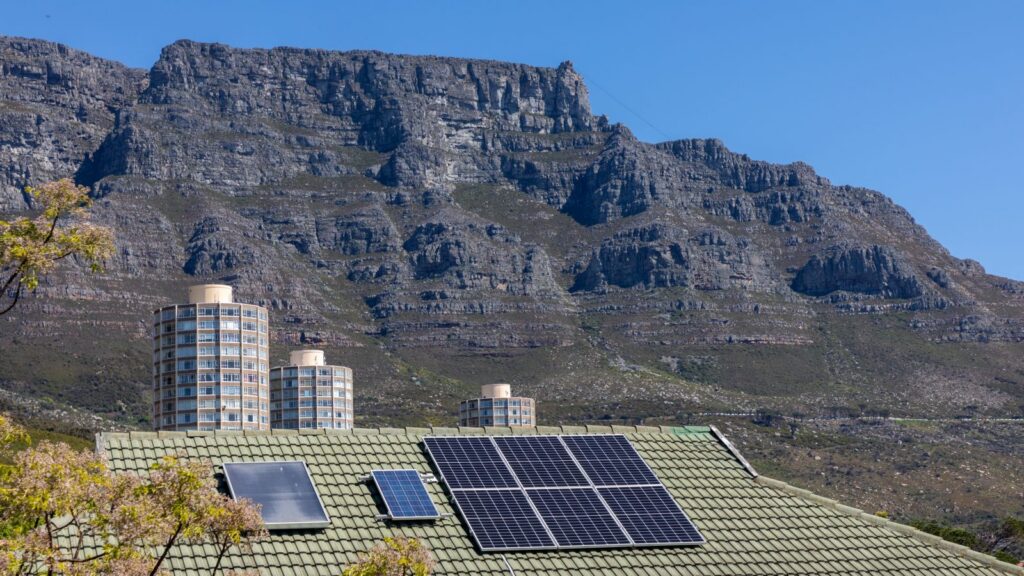
South Africans who do not register their rooftop solar power systems with Eskom will not be issued fines or have their electricity supply disrupted.
The deadline for South Africans to register their small-scale embedded generation (SSEG) systems with Eskom and have their fees waived is 30 September 2026.
Media reports previously suggested that South Africans who failed to register before this date could face fines ranging from R6,000 to R30,000, depending on the municipality.
However, Eskom spokesperson Daphne Mokwena has reportedly confirmed that the power utility will not impose fines or cut off electricity supply to customers who fail to register before this date.
In a social media post, energy expert Chris Yelland said Mokwena personally confirmed this to him and the Organisation Undoing Tax Abuse (OUTA).
This followed after both Mokwena and Yelland appeared on Power Breakfast, during which Yelland said Eskom did not possess the right to issue fines in the first place.
“It is not a court,” Yelland said. “It is not a statutory authority, it doesn’t write the law, and there is no provision for Eskom to issue fines.”
“We believe that cutoffs are an empty threat. They have no basis in law, and they will be challenged if they do start cutting off people who have not registered their solar systems.”
Eskom previously called for all systems under 100 kW to be registered under Schedule 2 of the Electricity Regulation Act, regardless of whether they feed back into the electricity grid.
Yelland and OUTA have argued, however, that systems under 100 kW do not need to be registered with Eskom or the National Energy Regulator of South Africa (NERSA).
According to Yelland, the Act does not apply to electrical installations which are behind the meter or do not have a point of connection to the municipal grid, which includes all solar systems.
“The Electricity Regulation Act states very clearly the conditions by which a distributor may disconnect a customer,” Yelland explained.
“If you read it carefully, you’ll find that failing to register your systems is not one of those reasons in law that entitle Eskom to cut you off.”
The real reason behind the registrations

Eskom has said on multiple occasions that safety and the stability of its grid are the primary reasons behind the solar registration requirement.
Mokwena explained that the utility needed to ensure that all electricity installations which are connected to its grid met certain safety requirements, including solar systems.
This, she said, would ensure the safety and reliability of both the electricity users at home, as well as on Eskom’s distribution network.
Additionally, she explained that the solar registrations were an important way for Eskom and NERSA to accurately quantify the number of solar users in South Africa.
Yelland rebuked both reasons as disingenuous and said they were misleading South Africans away from the true motives behind the registrations.
“The suggestion that solar PV systems cause safety issues on the utility side of the meter is simply not true,” Yelland said. “Eskom and municipalities have detailed procedures for working on their network.”
“This includes measuring if there is voltage present, isolating, locking out, and earthing. If you follow those procedures, you do not have safety problems at all.”
Yelland explained that all electricity systems which hold a Certificate of Compliance, which is required by law, are considered to be safe and compliant.
Additionally, he described the argument that solar registrations are required for Eskom to know how many solar users there are in South Africa as “absolute nonsense”.
Yelland pointed out that Eskom already knows how much solar PV there is in the country because it publishes this information publicly on its website every week.
Since the vast majority of these solar installations remain unregistered, Yelland said that Eskom’s use of registrations as an indicator of the amount of solar in the country would be inaccurate.
Instead, Yelland argued that the solar registrations served as a means for Eskom to generate more revenue through forcing its customers to switch to more expensive monthly electricity tariffs.
“Eskom customers on the Homelight tariff that have prepaid meters, which comprises a vast majority of Eskom’s direct customers, do not pay a fixed monthly cost,” Yelland said. “They only pay an energy usage cost.”
“The moment you want to install a solar PV system and register that system, you are converted off the Homelight tariff onto the Homeflex tariff, which has a very significant fixed monthly cost.”





Comments