The woman running one of South Africa’s biggest accounting firms


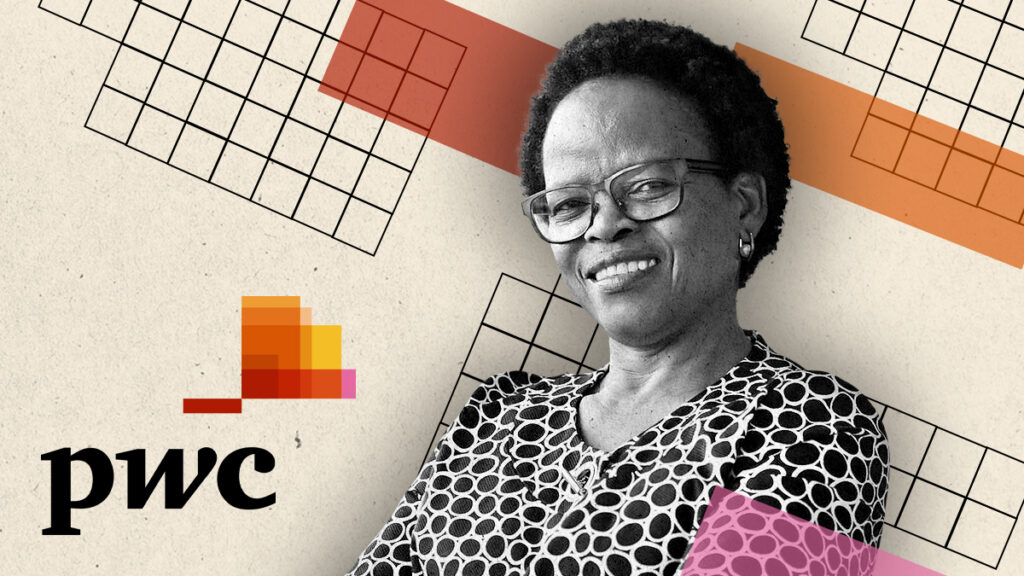
The CEO of PwC Southern Africa, Shirley Machaba, went from failing all of her university courses to managing one of the biggest accounting firms in the country.
Although Machaba is now hailed for her accounting and leadership abilities, her journey to the top wasn’t easy or straightforward.
Machaba was born in 1965 in Jabavu, Soweto, where she and her siblings were raised by her grandmother. Her parents were both working professionals – her father was a teacher, and her mother a nurse.
As the eldest granddaughter, she had to take on many responsibilities at home, especially since her grandmother was older. Balancing household chores with her studies was challenging, but it also made her very independent.
She began her education at Jabavu Primary School but spent most of her childhood in Limpopo, attending Vhulaudzi Secondary School in Tshitavha village, Venda.
“My mother is Venda, and my father is Pedi – that’s why I can speak almost all the black languages in the country, except isiXhosa, because, in Soweto, we spoke everything,” Machaba told City Press.
Initially, Machaba had set her sights on a career in medicine.
“I really admired the doctors who worked with my mother when she was a nurse at Nkhensani Hospital,” she said.
“But when I went to the University of Venda to register for the bachelor of science degree, which was an entry into medicine, I was in the queue and was told they had reached the quota and were not accepting more students.”
She asked which profession was closest to medicine, and they suggested accounting, she told CNBC Africa.
“So I opted for a bachelor of commerce in accounting and, because I didn’t do accounting at high school, I failed all the courses in the first semester,” she said.
This challenge prompted her to adopt a more disciplined, business-like approach to her studies, which paid off as she went on to graduate in record time – a mindset she continues to maintain. “I still wake up very early and maintain the same work discipline.”

After earning her degree, she pursued an honours degree on a part-time basis while working as a junior internal auditor at the Auditor-General’s office. She also took on a part-time job after-hours as a lecturer at the University of Venda.
“I really didn’t even enjoy lecturing. I lectured two classes after work, and I found out then that I was never going to be in that field,” she said.
“When I was a part-time lecturer, one of my professors at university, Professor Viljoen, convinced me to go for chartered accountancy. It was not hard to convince me, even though I didn’t know any black chartered accountants at the time.”
However, after completing her honours degree, she went on to enrol at Unisa for a postgraduate diploma in higher education.
“While I was doing my certified theory of accounting, which is tough, the Auditor-General’s office transferred me to Pretoria to finish off my articles with Coopers & Lybrand,” she said.
Her performance there was so impressive that Coopers & Lybrand wanted to retain her permanently. However, the Auditor-General’s office declined, as the transfer was intended solely for her training during the remainder of her articles period.
It was at Coopers & Lybrand, now called PwC, that Machaba first gained experience auditing major clients, including central banks across the continent.
After completing her articles in 1998, she briefly returned to the Auditor-General’s office. However, within nine months, she transitioned to the Department of Justice, where she became the inaugural head of internal audit.
“The internal audit unit was not there before, so I had to start it from scratch and I learnt a lot about leadership,” she said.
“During the four and half years I spent there, I was very proud of the things I achieved. When I left the department, we had a clean audit.”

Following her time in government, Machaba was headhunted by PwC. She became one of 10 black women appointed as partners at the firm, marking a significant milestone.
“That year, I had several offers, so I chose to go with PwC because it was closest to my heart. I joined as an associate partner and have been there ever since,” she said.
In 2005, she became a partner in PwC’s assurance services division, which allowed her to take on various roles and serve on multiple committees.
“I have been fortunate to lead a number of portfolios and had various roles in the organisation,” she explained, adding that she loved her roles of dealing with governance risk and being internal audit head the most.
She was elected chairman of the PwC SA board in 2012, and in 2019, Machaba was appointed CEO of PwC Southern Africa.
She has won numerous awards throughout her career and was named the African Business Woman of The Year by the African Business Leadership Awards (AABLA) in 2022.
“Like any other black female professional, my road was not an easy one. I had the highs and lows,” Machaba explained in the 16th Edition of Standard Bank’s Top Women Leaders.
“My recipe was to know what I want and remain focused, consistent, confident, principled, authentic, perfect what I do and never give up in what I do, including maintaining good work ethics.”
“Emotional intelligence has also been one of my strong attributes. I always raised my hand for new opportunities and put more effort into it for me to succeed.”
She is driven by her values and purpose, which centre around making a difference in people’s lives, particularly the lives of youth and women.
“Our destiny is in our hands; if we don’t decide, someone will decide for us. Success has no address, no colour, no gender. The solution is within us.”
“Keep pursuing your dreams until you achieve them. Run your career like a business, have a strategy articulating where you are, where you want to be and how to get there.”
“Surround yourself with mentors who will help you achieve your strategy. You will fall along the way. However, when you fall, stand up, dust yourself and keep walking.”






Comments