South African property developers planning new shopping malls in townships


South Africa’s township economy is attracting growing interest from property developers, who believe investment in retail centres and infrastructure can help unlock economic growth.
Abcon Developments managing director Bryce O’Donnell said township economies are already active and growing, but many still lack the infrastructure needed to support long-term development.
Informal economy expert and Kasinomics author GG Alcock estimates that the informal economy is valued between R750 million and R1 trillion, while other estimates put it at R900 million.
O’Donnell pointed to the draft South African Township and Rural Economy Development and Revitalisation Policy as an important step towards improving economic participation in these communities.
However, it will take time for the policy to be fully implemented. “Policy moves at the speed policy moves,” O’Donnell said.
The question facing developers is what happens as communities wait for those changes. Despite limited infrastructure, economic activity is already underway.
While South Africa’s informal economy holds significant value, much of its economic activity occurs without the formal infrastructure and services that help businesses grow.
That includes shopping centres, logistics facilities, business premises and other commercial developments that attract investment and improve access to goods and services.
According to O’Donnell, this is where private development can play an important role. However, one problem is that formal retail developments are often misunderstood.
While many believe they create demand, this is not the case, as residents already support local businesses, including spaza shops, informal traders, and street markets.
Instead, these developments provide the infrastructure needed to help existing businesses and communities to grow.
He said new retail centres often lead to road upgrades, improved municipal services, formal employment opportunities and stronger supplier networks.
These structures also give other investors confidence that an area can support further development. “One of the most persistent barriers to economic development in historically underserved areas is the absence of proof,” he said.
Developers tap into township mall demand
O’Donnell explained that investors need evidence that customers will support businesses and that an area can sustain long-term investment.
“A well-executed retail development provides that evidence in a way that a policy document, however well-intentioned, cannot,” he said.
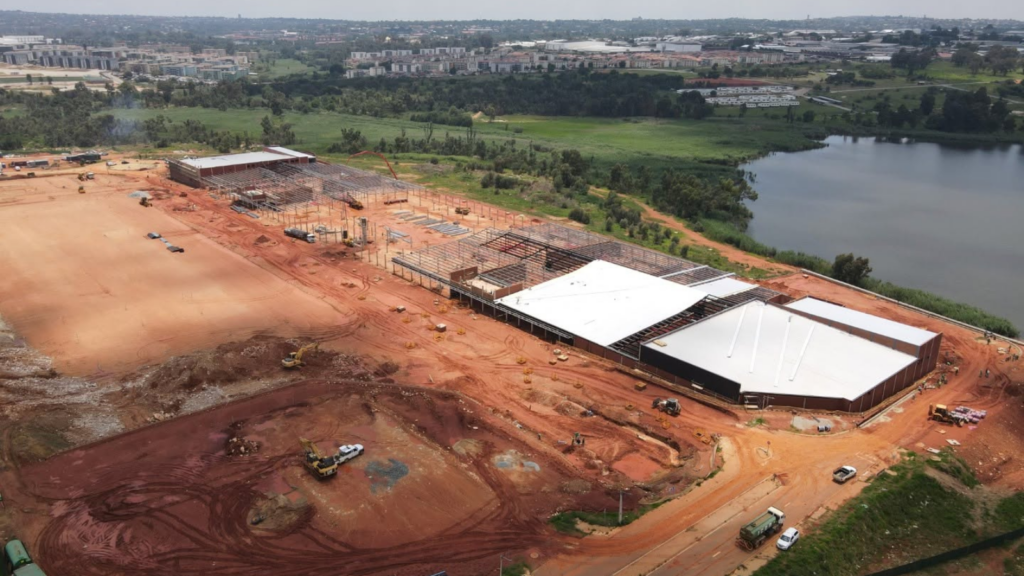
O’Donnell pointed to Fleurhof Drive, which is located between Soweto and Johannesburg’s western suburbs, as an example.
The area has seen more than 9,000 housing units completed over the past decade, with thousands more still under development. The growing residential population created demand for new formal retail facilities.
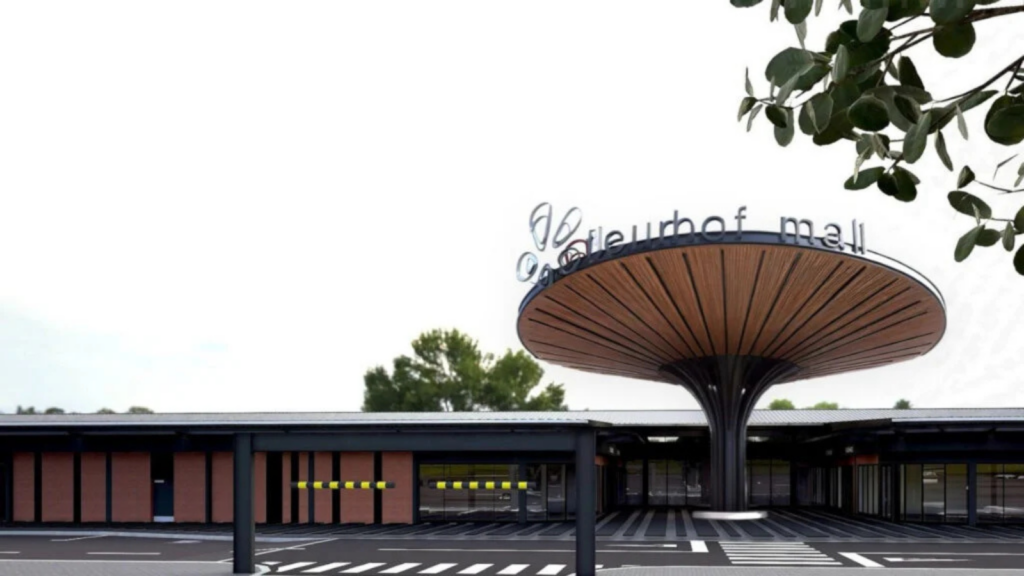
In response, Abcon and the Masingita Group of Companies are currently developing Fleurhof Mall, a 22,500sqm shopping centre.
Set to open on 27 August 2026, the mall will feature large retailers such as Pick n Pay, Shoprite, Mr Price and Edgars.
O’Donnell said the development provides the infrastructure needed for the local economy to expand. “We are creating the infrastructure that allows an existing economy to formalise and grow,” he said.
He added that construction creates hundreds of jobs, while completed developments provide permanent employment and opportunities for local businesses.
Traders operating near or inside formal retail centres benefit from greater customer traffic, improved security and better access to established national retailers. “The infrastructure changes what is possible,” he said.
Private investment and government both have a role

O’Donnell said development in townships should not be viewed only as a social responsibility or economic redress. “It is those things, but it is also, simply, good business,” he said.
He explained that developers invest where consumer demand already exists and where projects make commercial sense.
Successful developments, in turn, make future investment easier by demonstrating that an area can support additional businesses. At the same time, O’Donnell said the government still has an essential role to play.
He welcomed the draft township development policy because it recognises that private developers cannot solve these challenges on their own.
The government remains responsible for areas such as access to finance for small businesses, skills development, and broader economic support.
However, O’Donnell said the public sector also cannot meet the country’s infrastructure needs on its own. “The handshake between patient policy and decisive private development is where real change happens,” he said.
He added that South Africa’s cities still reflect decades of spatial planning that left many communities without adequate infrastructure or investment. Addressing those issues will require more than good intentions.
“They will be undone by the physical act of building in places that have been waiting too long for someone to treat them as the viable, deserving markets they have always been,” he said.
O’Donnell said developers who recognise the long-term potential of these communities are finding genuine commercial opportunities.
At the same time, these developers are contributing to broader economic growth in South Africa. “Bricks come before businesses,” he said.




Comments