South African company fired one employee every day for three months for corruption, theft, and dishonesty


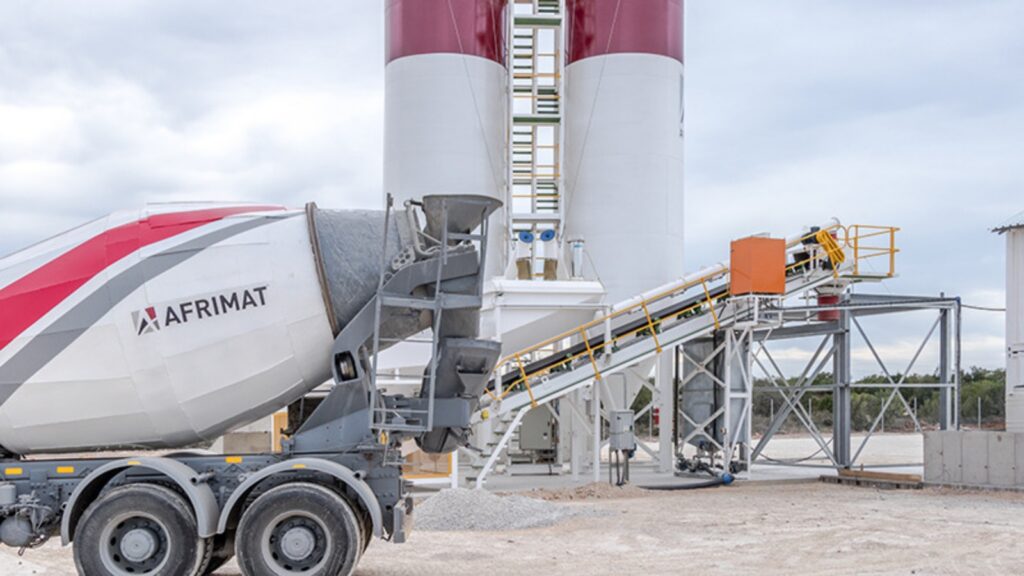
When Afrimat acquired Lafarge in 2024, the company was in such a bad state that it had to fire one employee every day for three months.
This was revealed by Afrimat CEO Andries van Heerden during the 9th Biznews Conference, which took place from 11 to 14 August 2026.
Afrimat is one of South Africa’s largest suppliers of materials for construction and mining, and has been listed on the Johannesburg Stock Exchange since 2006.
The company first announced its intention to acquire Lafarge South Africa in June 2023 for $6 million in equity (R108.8 million) to expand its national construction materials footprint.
The deal, which also included an agreement to settle R900 million in shareholder loans, would see Afrimat acquire a 100% ownership stake in Lafarge from the Holcim Group.
“Lafarge South Africa was in trouble,” Van Heerden explained. “The European owners wanted to sell the business. We did a deal, and we bought the business.”
“We didn’t buy it for the cement. The cement is a small part of it, but it has the best quarries in South Africa. We bought it for the quarries.”
Over the next few months, Afrimat acquired regulatory approvals from the Minister of Mineral Resources and Energy, as well as the Reserve Bank’s Exchange Control Division.
In April 2024, the Competition Tribunal granted final approval on the condition that Afrimat divest 5 quarries and 4 ready-mix concrete operations.
Afrimat agreed to these conditions and quickly began incorporating Lafarge as a wholly owned subsidiary of the company after the deal’s closure.
Throughout the rest of 2024, Afrimat integrated Lafarge’s aggregates, ready-mix, fly-ash, and cement grinding assets into its Construction Materials division.
By June 2026, Afrimat had completed the R215 million disposal of assets under the Competition Tribunal’s conditions, selling them to investment vehicle Saturc.
State-capture levels of corruption
At the time that the Lafarge acquisition was finalised, Van Heerden said the company was in a terrible state, which Afrimat now had to turn around.
He described the culture at Lafarge during that period as “state capture on a corporate level” due to the high levels of corruption.
“We literally fired one person per day for about three months in a row on corruption, theft, and dishonesty,” Van Heerden said. “You just couldn’t believe it.”
“So we had to change that culture and turn it around. I can say to you that the quarries are now fully integrated and performing very well, making this an exceptionally good acquisition.”
Van Heerden said the company was still facing challenges in Lafarge’s cement business, but he attributed this to the struggling cement industry rather than operational difficulties.
According to Van Heerden, companies that currently operate cement factories outside the Western Cape or Zimbabwe will struggle to turn a strong profit.
While he said the company’s cement business was not yet 100% profitable, it had turned around and was performing much better than before.
Afrimat is reportedly in talks with international partners to evaluate strategic alternatives for the Lafarge cement business, as part of a broader portfolio rationalisation.
He also said Lafarge was not responsible for Afrimat’s recent earnings pressure, pointing instead to headwinds affecting its bulk commodities business.
This included a more than 30% decline in iron ore prices at the mine gate, rising shipping costs, and the unexpected shutdown of ferrochrome smelters across South Africa.
Looking back on the acquisition of Lafarge, Van Heerden said the experience had taught him and Afrimat the importance of a healthy company culture.
“We found that the best value in acquisitions is where you can find a good asset, like Lafarge, that is badly managed,” Van Heerden said.
“You can get it for a good price, put in good people, and turn it around. The word that’s been used is execution. That is what you must get right, and that creates value.”


Comments