Standard Bank turned R1 million into R29 million


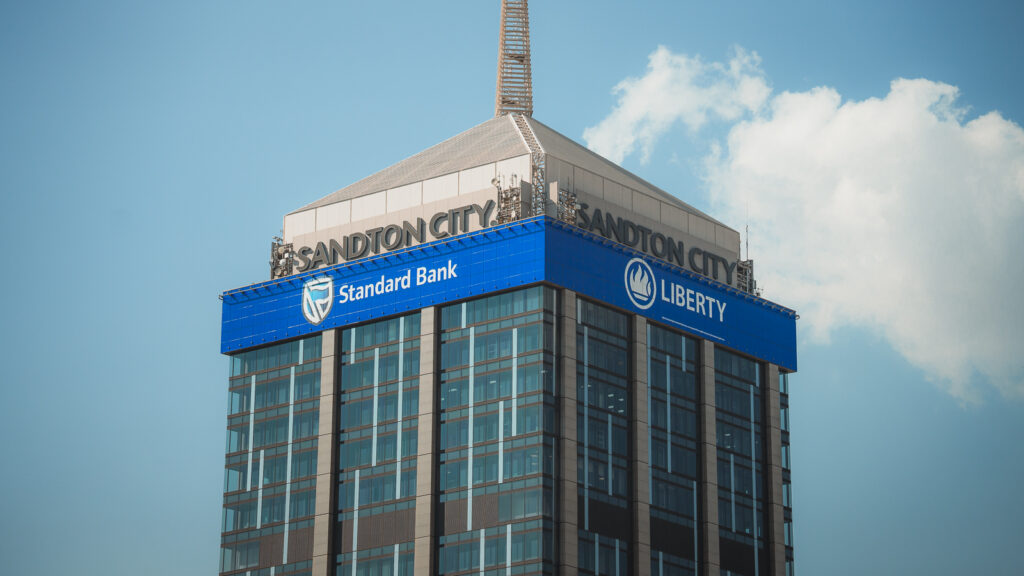
A R1 million investment in Standard Bank in 2002 would be worth R29 million today, thanks to the bank’s strong financial performance, compound growth, and its handsome dividends.
This value was created during a period with significant upheavals, including the Great Financial Crisis, the state capture era, and Covid-19.
The investment is an example of how allowing a good investment to compound can generate strong returns for investors over time.
Denker Capital co-founder and financial services investor Kokkie Kooyman used this example to explain why it is always better to invest for the long term.
Kooyman explained to BizNews that during this period, investors would have been bombarded with reasons to sell shares or not invest in the bank at all.
From wars in the Middle East to the Great Financial Crisis and Covid-19, headlines would have made people fearful of staying invested.
Those who do stay invested, however, are handsomely rewarded by the power of compound interest.
The key is investing in a high-quality business that can navigate headwinds, execute its strategy, and reward shareholders.
Current Standard Bank CEO Sim Tshabalala has made it clear to investors that the bank delivers on its promises.
This can be seen in the clear targets it presented to the market under its SBG2025 strategy and its new SBG2028 set of goals.
After clearing its 2025 targets, the bank is on track to meet its 8%-12% headline earnings growth target range in 2028, with a return on equity (ROE) between 18% and 22%.
In the first half of its 2026 financial year, the bank posted headline earnings growth of 10% on an ROE of 19.8% – its highest on record under current regulations.
Kooyman explained that this is the latest example of the bank steadily meeting its targets and quietly executing its strategy, resulting in strong returns for investors.
“If you had bought Standard Bank in 2002 and held it for the 24 years since, the share price growth would have taken you to R9 million,” Kooyman said.
“It paid plenty of dividends over that period, and if you had reinvested those, you would now have R29 million. That’s a compound annual return of 16.5%.”
Execution and track record

Kooyman explained that Standard Bank’s current valuation is around fair value. However, given the quality of the business and its track record, it deserves a premium.
“Standard Bank is now trading at roughly 2.2 times book value with a return on capital of 25%. That is perfectly priced, but it should trade at a higher premium of 2.5 times to 2.8 times,” Kooyman said.
Standard Bank has steadily executed on its African strategy, which Tshabalala likes to remind people began in 1988 when Standard Chartered sold its stake in the African bank.
The sale of this stake left Standard Bank without an African presence, and it had a choice: invest in South Africa and straddle the economy, or seek faster growth beyond its borders.
Tshabalala regularly recalls the story of how HP de Villiers, Dr Conrad Strauss and Eddie Theron built an African banking powerhouse from scratch.
“The decision from the top was to go back into Africa on the basis of its expected economic growth, despite potential headwinds and volatility,” Tshabalala previously told Daily Investor.
“Eddie Theron went off to London, as part of the expansion, and began building what today is ICBC Standard Bank in England and our international operations.”
A key part of Standard Bank’s African expansion that is often overlooked is its presence in major global financial hubs, such as London, New York, Dubai, and Beijing.
The bank identified that to make its African business work, it would have to facilitate the flow of capital into and out of the continent for clients and global investors.
“That was to say, they had knowledge, experience and capacity to serve clients outside South Africa, and Africa was a natural place for them to do so,” Tshabalala said.
The bank steadily grew through acquisitions and partnerships in key African markets, typically located near South Africa.
A key factor Tshabalala identified in the bank’s successful expansion into Africa has been appointing the right people to lead its various businesses.
“You have to make sure that you’ve got well-organised, highly qualified, well-respected and knowledgeable bankers on the ground, and have got blood that is as blue as yours,” Tshabalala said.
Despite all these elements combining to make Standard Bank’s Africa Regions business work, Tshabalala kept coming back to the bank’s ability to take a long-term view, which he says is in its DNA.
“The most important ingredient for the expansion is to take a long-term view rather than a short-term view. Standard Bank does not go in and out of countries,” he said.
“To summarise it all, you have to look through the volatility, take a long-term view, and ensure you are disciplined in your capital management.”
Today, the bank operates across 21 markets in Africa and has four global hubs outside of the continent.
40% of Standard Bank’s headline earnings are now generated by its businesses in the rest of Africa, which are in economies that are growing much faster than South Africa’s.






Comments