South Africa’s rand is in trouble


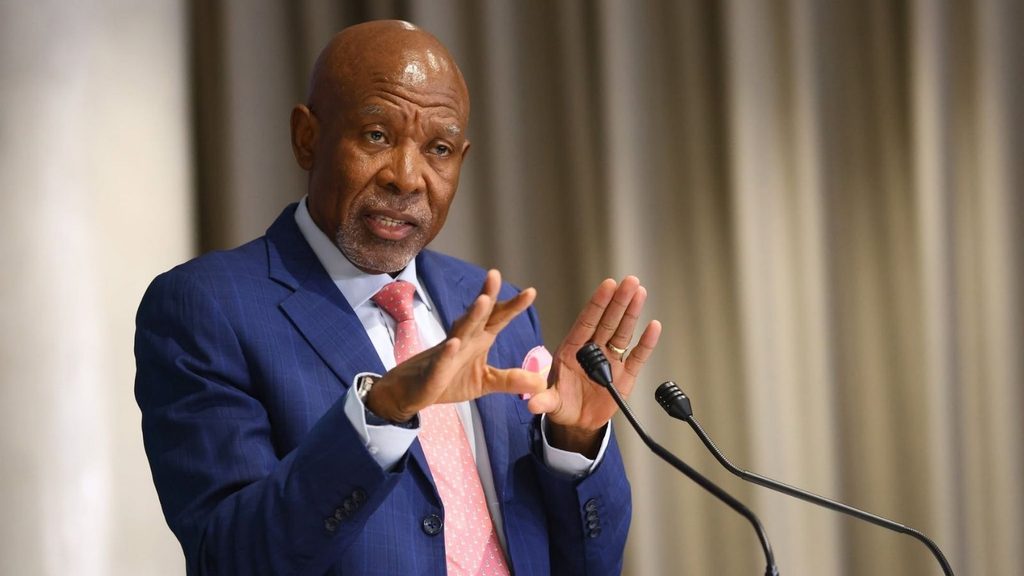
A narrowing interest rate differential between the United States and South Africa could spell trouble for the rand in the coming months.
The local currency has remained resilient amid escalating tensions in the Middle East, though it remains weaker than at the start of the year and in August.
Now, South Africa’s next monetary policy decision could put significant pressure on the rand should the Reserve Bank opt to keep interest rates unchanged.
Anchor Capital economist Dr Lerato Ntuli explained that the Federal Reserve’s most recent decision has important implications for South African monetary policy.
At its September meeting, the US Federal Reserve delivered a widely anticipated 25-basis-point interest rate hike.
She said this marked the Federal Reserve’s first increase since July 2023, with the federal funds target range now at 3.75% to 4%.
This comes after the South African Reserve Bank’s (SARB) Monetary Policy Committee (MPC) opted not to increase rates at its last meeting, which was held in July.
Ntuli said that, at the time, the committee cited an improved inflation outlook for its decision to keep rates unchanged.
Headline inflation slowed from 5.0% in June to 4.3% in July, largely due to lower fuel prices, with petrol and diesel prices declining sharply that month.
“However, the inflation backdrop has changed materially since then,” Ntuli said.
“Oil prices have risen significantly above the SARB’s July assumption of roughly $90/bbl and are now trading above $100/bbl as Middle East tensions persist.”
She explained that this means the July disinflation driven by lower fuel costs is likely to reverse.
“Headline inflation is therefore expected to accelerate through the fourth quarter of 2026 as higher fuel prices feed into fuel and transport prices,” she said.
“Core inflation also remains elevated. Core CPI rose to 4.2% in July from 4.1% in June, above the SARB’s tolerance band and highlighting persistent underlying price pressures.”
Ntuli said the ongoing Middle East conflict and elevated oil prices raise the likelihood of second-round effects, particularly through higher transport, logistics and food costs.
“Should these pressures become embedded in broader inflation dynamics, core inflation is likely to remain sticky or accelerate further, reducing the scope for the SARB to remain on hold,” she said.
Difficult decision for the Reserve Bank
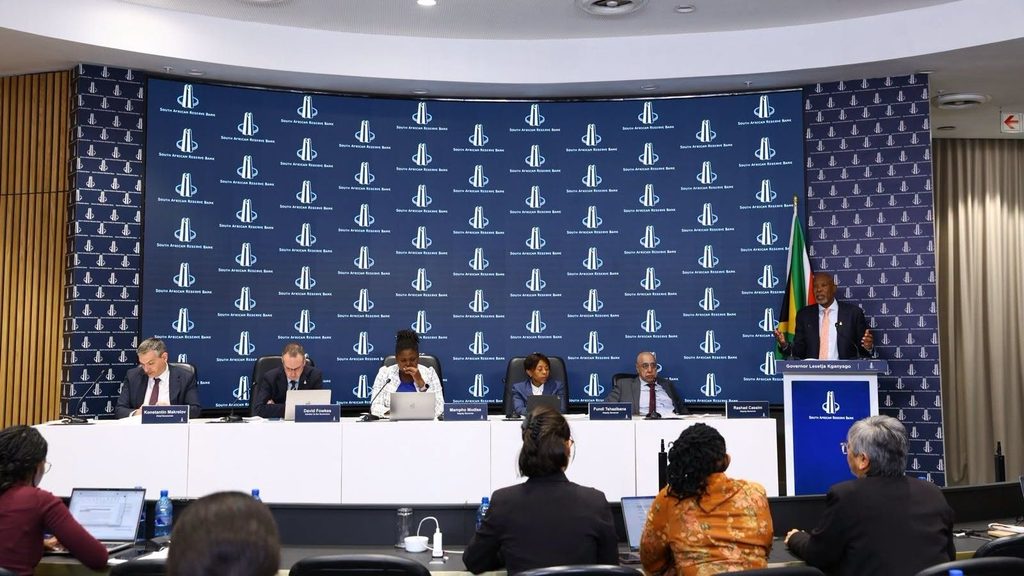
Against this backdrop, the MPC is set to make another decision about South Africa’s monetary policy at its meeting on 23 September.
Another 25-basis-point hike is widely expected, but some economists have warned that it could do more harm than good.
For example, Aluma Capital’s chief economist, Frederick Mitchell, warned that a rate hike will drive up the cost of capital, suppress fixed investment, and accelerate corporate insolvencies in labour-heavy manufacturing and mining.
He warned that raising interest rates in response to supply-side, imported energy shocks would be a serious policy misstep that risks choking an already struggling real economy.
However, following the Federal Reserve’s September decision, the risk of South Africa’s MPC not raising interest rates has also risen.
Ntuli explained that the interest-rate differential between South Africa and the United States has narrowed considerably.
The SARB’s repo rate is now at 7%, while the Fed funds rate is at 4%, meaning the spread has compressed to 300 basis points.
“Should the Fed deliver another 25-basis-point increase later this year, that differential would narrow further to 275 basis points,” she said.
“A narrowing interest-rate differential, combined with a stronger dollar and rising oil prices, increases the risk of sustained rand weakness.”
Ntuli’s concerns have been echoed by TreasuryONE currency strategist Andre Cilliers, who said the MPC’s September meeting will be the big focus for the rand in the coming week.
“Currently, markets are pricing in no hike. However, the SARB tends to track what the Fed does, and given the worsening inflation outlook, we could see a hike,” he said.
“The feeling is that if the SARB does not hike, we could see the rand weaken quite sharply.”
Ntuli said that, while weak domestic economic growth remains a key consideration, the balance of risks facing the SARB has shifted towards inflation rather than activity.
“Rising oil prices, sticky core inflation, a weaker rand, and a more hawkish Fed collectively strengthen the case for a precautionary tightening move,” she said.




Comments