South Africa going from zero to hero


South Africa’s economy is turning the corner and is set to hit a 2% annual growth rate by 2028 for the first time in over 15 years.
This is the view of Standard Bank, with many of its delegates sharing its positive view on the country’s trajectory, along with that of the continent.
South Africa has long been the laggard in Africa, with Standard Bank chief economist Goolam Ballim telling delegates at the Africa Unlocked conference that it has underperformed for at least the past decade.
However, Ballim now believes that the country provides the most optionality in Africa, with it being likely to exceed expectations in the coming years.
This is partly due to its unique mineral endowment, but it is also because of the country’s reform trajectory and changing political environment.
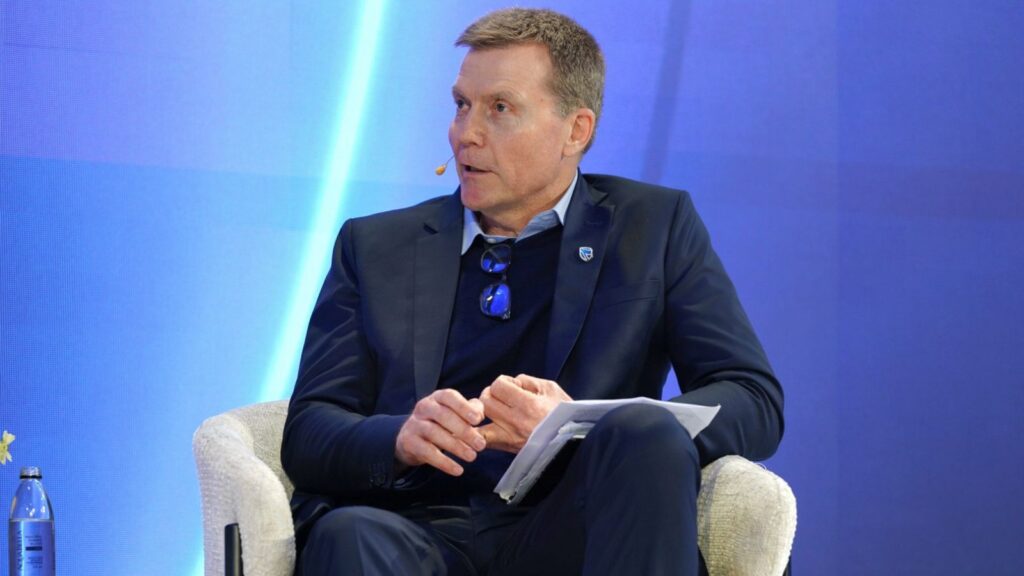
“The one superpower we have is the public and private sectors working together. If that can be done correctly, the flywheel will kick in,” Standard Bank South Africa CEO David Hodnett said.
The partnership between big business and the government in South Africa is yielding results. However, it may not be delivering fast enough.
Hodnett is clear that South Africa is far from perfect, and there are many challenges in the country. He is equally clear that it will take time to turn things around.
“I think it needs to be said clearly. South Africa is going through a period of real and legitimate debate about its direction,” Hodnett said.
“There are voices in this country, on the streets and in the headlines, that create a picture of a nation in difficulty. I want to be honest – some of that difficulty is real.”
Hodnett said the main challenge facing South Africa is the economy’s slow growth and lack of investment in infrastructure.
“Investment is far below where it needs to be, and the structural reforms we need are moving, but not as fast as many of us would like,” he said.
This has been the case in South Africa for the past decade, with its economy averaging an annual economic growth rate of less than 1%.
Turning the corner
After the past decade of pain, it appears as though South Africa’s economy is turning the corner and will see its growth accelerate.
Standard Bank forecasts modest growth for 2026, but expects it to tick up towards 2% by the end of 2028.
This is a critical level, with Ballim explaining that after 2% is reached, the confidence in the economy can become reinforcing as momentum builds.
A faster-growing economy becomes more attractive to investors, provides more tax revenue for the state, and provides more jobs.
Perhaps more crucially, it improves South Africa’s credit rating, enabling more investors to allocate capital to the country and free up more financing.
“Despite its challenges, South Africa has had its credit rating upgraded by S&P Global. Load-shedding has ended. We have been removed from the grey list,” Hodnett said.
“The government is intact and functioning. The financial sector is deep and sophisticated. The legal system is independent, and many of our key institutions work very well.”
This does not mean that South Africa’s economy will take off, but it puts the country in a very strong position should it regain economic momentum.
“I can’t tell you that the picture is perfect. But, I can confirm to you that South Africa is open for business,” Hodnett said.
For Ballim, South Africa’s future is very much about getting the basics right with regard to infrastructure and government policy.
“If, over the next three years, South Africa can lock in energy security and logistics improvements continue, and confidence in political stability continues to rise, the country can reach escape velocity,” Ballim said.
Escape velocity is broadly considered to be 2% GDP growth on an annual basis. At this level, growth can become self-reinforcing and accelerate.
Crucially, growth at this level also creates thousands of jobs and ensures that wages grow at a faster rate than inflation.
The ace up South Africa’s sleeve is its access to platinum and manganese, with these minerals being in extremely high demand.
This provides short-term tailwinds that give space for reform and grease the wheels of investment through increases in tax revenue and wealth creation.


Comments