The trade unionist who outsmarted Cyril Ramaphosa and built a R14.4 billion investment giant


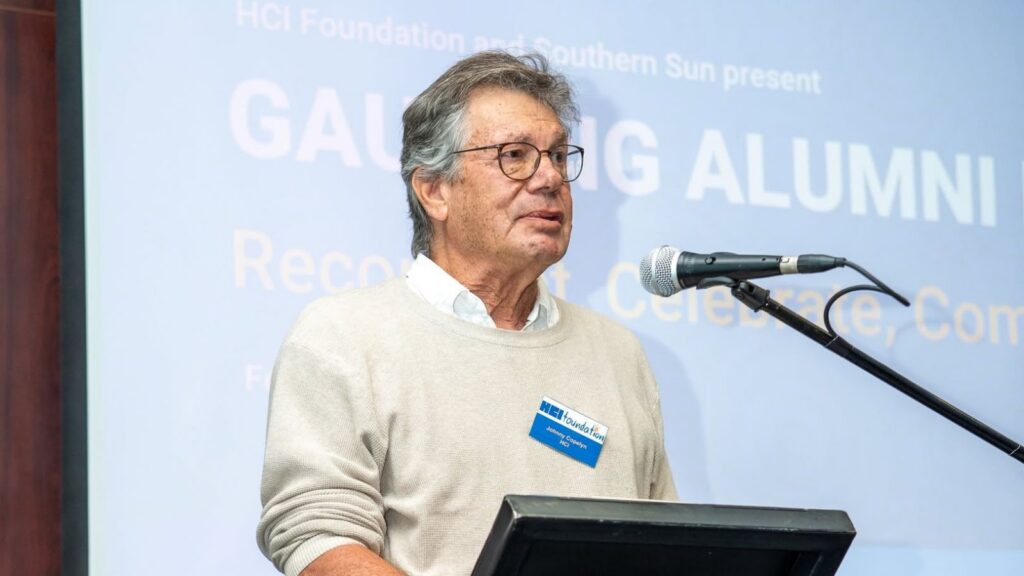
Johnny Copelyn outfoxed Cyril Ramaphosa in one of South Africa’s biggest boardroom battles in the early 2000s.
After winning the battle, Copelyn continued his immense success with Hosken Consolidated Investments (HCI), turning it into a giant valued at R14.4 billion on the JSE.
This was not Copelyn’s first run-in with South Africa’s current president, both of whom are former trade unionists and card-carrying ANC members.
Born in 1950, Copelyn grew up in a family of Jewish immigrants from Lithuania in Johannesburg and was deeply motivated to help black South Africans achieve democratic freedoms.
Copelyn attended the University of the Witwatersrand and completed a Bachelor of Arts in 1973. His honours thesis on the Pondoland revolt is widely cited in academia.
However, Copelyn’s future did not lie in academia. He moved to Durban in 1974 after the 1973 strikes in the city and joined the trade union movement.
As a gifted writer, Copelyn’s first job was to edit the South African Labour Bulletin. Rising through the ranks, he became a national organiser for the National Union of Textile Workers (NUTW).
This union was quickly banned by the apartheid government, which forced Copelyn to train as an attorney to find alternative employment.
Little did Copelyn know that his decision to join the NUTW would kickstart a business career that few in South Africa can match.
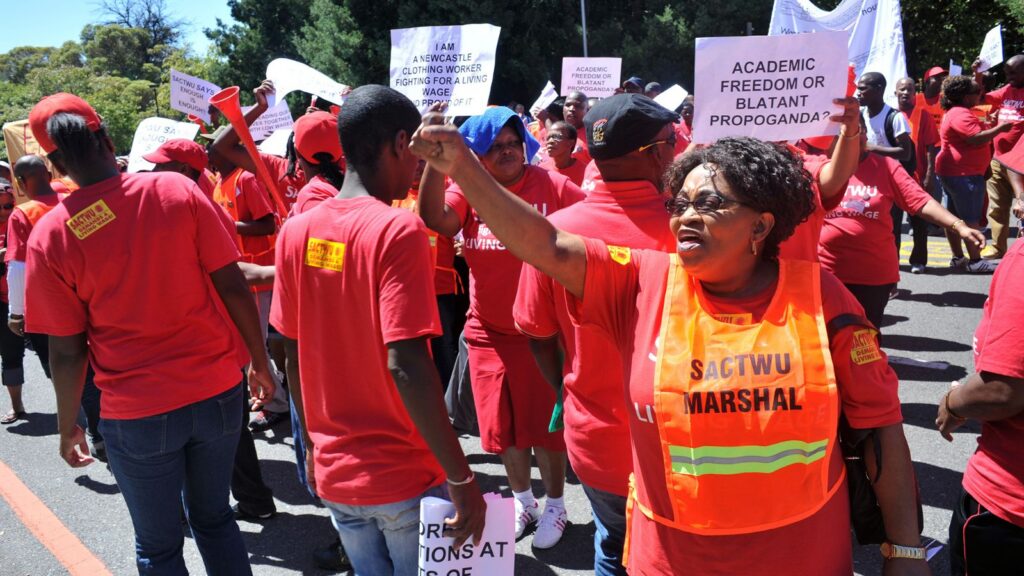
NUTW merged with the Southern African Clothing and Textile Workers Union (SACTWU), with Copelyn becoming its general secretary.
As an affiliate of COSATU, Copelyn had access to ANC party structures and members. He eventually became a member of the party.
This membership was partly forced on Copelyn, as he was chosen by COSATU as one of the 20 candidates nominated to the ANC’s candidate list.
After the 1994 election, Copelyn served in the National Assembly until 1997. Simultaneously, he was appointed as CEO of the SACTWU Investment Company.
Copelyn struck up a partnership with his close friend and counterpart Marcel Golding, who led the National Union of Mineworkers’ investment wing.
This friendship would serve Copelyn well and become one of the best business partnerships in South African history.
From trade unions to big business
While Copelyn was working his way up the trade union food chain and into Parliament, HCI was puttering along as a relatively obscure company.
Founded in 1973 as an investment holding company, it had been on the JSE for 20 years by the time of the 1994 elections.
With no notable investments, the company was overlooked by many investors and businesses. It was largely unknown to many South Africans.
This all changed in 1997 when the SACTWU Investment Company decided it needed a vehicle to build wealth for its workers’ pensions.
As a pension fund, it lacked the operational freedom of an investment holding company and could not effectively control or influence the management of its portfolio companies.
SACTWU became the major shareholder in HCI in 1997 and appointed Copelyn as its CEO, forcing him to give up his seat in Parliament.
Copelyn roped in Golding to run the firm with him, transforming HCI into a quasi-private equity firm that operated on behalf of SACTWU.
The firm’s guiding principle was to take major stakes in South African entities, both listed and unlisted, lend them its Black Economic Empowerment (BEE) credentials and improve their operations.
Given HCI’s political connections, it could also help companies gain access to operating licenses, business opportunities, and regulatory approvals.
This is exactly what it did for its first landmark deal. In 1998, HCI secured the license for South Africa’s first private free-to-air television channel, e.tv.
Copelyn and Golding poured money and resources into e.tv, turning it into a profitable enterprise. Today, HCI retains an ownership stake in eMedia Holdings.
HCI operated under the radar for its first few years as it steadily built up its balance sheet and transformed e.tv.
Its efforts to create a gaming and hospitality juggernaut, however, put it on a collision course with Ramaphosa and his entity, Johnnic.
Outfoxing Ramaphosa to make a R14 billion giant
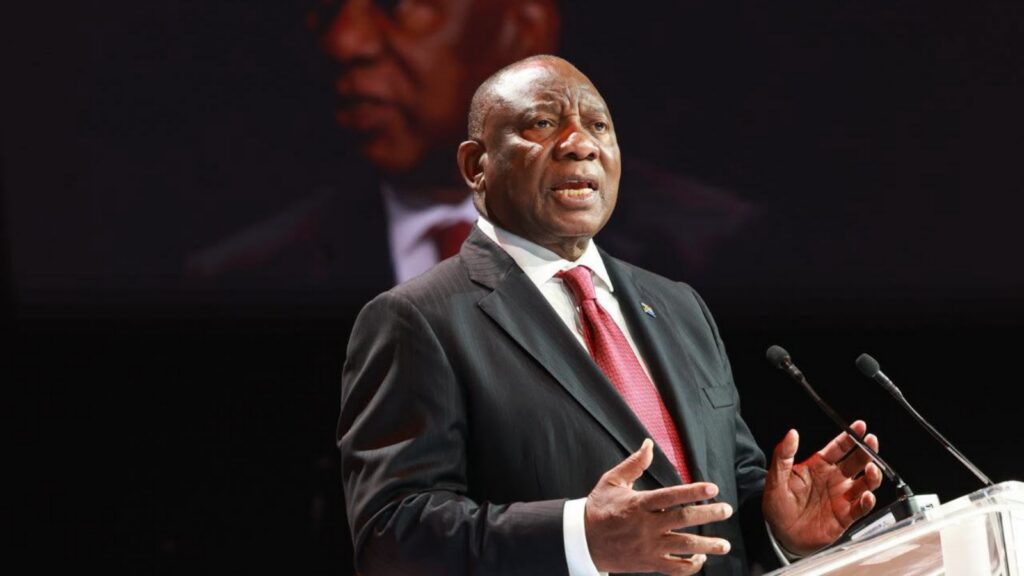
Copelyn and Ramaphosa shared the same idea – to build a gaming and hospitality giant through Tsogo Sun, which held many lucrative casino licences.
At the time, they were also vying for control of Southern Sun. Whoever won out would control a cash-generating machine as gambling surged in the early 2000s.
Both HCI and Johnnic were shareholders in Tsogo Sun, and both wanted control. Ramaphosa blocked Copelyn’s initial move to expand HCI’s influence over the company.
Instead of trying to buy the casino assets directly, Copelyn took the battle to Ramaphosa and started buying up Johnnic shares on the open market, kickstarting a hostile takeover.
Copelyn approached Johnnic’s institutional shareholders and bought out the minority shareholders, rapidly acquiring a 30%+ stake in the company.
HCI was now Johnnic’s largest shareholder, and Copelyn demanded seats on its board. Ramaphosa accused HCI of acting as predatory corporate raiders.
Copelyn said Johnnic’s management was estranged from the company itself, having very little skin in the game in the form of share ownership.
He bypassed the board and appealed directly to Johnnic’s institutional shareholders to accept a mandatory buyout offer.
Shareholders accepted HCI’s offer, and regulators approved the deal on the condition that HCI give up ownership of the Gallagher Estate. Ramaphosa promptly resigned from Johnnic.
HCI absorbed Johnnic’s gaming assets into Tsogo Sun and dismantled the rest of the business by unbundling or liquidating all its assets.
This victory transformed HCI into a multi-billion-rand giant that dominated South Africa’s booming casino, hotel, and entertainment sectors. It also gave Copelyn a reputation for ruthlessness.
Following this, Copelyn began using the cash generated by Tsogo Sun to diversify HCI’s investments.
Today, the company retains large stakes in Southern Sun and Tsogo Sun. However, it also has large holdings in Deneb Investments, Africa Energy, and Frontier Transport.
HCI also has an extensive unlisted portfolio where it holds its real estate, oil, and gas investments, and its own resources business.
In his 2026 letter to shareholders, Copelyn announced he would retire from his position as HCI CEO in the 2028 financial year.
This will bring to an end the career of one of South Africa’s most prominent business leaders, who turned a forgotten investment holding company into a R14.4 billion giant.





Comments