R8.9 billion to restore South Africa’s most important railway line


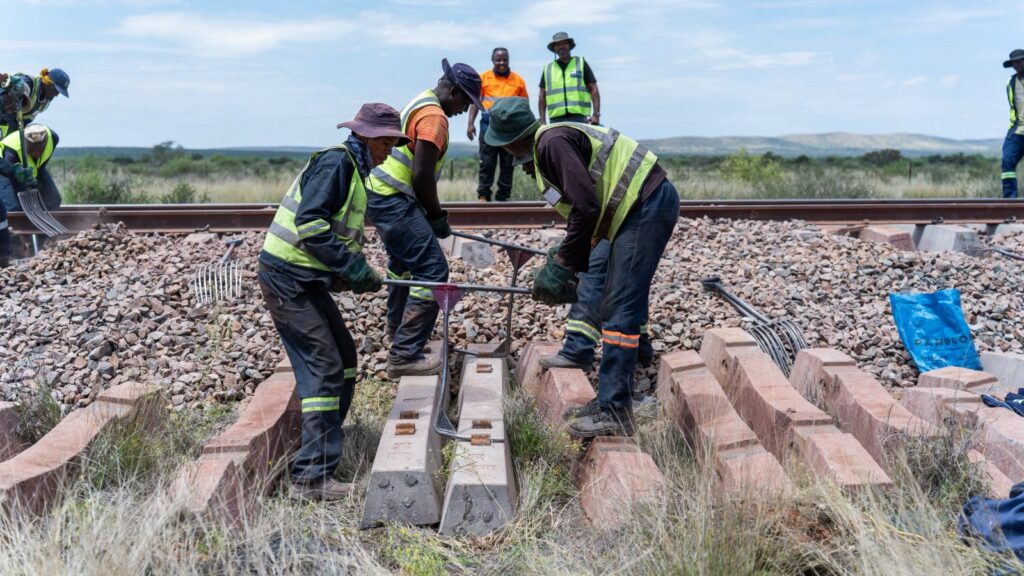
Transport Minister Barbara Creecy has committed R8.9 billion in investment to restore reliability and capacity on South Africa’s iron ore rail corridor.
The 861 km railway line connects the Sishen iron ore mines in the Northern Cape to the Port of Saldanha in the Western Cape, and is considered one of the country’s most vital freight lines.
The Sishen-Saldanha line was built by Iscor and opened in 1976, before being transferred to Transnet Freight Rail the following year, which has overseen the line since.
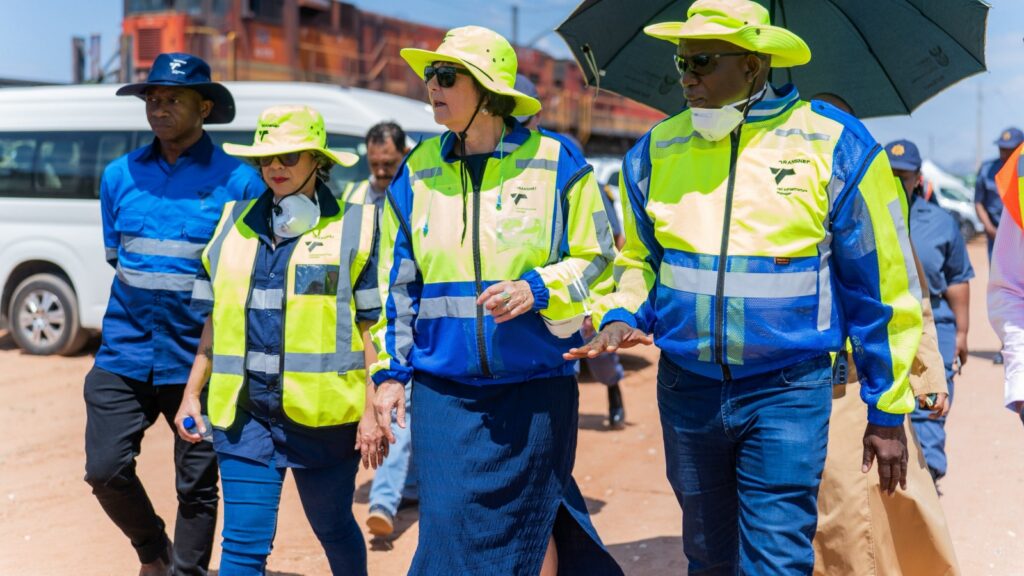
Creecy visited the iron ore line near Upington on Monday, 12 October 2026, during its annual maintenance shutdown, which runs from 6 to 16 October.
While there, she outlined a long-term Ore Line Restoration Programme under the Transnet Rail Infrastructure Manager (TRIM) which will run until 2030 at a total spend of R8.9 billion.
“Some of that money comes from Transnet’s revenue and own income,” Creecy said. “R3.4 billion comes from the Budget Facility for Infrastructure from the National Treasury.”
“This year, TRIM is investing R2.2 billion in this restorative maintenance. R1.5 billion of that comes from the Budget Facility for Infrastructure.”
In addition, Creecy said another R1.4 billion would be invested in the rolling stock operating on the Sishen-Saldanha line.
She explained that this would be split 50/50 between the maintenance of the locomotives and the wagons that operate on the line.
During the 10-day maintenance on the railway line, approximately 45,000 sleepers are set to be replaced, and no trains will run along the line during this period.
According to Creecy, the maintenance shutdown had created 1,300 fixed-term and 600 indirect work opportunities through the various service providers involved.
Of the R2.2 billion in maintenance spending, she said around one-third would go directly to local suppliers and enterprises in exchange for goods and services.
The South African government aims to transport 250 million tonnes of freight by rail per annum by the year 2029, with Creecy saying the Sishen-Saldanha investments align with this goal.
More than just rail
TRIM’s investments into the Sishen-Saldanha line are being complemented by strategic investments at the line’s termination point in the Port of Saldanha.
This is being done through the Transnet National Ports Authority (TNPA), which oversees all of South Africa’s eight major commercial seaports, including the one at Saldanha.
“TNPA has commissioned a bulk power upgrade at the Port of Saldanha, and is spending R750 million on upgrading the power,” Creecy said.
“As a result of that, the port power will then enable us to install a third tippler, which will support higher export volumes.”
The Port of Saldanha is the largest iron ore export hub on the African continent, with an iron ore terminal capacity of over 60 million tonnes.
The terminal is currently undergoing maintenance shutdown from 6 to 21 October, with planned upgrades to cargo-handling equipment and dust-management systems.
The TNPA recently signed a 25-year lease agreement with Freeport Saldanha, which it said would unlock a strategic investment pipeline valued at R6.9 billion.
The lease covers 55 hectares of land in the Southern Precinct of the Port of Saldanha, which is the deepest natural port in the Southern Hemisphere.
Member of the Western Cape Provincial Parliament Noko Masipa said the investment would cement the West Coast as one of South Africa’s most important maritime and industrial hubs.
He said the lease would drive commercial growth across sectors such as green hydrogen, marine engineering, logistics, and offshore services.
Freeport Saldanha is South Africa’s first, and so far only, sector-specific freeport and port-based Special Economic Zone (SEZ).
“When public institutions facilitate private enterprise rather than standing in its way, real economic growth follows,” Masipa said.
“Freeport Saldanha’s position as South Africa’s premier port-integrated SEZ will bring new industrial capacity, boost our export competitiveness, and create thousands of sustainable jobs.”




Comments