A stroke of luck for South Africa


Elevated commodity prices are likely to save the South African government’s finances from the worst effects of slowing economic growth and the fuel price relief offered early in the year.
Coupled with SARS intensifying collection efforts, the National Treasury’s projections for the state’s finances will hold despite significant headwinds.
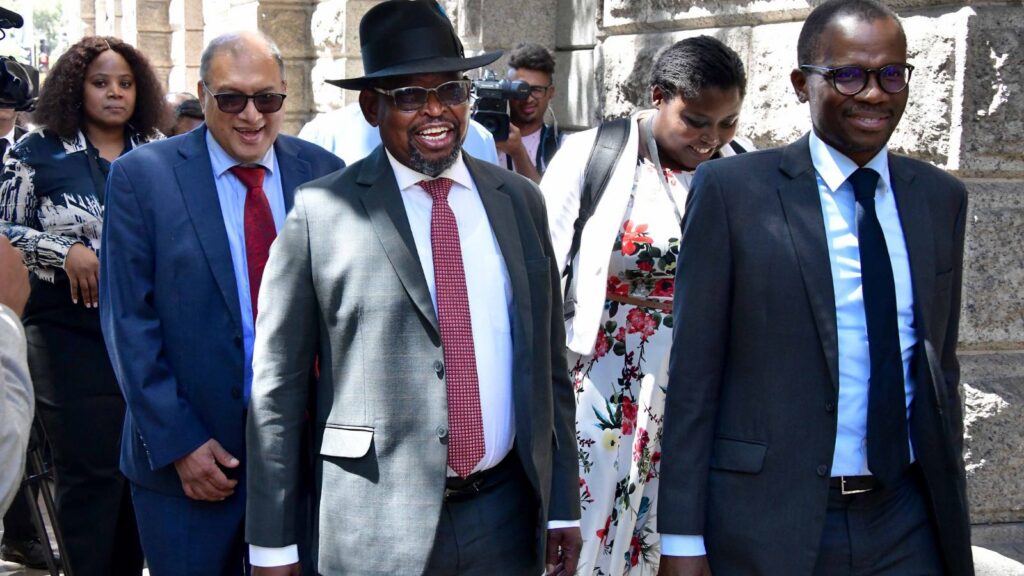
Symmetry chief investment strategist Izak Odendaal explained that the tables have turned on Finance Minister Enoch Godongwana.
Odendaal said this will be on full display during the Medium-Term Budget Policy Statement (MTBPS) on 21 October.
Godongwana will present the MTBPS in a difficult economic environment, with geopolitical events derailing much of what he presented in February.
However, Godongwana will be buoyed by how the rand and government bonds have proven resilient in the face of global turmoil.
The rand is flat against the dollar in 2026, while the 10-year government bond yield is up 70 basis points. But the bond yield is still 50 basis points lower than it was in 2025.
This is thanks to work from the National Treasury in limiting growth in government spending and a new, lower inflation target. However, trouble remains.
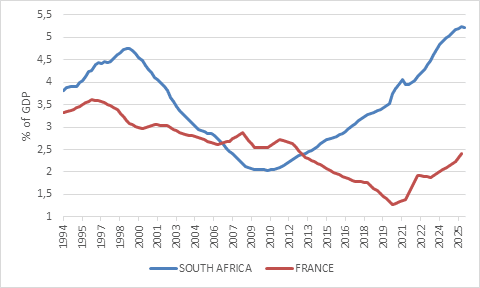
“South Africa might have a lower debt-to-GDP ratio than some developed markets, but its interest burden is much higher,” Odendaal said.
“There is no room for complacency. The MTBPS is likely to stick to the priorities laid out in the February Budget, but will find a harder time sticking to them.”
These priorities included a widening primary budget surplus and a gradual shift of expenditure towards investment and away from consumption.
“However, the growth outlook for the domestic economy will be downgraded from February’s estimates, due to the fuel price shock and two Reserve Bank interest rate hikes,” Odendaal said.
Lower economic growth translates into less government revenue, putting pressure on the Treasury’s efforts to widen the primary surplus.
This is exacerbated by the temporary relief offered by cutting the fuel levy earlier this year, which cost the government an estimated R17.2 billion in revenue.
These trends all point to renewed financial pressure on the government and potential fiscal slippage away from stabilising its debt burden in the current financial year.
Saving grace and hard work
Odendaal said the saving grace for South Africa is elevated precious metals prices, which boost tax revenue through higher corporate earnings.
This also flows through into enhanced dividend tax collections, higher income tax paid by employees at these companies, and then greater spending.
While precious metals prices have come under pressure in recent months, they remain elevated compared to levels a year ago.
This means mining companies will generate significantly more profit, resulting in higher corporate income tax revenue.
“This is pure luck, of course. Sound fiscal policy should therefore create room to absorb shocks like the Iran War without relying on a bailout from the gold price,” Odendaal said.
South Africa does not have such a buffer to absorb shocks, along with many other nations that have taken on significant debt in the past 15 years.
However, South Africa is doing something vastly different to countries in a similar financial position – it is taking its medicine.
“South Africa has been taking the bitter medicine of fiscal consolidation, attempting to stabilise debt levels and reduce government borrowing,” Odendaal said.
This is extremely painful as it entails collecting more tax while the government spends less money to boost the economy, creating a double blow.
In South Africa, this medicine appears to be working, with the government set to run its fourth consecutive primary budget surplus.
This means the government is bringing in more tax revenue than it spends, excluding debt-servicing costs.
As a result, the growth in its debt burden should slow and, over time, be reduced as no new debt is added and the economy grows.
“It has also implemented growth-enhancing reforms, since faster economic growth will organically deliver more tax revenues and therefore reduce the need for the government to borrow,” Odendaal said.
“Progress has been slow, but it has already been recognised by the market and ratings agencies.”





Comments