Cheap Chinese imports crushing critical South African employer


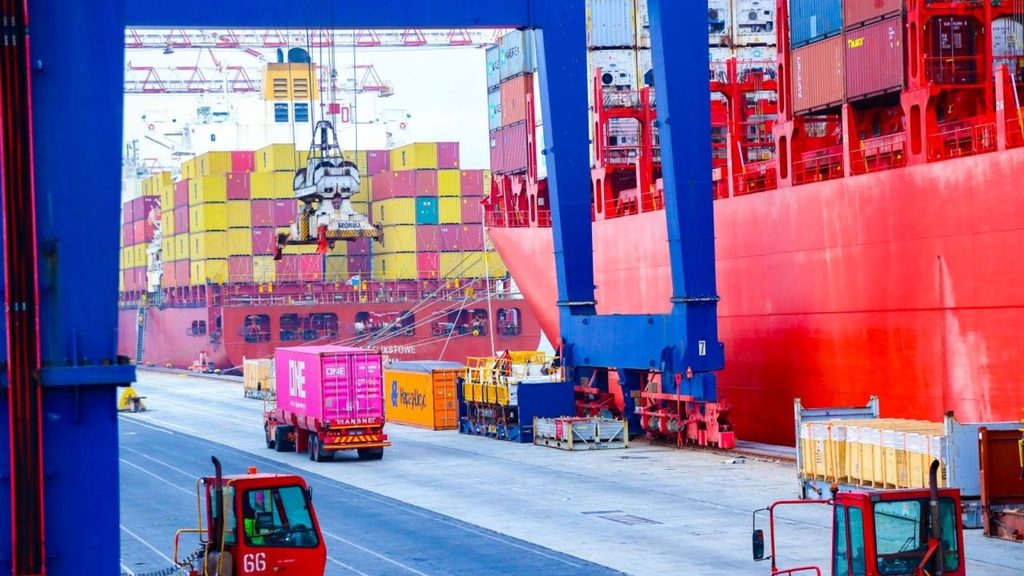
South Africa’s manufacturing sector has been in decline for more than three decades.
Now, a deluge of cheap Chinese goods, intensified by US President Donald Trump’s tariff war, is putting what remains of its industrial base under renewed pressure.
Chinese exports to South Africa have more than doubled since the start of the decade, rising by almost $10 billion in the first eight months of this year compared with the same period six years ago.
Among Africa’s major economies, only Nigeria recorded a bigger increase.
The pace has accelerated since Trump returned to the White House.
Shipments from China to South Africa jumped 29% in the first eight months of 2026 from a year earlier, as Chinese manufacturers, facing higher barriers in the US, hunt for customers elsewhere.
South Africa also runs a large trade deficit with China, which accounts for more than a third of the country’s manufacturing imports and only about 5.9% of exports, according to central bank data.
The industry contracted for a third consecutive quarter in the three months through June.
Manufacturing’s share of the economy has roughly halved from 24% in 1994.
The industry contracted for a third consecutive quarter in the three months through June, while employment in the sector has fallen by a quarter since 2008.
Chinese manufacturers, aided by subsidies and a cheap currency, aren’t just undercutting producers in South Africa.
Rivals from Brazil to Vietnam are also struggling to compete and have imposed tariffs on Chinese steel products.
The European Union reached a deal with Beijing last week to curb Chinese hybrid-car exports to the bloc.
South Africa is particularly vulnerable as its manufacturers are already grappling with high energy costs, an inflexible labour market, burdensome regulation, failing infrastructure, and weak economic growth.
Most exposed
Moody’s Ratings’ latest Manufacturing Vulnerability Index ranks Africa’s largest economy as the most exposed to Chinese trade competition among the eight nations it assessed on the continent.
It attributed this to South Africa’s “relatively large manufacturing sector with a high reliance on foreign, and specifically Chinese, value added in exports” and declining competitiveness.
“This is particularly evident in machinery and automotive components, where domestic producers have lost market share to Chinese exporters over the past decade,” it said.
The International Trade Administration Commission said it is investigating five new applications from companies seeking relief from an influx of imports.
The applicants span sectors ranging from producers of gypsum plasterboard used for ceilings to plastics and cold-rolled steel.
The entities involved include the South African Fasteners Manufacturers’ Association, representing makers of steel nuts and bolts, Saint-Gobain Construction Products South Africa, ArcelorMittal South Africa, and Hosaf, a unit of KAP.
“Over the years there has been a general increase in the caseload relating to increased imports,” ITAC said in an emailed response to questions.
“Part of that increase can be attributed to increased imports from East Asia, including China.”
At Alvern Cables in Germiston, east of Johannesburg, Works Director Jaycen Padiachy has seen the impact of the influx of Chinese goods firsthand.
The company, which was founded in 1967 and produces low- and medium-voltage cables, expected the rebound in economic activity after the global pandemic to help restore demand.
Instead, Padiachy said, the recovery has faltered. “What we are noticing now is a lot of competition in the market; imports are affecting our business.”
To compete, the factory has had to adjust its business model. “Under recent market conditions, we’ve had to work on reduced time for a short period,” Padiachy said.
Manufacturers have also had to carefully balance raw-material purchases and finished-goods stock against changing demand and where they source their goods.
“If we just continue to bring it in from Europe, we won’t be competitive,” said Juanita Kupersamy, the company’s commercial manager.
“China does have the advantage with strong price competition.”
‘Wake-up call’

Busi Mavuso, the head of Business Leadership South Africa (BLSA), one of the country’s largest business lobby groups, puts some of the blame for the influx of Chinese goods on Pretoria.
“You don’t see the appetite from government to actually protect local industry, and yet they continue to talk about industrialisation and beneficiation,” she said in an interview.
“We don’t have a clear trade policy as a country. We continue to put politics before economics.”
The trade department says it is taking the threat seriously.
The upheaval in global trade is “a serious wake-up call”, Maoto Molefane, acting deputy director-general at the Department of Trade, said in an interview.
“For the longest time we’ve been dependent on a particular region, but going forward, South Africa is looking at other areas.”
The government wants companies to diversify their markets and is promoting a “butterfly strategy” to strengthen trade links across regions.
There is a paradox at the centre of South Africa’s industrial decline. The country hasn’t lost its ability to manufacture.
Factory capacity utilisation stood at about 76% in 2026, down from 83.2% in 2003, around levels seen in some major developed economies.
What it lacks is sufficient demand for goods priced at a level that would keep its factories competitive, making investment in additional capacity difficult to justify.
South Africans are already under pressure from a high cost of living, unemployment, and stagnant growth.
When a cheaper imported alternative appears, price can outweigh arguments about supporting the local industry.
“Capability and capacity are not an issue,” Sello Takatso, senior manager for manufacturing at Nedbank, which lends to companies in the sector, said.
“With the mounting challenges of imports that are taking place, we are competing on price point.”






Comments