One woman makes R75,000 per month by renting out back rooms in Soweto


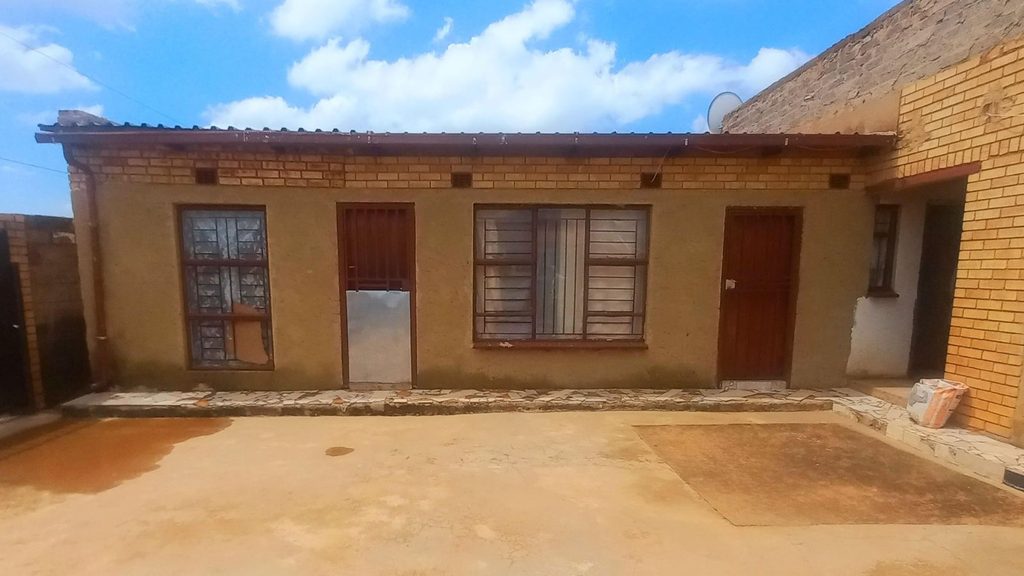
One woman makes R75,000 per month in rental income from 25 backroom units in Protea, a suburb of South Africa’s largest township, Soweto.
Despite this, she was unable to secure an R1.5 million bank loan to assist with the construction of 31 rental units for students going to the University of Johannesburg.
Informal economy expert GG Alcock said the bank told Nthabiseng, as he called her, that her project has no real estate value.
As such, she was unable to expand her business significantly or create employment by constructing 31 student units.
Alcock explained that this illustrates how the biases of formal financial institutions limit economic growth, as they do not grasp the scale of the informal economy.
Banks or financial institutions, in this case, see an individual seeking a loan to build a business in a sector that is not represented in formal data.
Because there is a lack of formal data to inform the lending decision, the loan is often not given out, as it is deemed too risky.
This is despite significant evidence pointing to a large and lucrative backroom rental sector, which Alcock estimates is worth R30 billion a year.
Nthabiseng is one of many South Africans who have used their formal job to build a side hustle by splitting up her property.
This began by breaking up rooms in her house in Protea to develop 14 high-quality backroom rental units. These are rented out for R2,500 to R3,000 each.
These units generated R40,000 per month in rental income for Nthabiseng, which flowed directly into her bank account.
During the Covid-19 pandemic, she invested heavily in the expansion of her business, buying another property in Protea and building 11 more rooms.
These were built using cash savings from the rental income of the first 14 units and were rented out for R3,000 each.
Combined with the first property, Nthabiseng generates R75,000 per month in rental income, which flows directly into her bank account.
The R1.5 million rejection
Nthabiseng’s business was generating significant cash flow, and she was looking to expand further into the lucrative student housing market.
This is a growing market in South Africa, with universities failing to invest adequately in student accommodation.
As such, JSE-listed giants, including Growthpoint and other property developers, have been investing heavily in building rental units close to university campuses.
Nthabiseng recognised the potential opportunity in this space and bought a house in Pimville using the cash from her rental units.
However, she would need financing to construct the 31 units she planned to build on the property.
“So, she went to a bank, and she asked for R1.5 million to begin building, and she showed them how much money she was earning from backroom rentals,” Alcock said.
“This was the same bank account that the money she received from the back rooms and her salary went into the same account.”
“For three weeks, they asked for more documents about the property and her business. Then they turned her down and said, ‘We don’t believe this has real estate value.’”
Alcock explained that Nthabiseng decided to test the bank out and applied for a R1.3 million vehicle loan to purchase a Mercedes-Benz.
This was approved within 20 minutes by the same bank that was unwilling to extend R1.5 million to fund her business venture.
Alcock pointed to this as an example of banks being willing to finance depreciating vehicles, rather than extend credit to build businesses.
He explained that this is because of the lack of data banks have access to when analysing the informal economy and how it operates.




Comments